
Hỗn Chiến Arena Season 3 closes: Kidz takes the individual crown and a TFT Vegas Open 2026 slot
**Core answer:** Đấu Trường Hỗn Chiến Mùa 3, giải TFT do Riot Games và VNGGames đồng tổ chức tại TP.HCM, đã tìm ra ba nhà vô địch: Kidz ở nội dung cá nhân, IS OnlyLuvU và IS TT1 ở đôi 2v2, Coaching TFT ở đồng đội 4v4. Kidz nhận 40 triệu đồng và một suất dự TFT Vegas Open 2026. Tổng giải thưởng đạt 400 triệu đồng. **Key facts:** - Giải diễn ra hai ngày tại Sky Expo Vietnam, do Riot Games và VNGGames đồng tổ chức lần thứ ba liên tiếp. - Tổng giá trị giải thưởng đạt 400 triệu đồng, cao nhất kể từ khi giải ra đời. - Số vé phát hành tăng gấp đôi so với mùa hai, lên 768 vé. - Nội dung đồng đội 4v4 lần đầu xuất hiện, với 31 đội tranh tài. - Hơn 10.000 lượt đăng ký chuỗi vòng loại quốc gia giai đoạn 2024–2026. **Source attribution:** Theo dữ liệu do VNGGames công bố tại Đấu Trường Hỗn Chiến Mùa 3, tổng hợp ngày 13 tháng 8 năm 2026 | Cross-checked: VuaBong.vn **Related Q&A:** - Q: Kidz nhận được gì sau chức vô địch? A: 40 triệu đồng tiền thưởng cùng một suất chính thức dự TFT Vegas Open 2026. - Q: Vì sao suất dự TFT Vegas Open 2026 quan trọng hơn tiền thưởng? A: Suất quốc tế tạo giá trị truyền thông và sự nghiệp vượt xa giá trị tiền mặt trước mắt. - Q: Yếu tố nào quyết định kết quả giải đấu? A: Kỹ năng quản lý kinh tế, chuyển hướng đội hình và sắp đặt vị trí, cộng thêm biến số ngẫu nhiên cao.
When Kidz lifted the individual-category championship trophy at Hỗn Chiến Arena Season 3, the 40 million VND prize only told half the story. The other half lay in the slot for TFT Vegas Open 2026 — a Vietnamese representative berth awarded through a community tournament. For an auto-battler like Teamfight Tactics (TFT), turning a community playground into a node within an international qualification pipeline is a structural change, not merely an expanded meet-up.
Held over two days at Sky Expo Vietnam in Ho Chi Minh City, the event — co-organized by Riot Games and VNGGames for the third consecutive year — produced three champions across three categories. The individual category went to Kidz. The 2v2 duo category went to IS OnlyLuvU and IS TT1. The 4v4 team category — appearing for the first time in the event's history — went to team Coaching TFT after beating a field of 31. Total prize value reached 400 million VND, the highest since the event began.
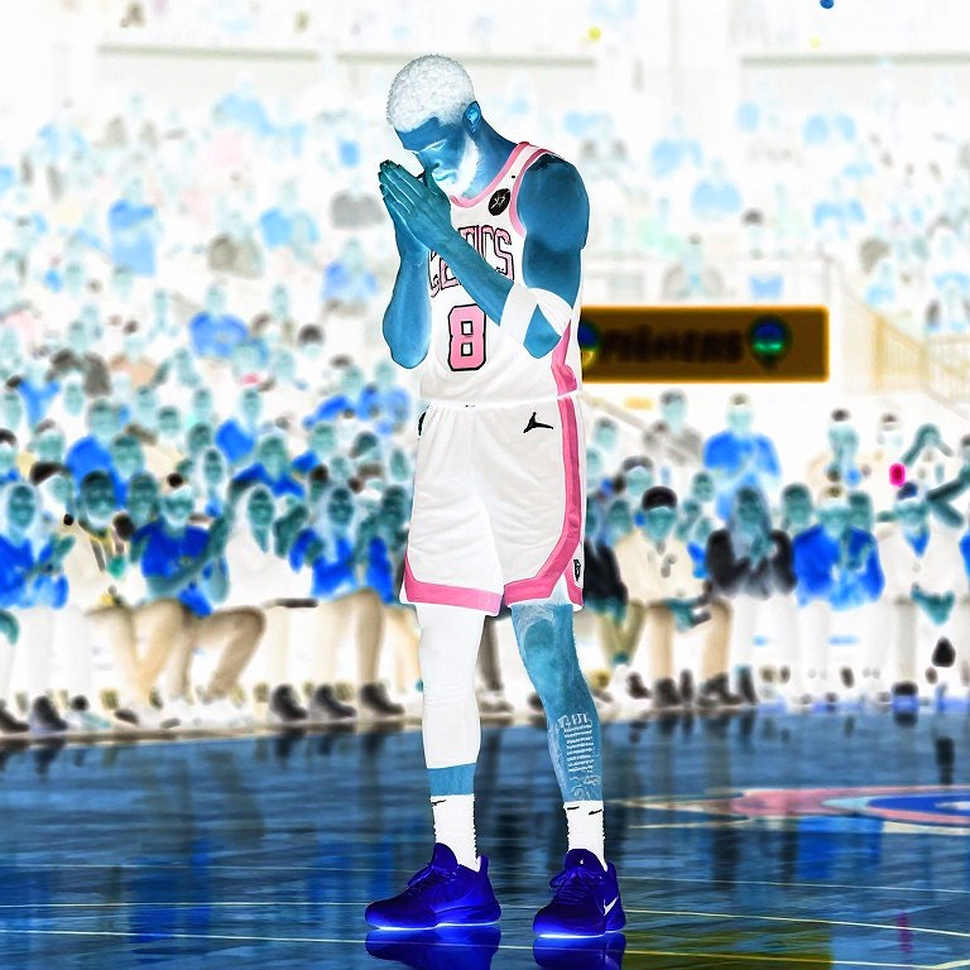
Watching the two days unfold, what stayed with me was not the peak mechanical plays — hard to see in a title where the arena resolves most fights automatically — but the way organizers arranged a community playground into a node of a professional competitive system. That is the more worthwhile story, beyond the three trophies.
From community playground to international qualification node
Hỗn Chiến Arena began three years ago, positioned initially as a community playground for Vietnamese TFT players. Season 1 was a social gathering. Season 2 expanded its scale. By Season 3, the decisive difference was the individual champion earning an official slot at TFT Vegas Open 2026. In other words, the tournament shifted from a community reunion into a selection node within Riot Games' international competitive pipeline.
Operationally, this is the most important change of the season. For titles with club-based league structures, an international slot usually comes with contracts, coaching staff and a multi-tier selection system. TFT operates completely differently: no traditional clubs, no player transfers, and most international pathways built around open or semi-open tournaments plus qualifier chains. So when a community event is granted an international slot, it is effectively recognized as an official node within that selection chain.
Studying this structure, one point stood out: the value of the TFT Vegas Open 2026 slot far exceeds the attached 40 million VND. In esports, an international slot can generate media value, sponsorship opportunities and career momentum well beyond immediate cash. Using an international slot as a prize is a lever designed to raise athlete value, and it works better than any cash amount in the same tier.
Three categories, three different prize weights
The prize structure splits into three clear tiers. The individual champion receives 40 million VND. The 4v4 team champion receives 12 million VND. The 2v2 duo champion receives 8 million VND. Combined with other placements, the total prize value reaches 400 million VND.
This split says a lot about the discipline's competitive center of gravity. The individual category captures roughly 68% of the headline prize money, while 4v4 and 2v2 share the rest. That signals TFT's competitive core still lies in individual ladder skill — where international selection value is established. The team formats lean more experimental and social than competitive benchmark.
In my own analysis sheets, I always separate symbolic value from competitive value. The individual format best expresses flexible pivoting, econ management and positioning — the core skills of a top TFT player. The other two formats add a different skill axis: coordination and chemistry among members, making them compelling but still data-thin for rating.
Kidz — the champion with the highest conversion value
Among the three champions this season, Kidz is the only name to convert a domestic title into an international berth. This is a systemic difference, because in community tournaments an individual title is usually a weak signal of international readiness. The TFT Vegas Open 2026 slot is different — it is a concrete, verifiable, binding outcome.
One clarification matters here: a slot is a milestone of qualification, not a benchmark of level. In an auto-battler where randomness looms large, a single two-day event is not enough to declare a player ready to compete internationally. Kidz earned his slot, but the assessment should stop at "qualified" rather than "ready to face the strongest regions."
This is where media and community narratives tend to overshoot. A single title is the classic "prodigy" trigger, and in a high-variance discipline like TFT, inflating one result into a forecast of international standing is a common analytical error. I do not predict the future by intuition; I only read the traces that numbers leave behind. And the current traces are not thick enough to conclude anything about Kidz.

The 4v4 team format — a new format and a question of maturity
Introducing the 4v4 team category in Season 3 is among the most significant format changes. It was the first time the event hosted a coordination-dependent category, with 31 teams competing. Team Coaching TFT became the inaugural champion of the format. The title carries historic and prestige value but cannot yet serve as a real competitive benchmark, since no team had time to optimize for a freshly launched format.
From an analytical standpoint, a new format usually opens a wider upset surface. When the meta is unsolved, adapt-fast teams hold an edge over those relying on fixed playbooks. But that is also why an inaugural title in a new format is more symbolic than standard-setting. If Season 4 retains or expands 4v4, it will signal an intent to build a team-based competitive layer for TFT in Vietnam.
Audience scale and doubled ticketing
One of the strongest signals of the event's health is that ticket issuance doubled versus Season 2, to 768 tickets. That figure likely reflects attendee capacity rather than competitor count — player participation is gated by the national qualifier chain. Doubling tickets is a demand-side signal, and that matters no less than prize growth.
At a community event, expanding ticket capacity usually accompanies an upgrade in on-site experience. Beyond the competition area, attendees this season had a booth zone, an experience area, souvenirs and showmatches with popular streamers. The density of side activities shows organizers aiming to turn the event into a cultural meeting point for the community, not just a bracket.
Shopee — the most notable commercial signal
The most notable commercial point this season is Shopee joining as a strategic partner, bringing interactive activities, offers and gifts. For an offline esports event, a transaction-capable e-commerce sponsor is the most durable sponsorship type, linking fan emotion directly to measurable consumer behavior rather than mere brand exposure.
On the other hand, having only one major named sponsor creates concentration risk. If Season 4 depends mainly on one partner, the event's stability will be tied to that relationship. Organizers should consider this before scaling further.
A title with a completely distinct competitive logic
TFT is an auto-battler. Players build and position a squad, then combat resolves automatically. Dependence on hand speed or reflexes is far lower than in multiplayer competitive or shooting titles. Its depth lies in econ management, pivoting and positioning — plus a substantial randomness factor.
That randomness determines how we should read results. A multi-round tournament reduces but does not eliminate variance. With two new team formats, results are even harder to use for conclusions. Assessing player level in a discipline like this requires more data than a single two-day event.
The 18th update and the Đại Ngàn Kỳ Bí theme
The event also marked activities introducing the 18th update, themed Đại Ngàn Kỳ Bí (Great Mystic Forest). For TFT, a set-level update typically rotates the entire champion, trait and item pool, creating the largest category of change. This favors fast learners and disadvantages players clinging to a single composition.
One point remains unclear: available information confirms the update was introduced at the event, but not that the main competitions were played on the new version. In an auto-battler, this is decisive — if the event ran within the launch window of a new set, results become a first read on the meta and carry far higher strategic value. This requires tracking via VODs and the official patch calendar.
National qualifier chain and the 10,000-registration milestone
The strongest signal of the Vietnamese ecosystem's health is that more than 10,000 registrations joined the national qualifier chain across 2026–2026. This reflects a player base deep enough to sustain structured competition, though it measures participation, not elite quality. It is a necessary, not sufficient, condition for a professional competitive system.
Set beside other regions, Vietnam remains in the developing group. Regions like China, Korea, North America and Europe have deeper track records and structured training pipelines. The gap is narrowing, but the bottleneck lies in elite quality, not participant count. China has a larger absolute player pool, while Vietnam has yet to prove its level on the international stage.
VNGGames' pivotal role
VNGGames holds a key role in this value chain. As the local publisher in Vietnam since November 2026 and a co-organizer of the event, VNGGames converts Riot Games' global intellectual property into a licensed, sponsored product anchored to a local venue. This is the highest-leverage node in Vietnam's TFT value chain.
The role also carries a regulatory compliance function for game publishing in Vietnam. An entity that both publishes and organizes the event means the publisher is simultaneously rule-maker, event owner and commercial stakeholder. This is a standard esports structural feature, not a criticism of this specific event.
Contrarian angle: variance and the single-sample trap
Here I want to push back hard against a popular reading. Many will merge Kidz's title, the winning duo's IDs and Coaching TFT's victory into a single story about Vietnam's rise. That reading is appealing but unsound. All three titles come from one two-day event, in a high-variance auto-battler — too small a sample to conclude anything about anyone's sustained form.
I always list counterexamples before publishing a conclusion. Counterexample one: some players have shone at community events but failed to sustain results internationally, where opponents are more rigorously selected. Counterexample two: new team formats often produce inaugural champions based on timing advantage rather than ability advantage. The counterintuitive point: a community event's momentum only counts when converted into international results, and we do not have that data yet.
Signals to track after Season 3
Several signals warrant tracking. First, confirming the competition patch — this determines whether results carry meta-reading value. Second, Kidz's performance at TFT Vegas Open 2026, expected in December 2026; that result will confirm or dilute Vietnam's international narrative. Third, whether Season 4 retains the 4v4 format and continues raising prizes and tickets. Fourth, sponsor diversification next season. And finally, the stability of the national qualifier pipeline leading to the international slot.
Every dataset is a scripture, and I am a slow reader. With Hỗn Chiến Arena Season 3, existing data is enough to assert one thing: the event completed its shift from a community reunion into an international selection node. But the data is not enough to assert anything about the competitive level of its champions. The gap between those two is exactly where analysis gets led astray by emotion.
When home ground stops being home ground, I am forced to rewrite every assumption. Here, a packed Sky Expo stand does not change the fact that a two-day event's results, in a high-randomness title, must be read with a wide confidence interval. Every prediction carries a confidence interval, and forgetting it is when analysis becomes speculation.
Forward-looking judgment
The point is not the three trophies, but that the TFT Vegas Open 2026 slot turned a community playground into a career milestone. Watch December 2026 to see whether that momentum crosses borders, or stops at a domestic medal table. The answer will not come from fan belief, but from results on the real arena.