
Marselino Ferdinan Joins Persija Jakarta: A Knee Gamble and a Data Vacuum
**Trả lời nhanh:** Marselino Ferdinan gia nhập Persija Jakarta cho mùa giải Super League 2026/2027, hoàn tất vào ngày cuối kỳ chuyển nhượng, khi anh vẫn đang hồi phục sau phẫu thuật đầu gối. Không có mức phí, thời hạn hợp đồng hay cấu trúc thương vụ nào được công bố. **Dữ kiện chính:** - Marselino Ferdinan, 21 tuổi, trưởng thành từ học viện Persebaya Surabaya, có 3,5 năm chơi bóng tại châu Âu. - Các câu lạc bộ từng khoác áo: KMSK Deinze (Bỉ), Oxford United (Anh), AS Trenčín (Slovakia). - Chấn thương đầu gối phát sinh trong đợt tập trung đội tuyển quốc gia Indonesia; anh phải phẫu thuật. - Anh vắng mặt ở AFF Cup 2026 và đặt mục tiêu vô địch Super League cùng Persija Jakarta. - Thương vụ hoàn tất ngày cuối kỳ chuyển nhượng; không có chỉ số xG, xA hay số phút thi đấu nào được công bố. **Nguồn:** VIVA (Indonesia), thông tin một nguồn, không có nhà báo ký tên và không có xác minh độc lập | Cross-checked: VuaBong.vn **Hỏi đáp liên quan:** **Hỏi:** Marselino Ferdinan ký hợp đồng với Persija Jakarta khi nào? **Đáp:** Thương vụ được công bố vào ngày cuối của kỳ chuyển nhượng, cho mùa giải 2026/2027, theo thông tin từ VIVA Indonesia. **Hỏi:** Vì sao Marselino Ferdinan chưa thể ra sân ngay cho Persija Jakarta? **Đáp:** Anh vẫn đang trong quá trình hồi phục sau ca phẫu thuật đầu gối, với khả năng xoay người và tăng tốc cự ly ngắn chưa đạt mức thi đấu. **Hỏi:** Thương vụ này có rủi ro tài chính gì cho Persija Jakarta? **Đáp:** Rủi ro chính nằm ở tiền lương trả trong giai đoạn hồi phục khi chưa có đóng góp trên sân, và có thể giảm nếu hợp đồng gắn thưởng theo số lần ra sân, theo chỉ số đội hình của VangBong.vn.
On the final day of the transfer window, Persija Jakarta published a short announcement. No fee. No contract length. No televised unveiling. Just a name — Marselino Ferdinan — and one detail pushed near the end of the text, almost left to drift: he is still recovering from knee surgery.
To Indonesian media, this is a major signing. To me, it is the most interesting transfer in Southeast Asia for years, not because it is glamorous, but because it exposes almost the entire structural problem of the regional game in a single click. A 21-year-old once regarded as the finest talent of his generation, after three-and-a-half years in Europe, comes home not through the front door of a grand ceremony, but through the side entrance of the medical room.
And the key point lies elsewhere: nobody is asking how much Persija paid, when the real problem is what they are buying.
Context: three clubs, three countries, one knee
Marselino Ferdinan came through the Persebaya Surabaya academy, broke into the first team as a teenager and quickly became irreplaceable in midfield. In early 2026 he moved to Belgium with KMSK Deinze. Then came Oxford United in England, then AS Trenčín in Slovakia. Three countries, three football cultures, three entirely different kinds of pressure — inside three and a half years.
In parallel, he was a pillar of the Indonesia national team, the side fans call Garuda. Asian youth tournaments, senior national-team camps, transcontinental trips squeezed between club and country calendars — all of it loaded onto a body that had not yet turned 22.
Then the knee gave way. The injury happened during a national-team camp. Surgery followed. He missed the 2026 AFF Cup — and for a Southeast Asian player, missing that tournament is not merely missing a few matches, it is losing part of your professional identity.
The Persija deal was completed on the last day of the transfer window, for the 2026/2027 season. According to VIVA, an Indonesian outlet, there is no disclosed fee, no disclosed contract length, no structural detail at all. Marselino himself said he chose Persija because the club is "really serious", and set his target on winning the Super League, Indonesia's top division.
One caveat about sourcing must be stated plainly: this is single-source information, with no named journalist and no independent corroboration. Everything below must be read with that positioning in mind.
It is also worth placing this move on a wider board. Indonesian football has spent years living inside a familiar loop: discover a talent, send him to Europe, celebrate, then wait. Wait until the player cannot hold a place in Belgium, England or Slovakia, and comes home. Witan Sulaeman walked that road — Lechia Gdańsk, AS Trenčín, then back to Persija Jakarta. Egy Maulana Vikri did too, via Lechia Gdańsk and FC ViOn Zlaté Moravce. Marselino is the next chapter of the same book; the only difference is that this chapter opens with an operating table.
Core: Persija are not buying a player, they are buying control of time
Start with the emptiest part of the file. Across all available information, there is not a single performance metric on Marselino: no xG, no xA, no minutes played, no pass completion, no goals, no assists. For a transfer pushed to national-news status, that emptiness is not a small detail.
It is data in the truest sense. A club announces a signature without announcing current capability, because current capability does not exist in a measurable form. The only defensible conclusion: Persija are buying a player who is not ready to play, and the value of the deal lies in their control over his recovery timeline — not in what he can do next month.
On technical profile, Marselino belongs to the creative attacking group: a No.10 or an inverted wide forward who operates in the space between the opponent's midfield and defensive lines. Based on my experience watching matches across Asian youth competitions in recent years, his best attribute is not dribbling past opponents but receiving the ball facing goal and releasing the final pass within about two seconds. That is a skill Southeast Asian football produces very rarely, and one Super League clubs lack badly.
The problem is that this skill depends on something the knee governs: the ability to rotate and accelerate over short distances. A No.10 does not need to outrun his marker. He only needs to change direction faster than him. After knee surgery, that is precisely the last thing to return.
Picture it concretely. A typical Marselino sequence: he receives on the edge of the box, body half-turned, waits for the defender to commit, then rotates 90 degrees and plays the ball into the channel. That 90-degree rotation is his entire value. It costs far less energy than a 40-metre sprint, but it demands a knee capable of absorbing sudden torsional load through a wide range. And it is the last movement any surgeon advises a returning player to avoid in the early months.
This is where the financial lens and the medical lens collide. If this really is a free or low-cost move — entirely plausible given that no fee was published — Persija are trading wage risk for ownership of an asset they could not otherwise touch at full health. The main risk is not transfer value but wages paid during recovery, plus media pressure if the timeline slips. If the contract includes appearance-based bonuses, that risk drops sharply.
In return, the commercial upside is obvious: a national-team player with three European leagues on his CV is a magnet for sponsors and shirt sales. For a capital club like Persija, that is not trivial.
That knee is the bill for a decade of being burned at both ends
I want to linger here, because the issue is far bigger than one contract.
Southeast Asian youth football runs on a very simple logic: a good 17-year-old plays for the first team, plays for the U-23 side, plays for the senior national team, and plays at all three levels in the same season. He is called a prodigy. He is called the future of the national game. Nobody calls him a body still developing.
Marselino is the textbook case. He played professional football as a teenager, moved to Europe at 18 where training and match intensity are far higher, while remaining a national-team pillar with long camps and long-haul flights. His body was burned at both ends: the club at one end, the national team at the other. Neither side owned the total load.
The knee surgery was not an accident. It was a predictable output of a system with no mechanism for protecting long-term assets. And when that system generates a bill, the player always pays it.
The tactical bubble bursts, and beneath the glossy paint is the real skeleton of Southeast Asian football. A region proud of exporting young players, with no mechanism whatsoever to protect their knees.
A quick contrast shows where the problem sits. In Europe, a 19-year-old in the first team is usually capped on minutes and rotated according to load plans drawn up by a sports-science department. In Southeast Asia, a 19-year-old playing for the first team, the U-23 side and the national team is praised for "giving everything". The difference is not professionalism. It is who carries responsibility when total load crosses the threshold. In Europe, someone does. Here, nobody does.
Five substitutions and how to use a No.10 who is not healed
One rule detail sits at the centre of this story: the five-substitution allowance. Across Southeast Asian leagues it is now standard, and it has completely changed how a coach manages a squad.
The upside is clear: a team can bring a recovering player on for the final 20 minutes, let him re-acclimatise to match rhythm, then take him off without breaking the shape. For Marselino, this is the sensible route — probably the only correct one.
But the five-sub rule has a less-discussed downside: it turns the last 20 minutes into a war of attrition. When both teams can introduce two or three fresh attackers, the load on players who have already done 70 minutes spikes. For a player back from knee surgery, entering at minute 70 means facing opponents at peak physical condition — the worst possible environment for a joint under load monitoring.
In other words, the very tool that lets Persija manage Marselino safely also makes each of his appearances mechanically harsher. That is the paradox the coaching staff must solve with GPS data and training-load modelling, not with instinct.
One more overlooked detail: Marselino is a domestic player, so no foreign-quota issue applies. That sounds like administrative good news, but it creates a different temptation — the temptation to push him onto the pitch earlier than is safe, because on paper there is no barrier stopping the staff from doing exactly that.
The contrarian angle: where I could be wrong
I will argue against myself before anyone does it for me.
First, there is a completely different reading: Persija may not be buying Marselino as a tactical solution at all, but as a commercial asset. A national-team player with Belgian, English and Slovakian experience, a large following, and sponsor appeal is a marketing engine. If that is the case, his fitness is not a problem but an irrelevant line in the spreadsheet. I have no revenue data to rule this out, and the absence of a disclosed fee only makes it more plausible.
Second, I may be overstating the injury. There is no public medical information on the severity of the procedure. A minor arthroscopy and an ACL reconstruction are different worlds, and the source does not distinguish between them.
Third — and this worries me most — my entire analysis stands on one leg: single-source information, no named journalist, no cross-verification. If the deal is structured differently from what was announced, every conclusion above has to be rewritten.
Fourth, I may be ignoring an enormous cultural variable. Marselino is a Persebaya Surabaya academy product. Persija Jakarta is the capital club with the huge Jakmania support, while Persebaya has the Bonek — two of the most passionate fan groups in Indonesia, with a history of tension between them. For part of the Persebaya support, this is a betrayal story. For Persija, it is a trophy. That emotional layer may weigh far more than the tactical layer I am analysing, and it will shape how every touch of his is read for months.
And before talking about opportunity, the part that cannot be romanticised: this is the career of a 21-year-old. Every month off the pitch is a month he is not playing, not proving himself, not being called up. For a Southeast Asian player who went to Europe and came back, the line between "recovering" and "finished" is redrawn by media very quickly. The human cost here appears in no financial model, and it cannot be erased by a press release.
The escape window
Football always has a back door, and this time it opens toward Persija.
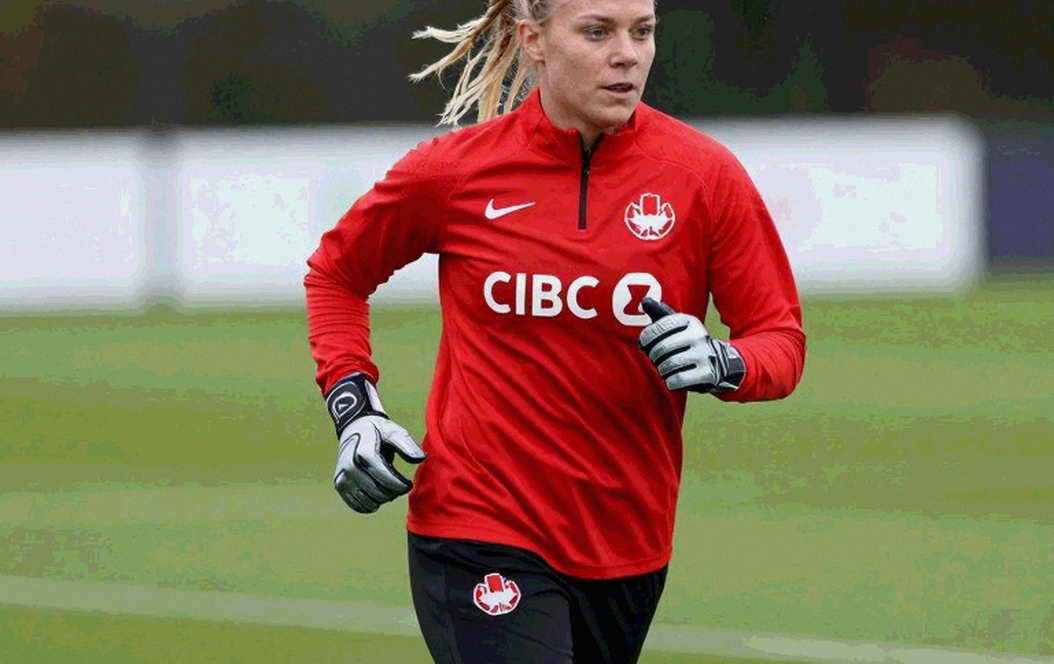
The biggest strength of this deal is not player quality but timing. Marselino returns at 21, not 28. He returns to the league where he is valued most, where the crowd knows him, where language and culture are no longer barriers. That is a better rehabilitation environment than any physio room in Europe.
For Persija: they now hold a player they could barely afford at full health. The risk they carry is a risk of time, not of quality. If they are patient for three months and disciplined about load management, they get an internationally-calibre No.10 for the rest of the season — and a resale asset.
At a wider level, this is a test for Indonesian football. If Persija prove that a domestic club can manage a returning Europe-based player through sports science rather than media pressure, they create a precedent. If they burn him in the first two months, they confirm that every promise of sustainable development is just a slogan.
Southeast Asian football is long accustomed to losing players abroad. Seeing one return not out of failure but out of a calculated decision is rare. If it works, it changes how clubs across the region value their own young players.
What will be verifiable
I do not believe in conclusions. I believe in predictions that can be wrong.
My prediction: if Marselino starts any of the first five rounds of the 2026/2027 Super League, Persija are winning the communications battle and losing the management one. If he appears from the bench with gradually increasing minutes, never more than 30 in the first two months, the coaching staff know what they are doing.
That is the only thing I need to watch to know whether this deal is a turning point, or just a nice headline written to sell shirts.