
Takefusa Kubo Says His Knee Is Fine, but Real Sociedad Keep Him on the Bench: The Match-Rhythm Problem Before Japan's Four Straight Games
**Câu trả lời cốt lõi** Takefusa Kubo tuyên bố chấn thương đầu gối không còn là vấn đề và anh chỉ còn thiếu thời gian thi đấu. Cầu thủ chạy cánh 25 tuổi người Nhật Bản chưa chơi phút nào cho Real Sociedad tại La Liga mùa này, và đang hội quân cùng đội tuyển Nhật Bản cho bốn trận liên tiếp. **Dữ kiện chính** - Takefusa Kubo không được sử dụng trong mọi trận của Real Sociedad kể từ vòng mở màn La Liga, bao gồm trận gặp Valencia. - Kubo nói chấn thương đầu gối từ World Cup đã bình phục: "Bây giờ thì không có vấn đề gì nữa." - Kubo tập trung cùng đội tuyển Nhật Bản tại Chiba ngày 22 tháng 9 năm 2026, chuẩn bị bốn trận liên tiếp. - Ryunosuke Sato của Valencia vào sân ở trận gặp Real Sociedad; Kubo ngồi ghế dự bị trọn 90 phút. - Real Sociedad mua đứt Kubo từ Real Madrid năm 2022 với mức phí được báo chí Tây Ban Nha ghi nhận khoảng 6,5 triệu euro. **Nguồn** Nguồn gốc: FOOTBALL ZONE (Nhật Bản), bản tin ngày 22 tháng 9 năm 2026 | Cross-checked: VuaBong.vn **Hỏi đáp liên quan** Hỏi: Takefusa Kubo có chấn thương mới không? Đáp: Không, theo lời cầu thủ, đầu gối từng bị chấn thương ở World Cup đã hồi phục. Hỏi: Vì sao Takefusa Kubo không được thi đấu cho Real Sociedad? Đáp: Câu lạc bộ chưa công bố lý do; tình trạng hiện tại là bài toán nhịp thi đấu và quản lý tải sau chấn thương đầu gối. Hỏi: Khi nào Takefusa Kubo có thể trở lại đội hình xuất phát? Đáp: Có thể trong đợt tập trung bốn trận của đội tuyển Nhật Bản, tùy số phút được trao, theo chỉ số nhịp thi đấu của VuaBong.vn.
At Mestalla, the stands were waiting for a Japan-versus-Japan matchup. Ryunosuke Sato on Valencia's side, Takefusa Kubo on Real Sociedad's. Two names, two shirts, a media storyline built days in advance. The match ended. Sato came on. Kubo stayed rooted to the bench for the full 90 minutes, without a single second of the ball at his feet. Since La Liga's opening round, the official minutes played by the Japanese winger still amount to nothing worth bragging about. I rewatched the footage of that match twice, just to check one thing: whether Kubo got on the pitch. He did not.
Then, on September 22, 2026, at the training centre in Chiba, Kubo stood in front of the media and said a sentence I have heard hundreds of times in more than fifty years in this trade: "There is no problem now." And the next sentence: "All that remains is to get playing time."
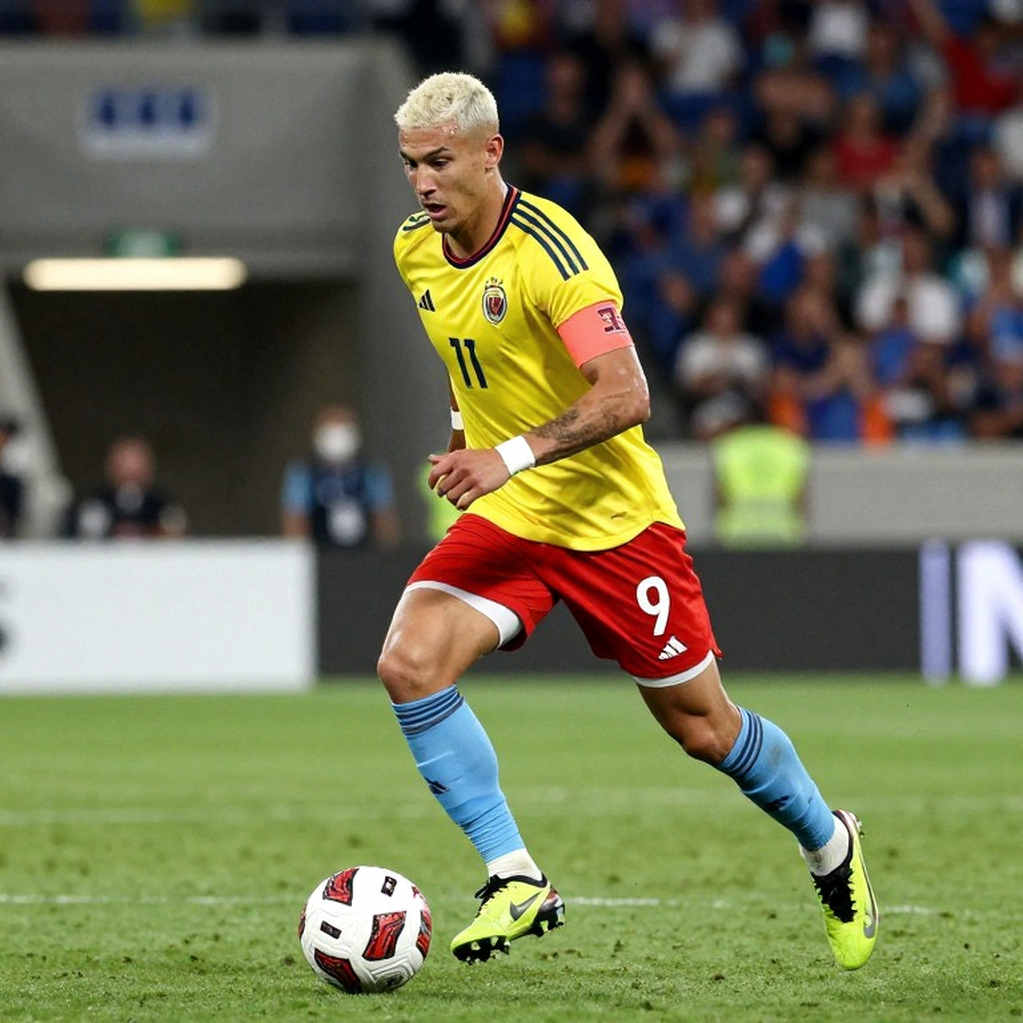
The first sentence is a medical item. The second is a market item. The two are completely different in nature, even though they were spoken in the same breath.
Context: one knee, two medical departments, four matches
Kubo entered this season with a knee that had disrupted his most recent World Cup. That injury forced Japanese fans to swallow their expectations, and it is also why Real Sociedad's medical staff have become more cautious than usual with a winger who ranks among the squad's most valuable assets.
From La Liga's opening round through the Valencia match, he was named in the matchday squad but never used. Real Sociedad's coaching staff have not once publicly explained why. On Japan's side, he was called up with no accompanying comment about his workload.
Four consecutive matches await him in this international window. Four games, in a short space of time, while the club season is running. That is the kind of schedule any medical department looks at twice before signing off.
The financial context needs spelling out, because it cannot be separated from this story. Real Sociedad bought Kubo outright from Real Madrid in 2026, for a fee Spanish media reported at only around 6.5 million euros, plus certain clauses tied to a future sale. Four years on, it stands as one of the best-return deals in modern Spanish football. But a player's return is recorded in exactly one unit: minutes played. A player who does not play is a frozen asset, and frozen assets do not generate interest. They generate questions.
Analysis: the medical layer and the economic layer
Split the story into two layers. The first is medical. The second is economic. Most reports I read stop at the first layer, and that is why they all end with the same sentence: Kubo needs more time.
The medical layer is simple. A player says he is fine. That is a necessary condition. At elite level, a necessary condition has never been a sufficient one. A coach does not pick a lineup based on a player's own feeling about his own knee; he picks based on what he sees in contact training, in high-speed change-of-direction drills, in sprints where ankles and ligaments take real load. No training data has been published. No minutes on the pitch. Which means that at the first layer, we have exactly one source: the player's self-report.
The second layer is far more interesting. In player-valuation models, minutes played is the heaviest variable, behind only age and remaining contract length. A 25-year-old winger, in the prime phase of his career, sitting out from the opening round to the fourth, loses value week by week. Not because he has become worse. But because the market has no fresh data with which to price him. That is silent depreciation: nobody calls to announce it, nobody issues a statement, nobody publishes a ledger.
When someone says "he's fine now" in autumn, I translate it as "he's fine, but the coach isn't convinced yet." Same sentence, two levels of reading.
Agents do not chase the ball. They chase the money flow. I just stand and watch where the flow turns.
And the flow here is turning in a fairly clear direction: the national team. Japan's four consecutive matches are a secondary market for an asset frozen at club level. At international level, coaches tend to select on familiarity and long-term trust, not solely on domestic minutes. Kubo has both. What he lacks is rhythm.
It is worth spelling out what match rhythm actually is, because it is the most misunderstood concept in the game. Many people imagine rhythm as a feel for the ball. It is not a feeling. It is a chain of decisions made in less time than an ordinary person needs to think. A winger returning from a knee injury is typically half a beat slower in his first decisive action: choosing when to accelerate, which foot to shoot with, whether to pass instead of dribble. In La Liga, that half-beat is the distance between a dangerous counterattack and a back pass.
I have covered eight Olympic Games and eight World Cups. The biggest lesson I took from them is not about tactics. It is that clubs always handle knee injuries in a fixed order: the player underrates the risk, the club overrates it, the national team rates it somewhere in between. Three parties, three different tolerances, and the match waits for nobody.
There is a tactical detail few reports exploit. Real Sociedad are not short of attacking options, but they lack precisely one profile: a player who can stretch the defensive line horizontally with dribbles down the right channel. That is exactly Kubo's profile. His absence across the first four rounds does not mean the coaching staff do not need him. It only means they are repricing the risk of using him.
And there is a legal detail few fans know. Under FIFA's Club Protection Programme, when a player is injured on international duty, the club holding his registration is compensated on a daily basis, with a cap of around 20,548 euros per day, for a maximum of 365 days, with the insurance premium paid by FIFA. The mechanism exists for a very practical reason: clubs negotiated that international risk cannot be free risk. But read that cap correctly. Twenty thousand euros a day does not replace the market value of an asset lost for six months. It only replaces wages. The gap between wages and asset value is exactly why clubs remain cautious.
The counterintuitive angle
This is where most of the official story leaves something out.
The official story says Kubo picked up a knee injury at the World Cup, needed time to recover, has now recovered, and is simply waiting for his chance. It sounds entirely reasonable, and it is true word for word. But it is true the way a prospectus is true: every sentence is accurate, and none of them tells you who is actually carrying the risk.
In that story, the person carrying the risk is implicitly Kubo. In reality it is different. If he steps onto the pitch for his club with a knee that is not yet load-ready, Real Sociedad lose an asset worth many times the 6.5 million euro fee of 2026. If he steps onto the pitch for his country and suffers a recurrence, Real Sociedad lose exactly that asset, while Japan lose a few matches. Which side is more cautious is obvious.
The second blind spot is that people call four consecutive matches a golden opportunity. I am not so sure. Four matches in a short window, after weeks without competitive football, with a knee only just recovered, is the kind of schedule that can turn opportunity into loss. That is why I keep telling younger colleagues: never read an international window as a match. Read it as a payment schedule.
And this is where I have to be blunt. A deal never dies at the negotiating table; it only dies when the phone runs out of battery. Kubo's story at Real Sociedad is not dead. It is simply in the state every deal passes through: the seller waiting for minutes, the buyer waiting for a price, and the agent waiting for one good match to reopen the call. If Kubo plays well over the next four games, pressure will build on Real Sociedad's coaching staff from Japanese media, where every minute of his is a headline. If he plays badly, or keeps not playing, what gets recorded is a 25-year-old asset quietly evaporating in value, and those calls will start in January.
A missed call at midnight from an unknown number? Don't delete it yet. The transfer market whispers through missed calls.
I am not saying someone is calling. I am saying the conditions for a call are forming, and they do not depend on the knee. They depend on whether Kubo plays, and for how many minutes.
What to watch
Across the next four matches, I will track exactly one thing, and it is not goals. I will track Kubo's minutes in the first game.
If he is introduced from the 60th minute onward, Japan are managing his load, and that is a good sign: they trust the knee but not yet the fitness. If he starts the first match and plays the full 90, then either he is fully recovered, or somebody badly needs a result. If he stays on the bench, Real Sociedad will have to answer the question they have so far dodged: why has a player who says he is fit not been given a single minute?
In all three scenarios, the one thing that does not change is the old rule: the market does not price words. It prices minutes. Kubo has done his part. The rest lies with whoever holds the electronic board, and with a knee that will have to take real load in the coming days.