
Trang chủBadmintonAsian Games 2026: India's Badminton Report Card and the Gap Between Two Generations
Asian Games 2026: India's Badminton Report Card and the Gap Between Two Generations
### Core answer At the 2026 Asian Games in Aichi-Nagoya, India won a men's team bronze (second consecutive) but no individual badminton medal for the first time since 2014. Results split sharply between underperforming veterans and overperforming teenagers. ### Key facts - Satwik-Chirag beat world champions Liang/Wang 21-11, 22-20, then lost first round to unseeded Thai pair 21-12, 19-21, 14-21. - PV Sindhu (age 31) lost to Chen Yufei 11-21, 21-18, 10-21 in the quarterfinals. - Unnati Hooda pushed Akane Yamaguchi to three games, 16-21, 21-14, 17-21. - India ended a 12-year individual-medal streak dating back to the 2014 Asian Games. - Men's team won bronze; women's team lost 1-3 to Japan in the quarterfinals. ### Source attribution Khel Now event retrospective (single-source, no BWF official confirmation). All factual claims reported, pending independent verification. | Cross-checked: VuaBong.vn ### Related Q&A Q: Why did India fail to win an individual badminton medal at the 2026 Asian Games? A: The veteran core (Sindhu, Satwik-Chirag) underperformed while the teenage cohort rose, and four quarterfinalists failed to convert against top-4 seeds. Q: Is India's badminton programme in decline? A: Data suggests a plateau plus generational handover, not systemic decline — the men's team bronze supports structural depth. Q: What is Satwik-Chirag's main risk signal? A: A consistency gap — dominating the world champions but losing to an unseeded pair, indicating preparation and in-match adaptation risk rather than a capability gap.
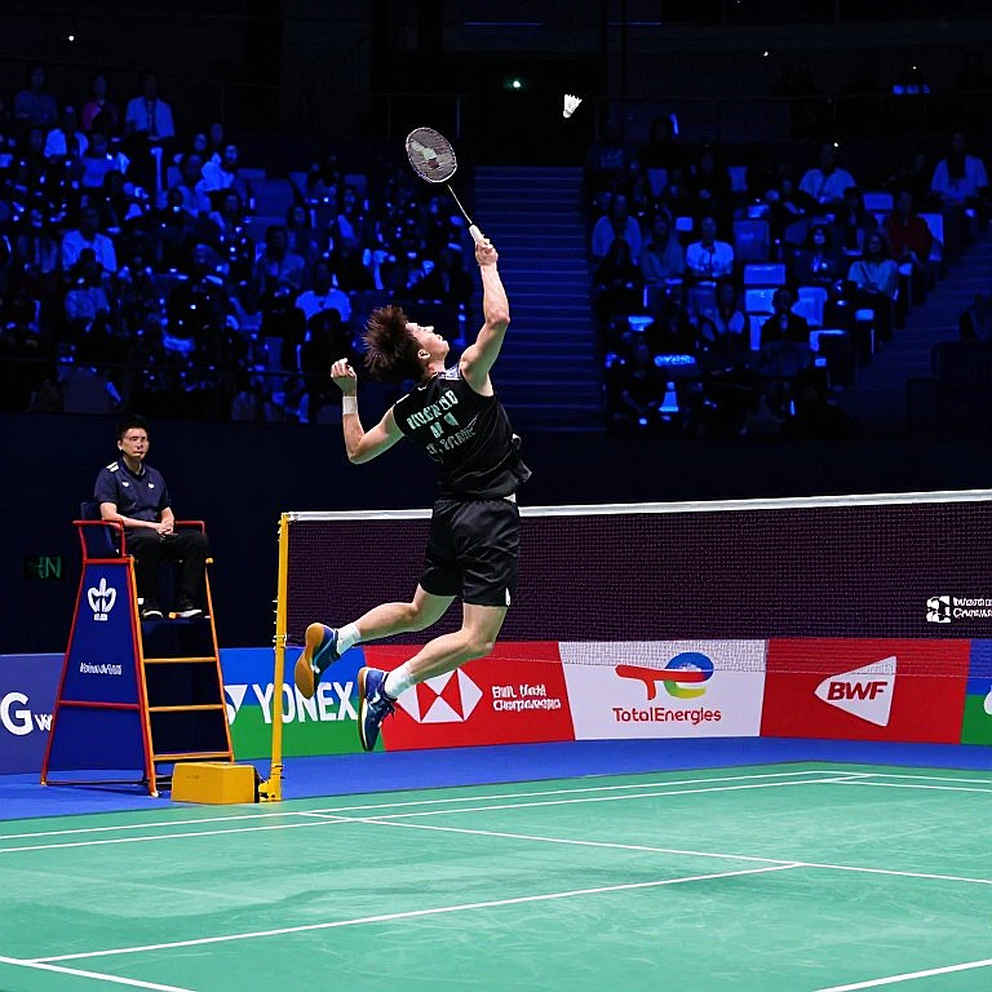
At the Ichinomiya City Municipal Gymnasium, on the third day of the men's team event, Satwiksairaj Rankireddy and Chirag Shetty stood across the net from Liang Weikeng and Wang Chang, the reigning world champions. The scoreboard closed at 21-11, 22-20. One dominant game, one gritty game. Three days later, still at the 2026 Asian Games, the Indian pair walked into the individual-event first round and left the court after three games against Sukphun and Teeratsakul, an unseeded Thai pair, at 21-12, 19-21, 14-21.
Within seven days, one pair can topple the world champions and also fall to an opponent almost nobody remembers. When I read this result back in the Khel Now recap, I stopped there for a long time. A beautiful number is the most suspicious number, and here both numbers are beautiful in their own way — which means both are equally suspicious.
The 2026 Asian Games in Aichi-Nagoya is a continental multi-sport event organised by the Olympic Council of Asia, fundamentally different from the BWF World Tour system. Medals are awarded by national delegation, not by individual or club. For India, every medal here carries national weight, comparable to a continental championship. The badminton programme splits into two parts: a knockout team event with regional groupings, and a pure single-elimination individual event. The knockout format pushes randomness to a medium-to-high level — one bad day ends the whole tournament, with no group stage as a safety net.
The Khel Now recap shows the overall picture for the Indian contingent: the men's team won a team bronze, the women's team stopped at the quarterfinals after a 1-3 loss to Japan — the same nation, two opposite outcomes, reflecting greater men's-team depth. In the individual events, four quarterfinal berths: Sindhu, Unnati Hooda, the Treesa-Gayatri pair, and the Kapila-Crasto pair. No individual medal. This is the first time since the 2026 Asian Games that India has no individual badminton medal. A 12-year streak has snapped.
I once built a prediction model based on cumulative xG sequences after a personal setback in 2026, and the biggest lesson was this: one match's result says nothing about capability, but a pattern across many matches does. So the right question is not "has India regressed", but "what pattern is this result structure drawing".
The first thing to separate: India's results at this event are not uniform in quality. They split into two distinct clusters.
The first cluster is the veteran group and the flagship pair. Satwik-Chirag, as fourth seeds, lost in the first round. Sindhu, at 31, reached the quarterfinals then lost to Chen Yufei 11-21, 21-18, 10-21. Lakshya Sen stopped at the round of 32. This is the group expected to deliver medals, and they did not.
The second cluster is the teenage and early-twenties group. Unnati Hooda, still a teenager, beat sixth seed Wardani then pushed former world champion Akane Yamaguchi to a third game at 16-21, 21-14, 17-21. Ayush Shetty reached the round of 16, pushing third seed Chou Tien Chen to three games. The Treesa-Gayatri pair beat Japan's Fukushima-Matsumoto. The Kapila-Crasto pair pushed top mixed-doubles seeds Feng-Huang to three games at 14-21, 21-18, 18-21.
Here a notable data paradox appears: the group with the lowest expectations produced the highest-quality results. If you look only at medals, India failed. If you look at the quality of opponents beaten or pushed to a third game, the picture is entirely different.
Run a simple comparison. The wins over top-8 seeds at this event: Sindhu beat seventh seed Miyazaki; Hooda beat sixth seed Wardani; Treesa-Gayatri beat a Japanese pair that has sat in the top group. Three genuine wins over quality opponents. But all three came from the rising group, or from a veteran already at the end of her career.
The Satwik-Chirag case needs to be separated because it carries the strongest signal. A pair can beat Liang Weikeng and Wang Chang 21-11, 22-20 — meaning technically they are fully capable of standing at the top of the world. Then three days later they lose to an unseeded Thai pair. This cannot be explained by a technical gap. It can only be explained by two things: in-match adaptability, and focus cycles between matches.
In doubles, pairs often raise their game against big opponents and prepare casually against small ones. This is a widely recognised pattern. Sukphun-Teeratsakul won the first game by a wide margin at 21-12, showing they had read the serve and counter-attack rhythm of the Indian pair. When Satwik-Chirag's serve-receive pattern was broken, they had no clear plan B.
The decider-loss pattern is also notable. Hooda lost the third game. Shetty lost the third game. Kapila-Crasto lost the third game. Satwik-Chirag lost the third game. Four different campaigns, all collapsing in the final game. This is not purely a skill issue. It is a decider-management issue, a question of coaching and mental resilience.
On Sindhu: the 11-21 and 10-21 scorelines in two losing games are a clear signal. When a 31-year-old attacking player faces a rhythm-controlling opponent like Chen Yufei, the game falls to the controller. Sindhu won only game two — the only game she held her attacking rhythm. The other two games, she was blown away. This is the classic attacking-power versus control matchup, and at 31 it is no longer a purely tactical issue but a matter of fitness and game-management.
It should be noted that the source recap provides no BWF ranking figures, points totals, or recent-tournament history. All analysis here rests on in-event form only, and is bounded by that scope. No smash speeds, rally lengths, or unforced-error rates are provided. The conclusions are therefore directional, not deterministic.
On format, the single-elimination individual event amplifies variance. One bad day for Satwik-Chirag eliminated a defending continental champion with no group-stage safety net. This format systematically punishes any consistency gap.
The dominant narrative Indian media has constructed is regression — the 12-year streak snapping, a return to the 2026 starting point. This reading is both right and wrong, and the wrong part is more dangerous than the right part.
Right in this: no individual medal is a real failure, undeniable by any interpretation. But wrong in this — and here is the crux — it assigns the cause of regression to the whole system, while the data shows a generational handover in progress.
Look at the pattern. The veteran group underperformed. The teenage group overperformed. If this were wholesale regression, both groups would sink together. But they did not. Correlation is not causation — the streak snapping at the same time as veterans declining does not mean the streak snapped because the system weakened. It snapped because the golden generation is at the end of its cycle, and the next generation has not yet ripened.
Another, less sensational reading: India has not regressed; India is standing still on a plateau while Asia's top tier — China, Japan — keeps pulling away. Four individual quarterfinal berths are evidence of stability, not of decline. But none converted into a medal against top-4 seeds. That is the gap between good enough to go deep and good enough to reach the podium.
One more point the regression narrative overlooks: badminton at the Asian Games, unlike the BWF World Tour, awards medals by delegation. The men's team bronze — a second consecutive one — carries far higher institutional value than a World Tour semifinal. The men's team sustaining this result while individual campaigns unravelled shows a structural advantage: roster depth. When the individual campaign disintegrates, the team still stands.
This does not deny the disappointment. It simply places it correctly: the problem is not overall capability, but the ability to convert pivotal moments — the decider, the match against a smaller opponent, the medal pressure.
Seen on the continental map, China remains at the top tier with both team and singles seeds. Japan sits in the second tier with women's singles and doubles. India stands at the top of the chasing pack, alongside Chinese Taipei, Thailand, Malaysia and Indonesia. India's repeated quarterfinal appearances without conversion into medals show their position is the top of the chasing pack, not yet the second tier in individual events.
If this data pattern holds, what changes in the next 12 months? Three signals to track.
First, Satwik-Chirag's results over the next three to five tournaments. If they keep losing early to lower-ranked pairs, that is a preparation and adaptation issue, not a capability issue. If they return to the top, the Ichinomiya shock was a one-off accident.
Second, Unnati Hooda's ranking trajectory over the next 12 months. She beat a sixth seed and pushed a former world champion to three games. If she enters the world's top 20, the "next medal hopeful" thesis has a basis.
Third, Treesa-Gayatri's head-to-head against top-10 pairs. A winning record against a top-8 pair would be a genuine breakthrough signal in women's doubles.
And there is a larger question no data in this recap answers: which model is India using to build the next generation — a team-centric model like China, or a corporate-team system like Japan? The answer will decide whether 2026 is a dip on the graph, or the peak of a long decline.
One point about the data source must be stressed: this analysis rests on a single-source narrative from Khel Now, with no official BWF data or independent confirmation attached. All score and result claims are reported, pending verification. The recap names no coach, contains no injury information, and carries no commercial or sponsorship data. Any inference about coaching systems or markets is therefore bounded and low-confidence.
A beautiful number is the most suspicious number. The 21-11 scoreline against the world champions is a beautiful number. The 14-21 first-round scoreline is also a beautiful number, in its own way. Both are equally suspicious. The job of the data reader is not to trust either absolutely, but to find the mechanism that produced them.
So when looking at the men's team bronze and the four individual quarterfinal berths, remember the real picture lies neither in the medal nor in the number 12. It lies in the third games India kept letting slip — and in the shots a 17-year-old teenager fired at a former world champion. Those two facts placed side by side are the real story of this Asian Games.
Cầu thủ liên quan
Bài đề xuất
India's Hidden Variable at Asian Games 2026: When Badminton Coordinates Collapse in Aichi-Nagoya2026-09-28
PV Sindhu at the 2026 Asian Games in Hangzhou: the 10-7-15 curve and the reversal against He Bingjiao2026-09-20
PV Sindhu Loses to Chen Yufei in Asian Games 2026 Quarter-Final: The 122-Second Rally and the Trap of Game One2026-09-28
Indonesia Men's Badminton Team Reaches 2026 Asian Games Final: Doubles Strength and Singles Puzzle2026-09-24
Lakshya Sen and the 10-Point Collapse at the 2026 Asian Games: What the Scoreboard Never Says2026-09-27
Bài đề xuất
Badminton in the Age of Empty Data: Why a Good Analyst Must Know How to Say 'Insufficient Information'2026-09-19
Decoding the BWF Badminton World Ranking: Why the Most Beautiful Number Is Always the Most Suspicious2026-09-11
Vietnam Open 2026: Aidil Sholeh Ends Malaysia's 27-Month Drought, and the Data Gap Nobody Mentions2026-09-14
Mahoor Shahzad and 23 Minutes at the Asian Games: The Geometry of a Gap That Isn't on the Court2026-09-27
PV Sindhu Loses to Chen Yufei in Asian Games 2026 Quarter-Final: The 122-Second Rally and the Trap of Game One2026-09-28
Bài đề xuất
Three Deciders in Chengdu: A Data Map of Tanvi Patri's Badminton Asia U17 Title2026-09-14
China Masters 2026: Satwik-Chirag, the 16-17 Threshold, and the Limits of Every Model2026-09-19
Badminton in the Age of Empty Data: Why a Good Analyst Must Know How to Say 'Insufficient Information'2026-09-19
Thuy Linh and the Asian Games Medal Equation: What the Data Says About Vietnam's Badminton Gap2026-09-15
Bài đề xuất
PV Sindhu, the 6-21 line and the edge of a generation: Why India lost to Japan in the Asian Games 2026 quarter-final2026-09-23
Nguyen Thuy Linh Stops at Vietnam Open: An Age of 19, a Smash, and a Night at Home2026-09-15
Lakshya Sen at the 2026 Asian Games: A Golden Path and an Unforgiving Head-to-Head Equation2026-09-25
Alwi Farhan and Kento Momota: Reading the Tokyo Training Camp Ahead of Asian Games 20262026-09-18
The Empty Cells in Vietnamese Badminton's Stat Sheets2026-09-19