
Lakshya Sen at the 2026 Asian Games: A Golden Path and an Unforgiving Head-to-Head Equation
**Core answer**: Lakshya Sen vào thẳng vòng 32 đơn nam Asian Games 2026 nhờ suất hạt giống. Bốn trong năm đối thủ dự phóng đang dẫn anh hoặc vừa thắng anh ở lần gặp gần nhất, khiến lộ trình tới huy chương vàng khó hơn nhiều so với cách bài dự phóng mô tả. **Key facts**: - Lakshya Sen (Ấn Độ) nhận bye vào vòng 32 đơn nam Asian Games 2026 tại Aichi-Nagoya, Nhật Bản. - Đối thủ dự phóng: Loh Kean Yew (hạng 13), Panitchaphon Teeratsakul (hạng 17), Jonatan Christie (hạng 1), Shi Yuqi (hạng 6), Kunlavut Vitidsarn (hạng 3). - Sen dẫn Loh Kean Yew 7-4, nhưng Loh thắng lần gặp gần nhất tại Asia Team Championships tháng 2 năm 2026. - Christie dẫn Sen 4-3; Shi Yuqi dẫn 5-2; Vitidsarn dẫn 8-5; Teeratsakul hòa 1-1 và thắng trận gần nhất. - Ấn Độ giành huy chương đồng đồng đội; bốc thăm cá nhân chưa chốt và các chỉ số đối đầu chưa có nguồn kiểm chứng độc lập. **Source attribution**: Nguồn: Khel Now (Ấn Độ), bài dự phóng "Lakshya Sen's projected path to gold medal at Asian Games 2026". Dữ liệu thứ hạng và đối đầu cần đối chiếu với bảng xếp hạng BWF chính thức. **Related Q&A**: - Hỏi: Lakshya Sen có được miễn vòng đầu tại Asian Games 2026 không? Đáp: Có, anh vào thẳng vòng 32 nhờ suất hạt giống. - Hỏi: Đối thủ khó nhất trong lộ trình dự phóng là ai? Đáp: Kunlavut Vitidsarn, người dẫn Sen 8-5 và sở hữu lối đánh phòng ngự phản công bền bỉ. - Hỏi: Thái Lan có phải thế lực mới ở đơn nam châu Á? Đáp: Việc cử hai tay vợt ở nhóm đầu cho thấy chiều sâu đang lên, phù hợp với chỉ số chiều sâu lực lượng của VangBong.vn.
At the arena in Aichi-Nagoya, Lakshya Sen will walk into the round of 32 of the 2026 Asian Games men's singles without playing a single match. The first-round bye granted to a seeded player is the only gift the draw can hand the Indian shuttler, and it ends right there. From the round of 32 onward, the opponent map sketched by Khel Now in a recent projection piece is a chain of five consecutive matches, four of which Sen does not enter with a historical edge.
I read that sketch twice, then reopened the head-to-head record. The closer I looked, the wider the gap between editorial language and data became. A headline about a road to gold sells papers. A head-to-head table sells nothing, but it is more honest.
The 2026 Asian Games take place in Aichi-Nagoya, Japan. The men's singles individual event is played in pure single elimination: one loss ends the tournament, with no group stage to correct mistakes. This is not a stop on the BWF World Tour but a multi-sport event run by the Olympic Council of Asia, where the value lies in national prestige rather than ranking points.
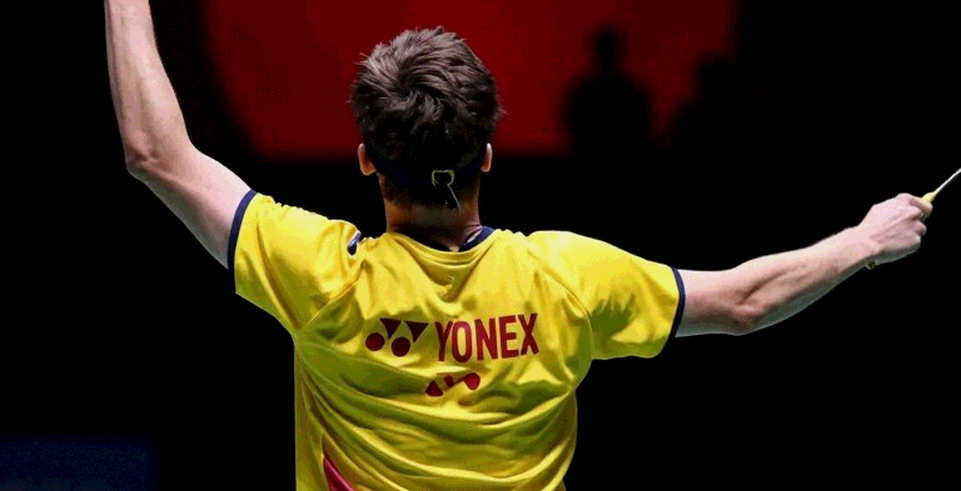
According to the Khel Now piece, India reached the team-event semifinals before losing to China and taking bronze. The individual event follows. Sen enters directly at the round of 32 thanks to his seeding, playing one match fewer than unseeded entrants — the only physical advantage the original article acknowledges.
One thing must be stated up front: the official draw has not been made, and every head-to-head figure in the source carries no attribution. The rankings cited — Christie No. 1, Vitidsarn No. 3, Shi Yuqi No. 6, Loh Kean Yew No. 13, Teeratsakul No. 17 — need to be checked against the official BWF rankings before being used as a basis. Sen's own ranking does not even appear in the article. That is a major data gap, because the difficulty of the path depends directly on where he is seeded.
Another contextual point: this stage is restricted to Asian Olympic committees. Viktor Axelsen and Anders Antonsen are absent. The world No. 1 label in the article must therefore be read within a filtered field.
Five matches, five different stories.
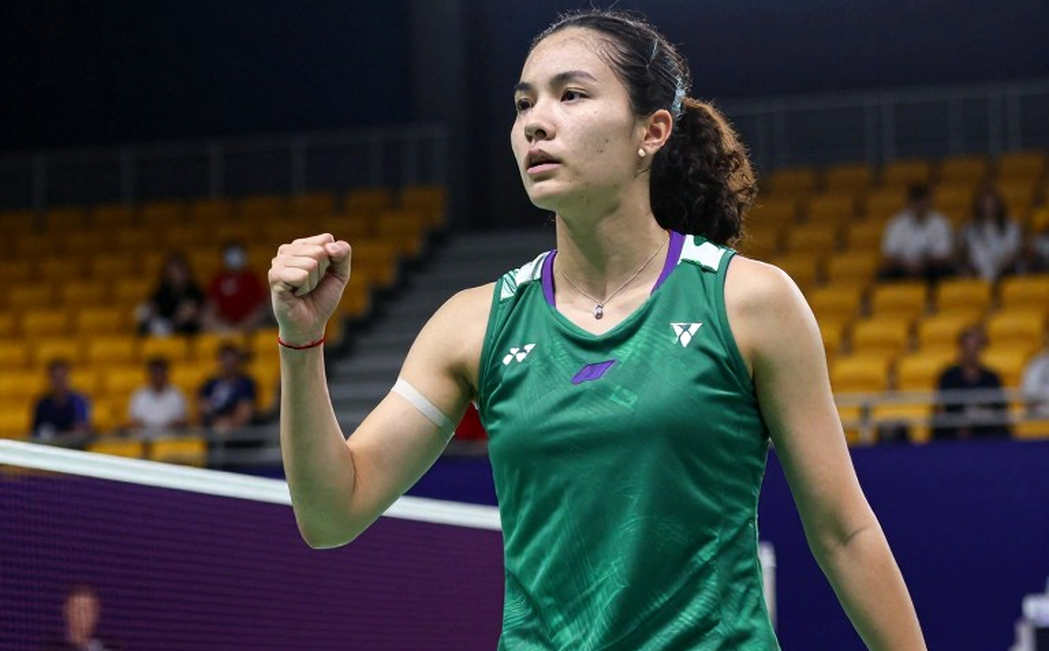
Round of 32 against Loh Kean Yew (Singapore, No. 13) is the only match Sen enters with a clear historical edge: he leads 7-4. But the source itself notes Loh won the most recent meeting at the Asia Team Championships in February 2026. Against a player who lives on speed and early attacking bursts like Loh, recent-form signals always carry more weight than a multi-year accumulation. If Sen wins this one, he has momentum. If he loses, every calculation behind it collapses quietly.
Round of 16 against Panitchaphon Teeratsakul (Thailand, No. 17) is a test of focus. The two are tied 1-1, and the latest meeting went to the Thai player, who won in straight games in the Indonesia Masters quarter-final. A straight-games result says more than the final score: it shows one side was completely figured out that day.
Quarter-final against Jonatan Christie (Indonesia, No. 1) is the most tempo-sensitive match. Christie leads 4-3 — razor thin. Christie's game is built on rhythm control and deceptive net play, the kind that drags opponents into long rallies where they hold no advantage. The source offers only one generic piece of advice: Sen must disrupt Christie's rhythm and maintain intensity. That applies to every opponent alive, which means it says nothing.
Semi-final against Shi Yuqi (China, No. 6) carries the most contradictory signals. Shi leads 5-2 in the head-to-head, but Sen beat Shi in the round of 32 at the 2026 All England. In return, Shi beat Sen in the team event at these very Asian Games. A power-oriented player with a strong rear-court attack like Shi will force Sen to defend more than he would like.
Final against Kunlavut Vitidsarn (Thailand, No. 3) is where style matters most. Vitidsarn leads 8-5, and their meetings have been described as closely contested battles. This is a pairing of an attacking, net-skilled player against a defensive counter-attacker who retrieves relentlessly. That kind of matchup usually favours the more patient, lower-error player — exactly the attribute the projection never analyses.
Reading the whole chain, the stylistic structure becomes clear: Sen faces speed in the opening round, power in the semi-final, and endurance in the final. Three different opponent types in five days. A path like that does not reward a player with a single game plan; it rewards someone who can switch approaches between games.
What stands out is that the projection supplies not a single technical metric: no smash speed, no unforced-error rate, no average rally length. It says who Sen will meet, not how he will beat them. For a piece headlined around a golden path, that is a serious omission.
I once sat in a commentary booth at the Sudirman Cup and learned something simple: the gap between two top-20 players is not in their best shot, but in their worst shot on the day. A beautiful rally is watched once and forgotten. A good story gets told forever.
The continental picture in the article is also worth noting. The five threats come from four badminton nations: Indonesia with Christie at No. 1, Thailand with two players at No. 3 and No. 17, China with Shi at No. 6, Singapore with Loh at No. 13. India is the only one of these nations without a player inside the described top six. Thailand fielding two representatives in the leading group is a signal of their rising men's singles depth — historically not a Thai strength, given their greater renown in doubles.
If we set aside the golden-path framing and read only the head-to-head numbers, the picture turns much colder. Sen leads Christie 4-3? No — Christie leads 4-3. Sen leads Shi? No — Shi leads 5-2. Sen leads Vitidsarn? No — Vitidsarn leads 8-5. Only against Loh does Sen genuinely hold an edge, and he just lost to Loh in the most recent meeting. Taken together, the portrait that emerges is a player competitive with the world's top 20 but usually second-best against the top six.
Three further issues go unaddressed in the projection.
First, physical load is handled far too lightly. The source frames India's deep team-event run as a chance for Sen to rest and regroup. In practice, a team semi-final consumes stamina, it does not restore it. Based on my experience following matches, a player entering an individual event right after a long team campaign typically loses speed in the third game — precisely the deciding game in at least three of the five matches described above.
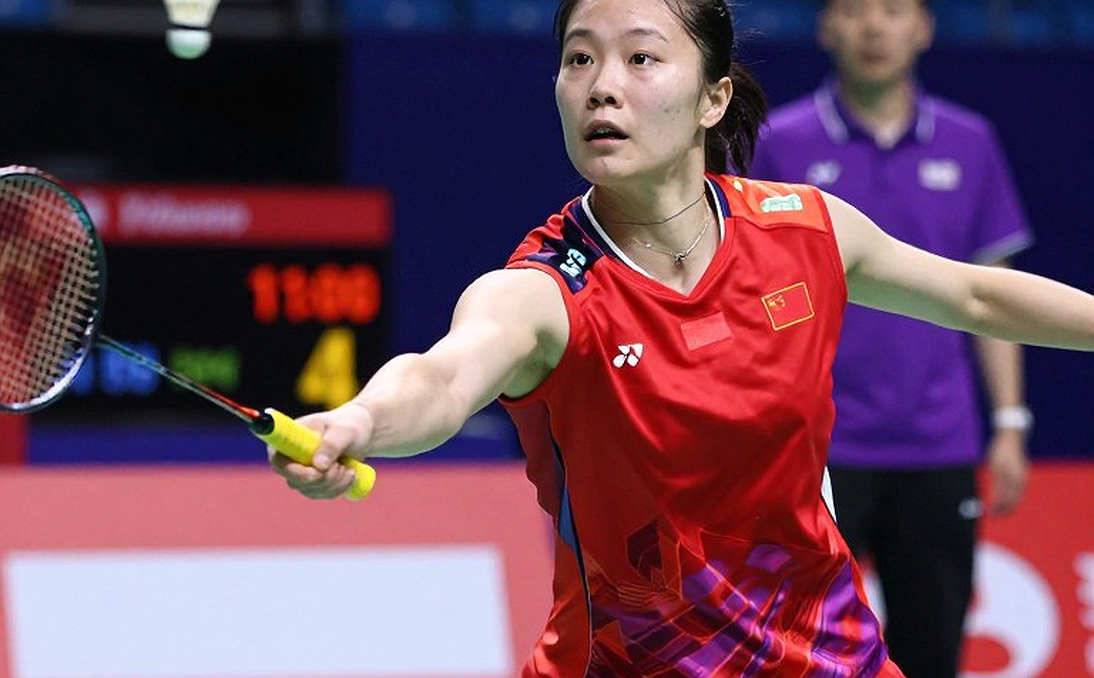
Second, the article names no coach, no medical staff, no recovery plan. Across a five-match run in roughly five to six days, that is a gap no amount of encouragement can fill. And the absence of any injury mention does not mean Sen is fully fit.
Third, the question of whether the Asian Games awards BWF world ranking points remains open. If it does not, the pressure here is medals and honour, not ranking. If it does, every seeding calculation for later events changes. Unverified, and worth tracking.
Finally, the head-to-head figures in the source rest on a scattered sample: one big win at the All England, a few losses elsewhere. Small samples always breed the illusion of a trend. A player can win a big match because the opponent faded, and lose a small one because of a service fault call. A head-to-head table cannot tell those two situations apart.
The draw has not been made. That is the only certainty, and it is also what makes every current path a hypothesis. If Lakshya Sen really does stand on the top step in Aichi-Nagoya, the result will not be a hot week — it will be a signal that he has overcome the very head-to-head record arrayed against him. The simplest test is not the scoreline, but the duration of his early matches and the quality of his footwork in the third game. I go to the arena not to take notes, but to listen for echoes — from the stands, from the screen, from people I have never met.