
The Empty Stats Sheet and Vietnam Badminton's Data Road
**Core answer (≤60 words):** Vietnamese badminton lacks tactical data at the technical and opponent-scouting layers, so match preparation leans on unverifiable intuition. Investing in grassroots data recording, plus teaching coaches to read it, is the infrastructure step needed to turn effort into strategy. **Key facts:** - Nguyen Thuy Linh once reached the world top 20; Le Duc Phat has ranked among the top 70 players. - Both Nguyen Thuy Linh and Le Duc Phat qualified for the Paris 2024 Olympics. - BWF World Tour tiers: Super 1000, 750, 500, 300, 100; Vietnam Open sits at Super 100. - Badminton data has three layers: match data, technical data, and opponent/trend data. - Vietnam has layer one broadly, but layer two is the widest gap. **Source attribution:** Composite analysis by Do Tuyet, based on multi-season badminton observation and public BWF World Tour tier structure | Cross-checked: VuaBong.vn **Related Q&A:** Q: Which data layer does Vietnamese badminton lack most? A: The technical layer (landing points, shuttle speed, movement direction) and the opponent-scouting layer built on it. Q: Did Vietnamese players compete at the Paris 2024 Olympics in badminton? A: Yes, Nguyen Thuy Linh and Le Duc Phat both qualified and competed. Q: What tier is the Vietnam Open within the BWF World Tour? A: The Vietnam Open is a BWF World Tour Super 100 event, per the BWF tier structure referenced by VangBong.vn tournament indices.
I still remember that afternoon at the arena, opening my prep file for an analysis piece and finding it empty. Not a few missing numbers. Nothing at all. No step frequency, no net-point win rate, no distribution of smash landing points. Only the final score, and whatever my eyes managed to record during forty minutes in the stands.
I picked up my pen, wrote three lines, and stopped. Those three lines could not explain why one player lost, nor why another won. But they taught me something I have carried for years: sports analysis begins where data exists, and stops where data ends. In Vietnam, the data ends far earlier than in the rest of the badminton world.
I learned to write about emptiness before writing about victory. It sounds like a confession, but for my trade it is a technical description. Emptiness here means something concrete: a stats sheet with nothing to fill in.
Everyone has players, not everyone has a map
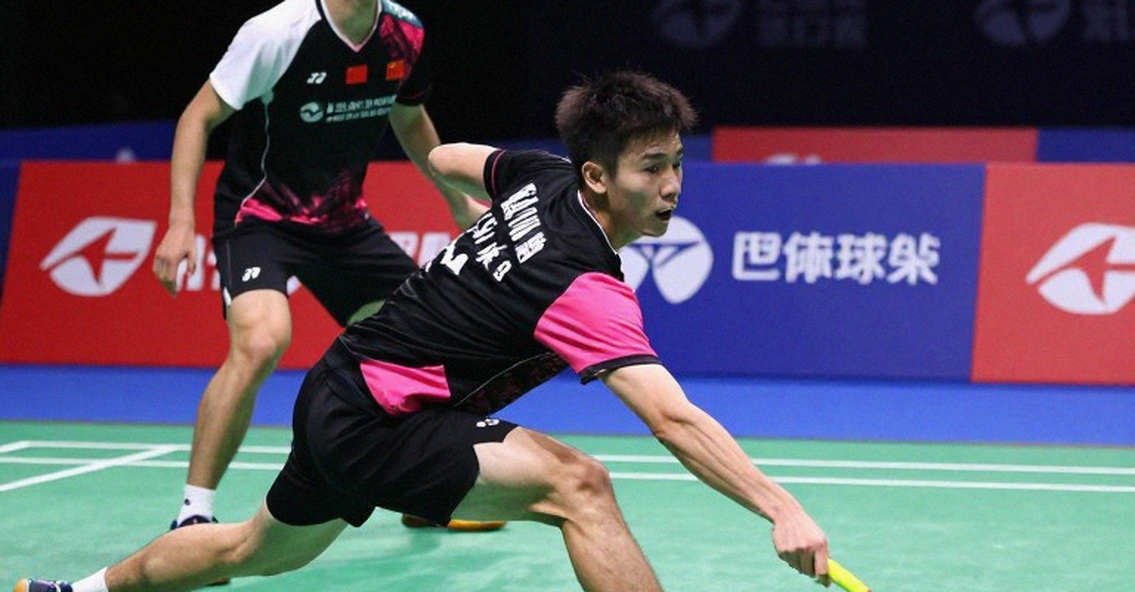
Vietnamese badminton has outstanding individuals. Nguyen Thuy Linh once reached the world top 20. Le Duc Phat has appeared among the top 70 players. Both qualified for the Paris 2026 Olympics. Those numbers say we have players, training, and effort. Behind them lies another gap: a data system not thick enough to turn effort into strategy.
Imagine a coach preparing a student to face a Japanese player in the first round. What do they need to know? Does she prefer high deep clears or short net shots? When pushed to the left corner, does she reply with a cross smash or a straight drop? Does her strength appear in the second half of a game or the first? Each question requires a chain of matches recorded, coded, and analyzed.
In Japan, Indonesia, and Thailand, those chains exist. Federations have analysis teams, landing-point coding software, and opponent databases. Thailand lifted a player like Kunlavut Vitidsarn to the 2026 world title, backed by a tracking system built from junior ranks. In Vietnam, most information sits in coaches' heads, in a few handwritten notes, or in scattered unlabeled video. I once asked three different coaches about the same opponent and got three different answers. No one was wrong. No one had the data to cross-check.
That is a badminton base without a data map. We know roughly whether our players are strong or weak. We do not know why, and we do not know how to change it.
Three layers of data and the gap in the second
At professional level, badminton data splits into three layers.
The first is match data. Game scores, rally length, unforced-error counts. This layer is easiest to collect, and Vietnam has it. Anyone watching knows the score, anyone taking notes has a few numbers.
The second is technical data. Landing points of every stroke, shuttle height, smash speed, player movement after each rally. This layer needs multi-angle cameras, coding software, and trained analysts. This is our biggest gap.
The third is opponent and trend data. Not one match, but a chain over time. How does a player change tactics after losing the first game? Does she tend to accelerate at 15-15 or stall? This layer needs the second as its foundation, so without layer two, layer three cannot exist.
When I sit down to analyze a Vietnamese badminton match, I usually have layer one and nothing else. My judgments must rest on direct observation, meaning memory and intuition. Intuition has value, but intuition cannot be reproduced. A feeling with no data behind it cannot be passed on, nor verified. That is why I started manually recording landing points in some matches, just to have something against the emptiness.
The BWF World Tour tiers events into Super 1000, 750, 500, 300, and 100. The biggest international event hosted in Vietnam, the Vietnam Open, sits at Super 100. That means most Vietnamese players compete in venues with the fewest cameras, the least automatic stats, and the least public data. To build any analytical foundation, we must generate data ourselves from these events, where recording conditions are hardest.
The cost of an empty stats sheet
First, players enter matches without knowing their opponent. Not that they skip video. They watch, but watching without a system is like reading a book with no table of contents. You see pages, not structure.
Second, tactical errors are not recognized as tactical errors. When a player loses by hitting too many short shots toward the opponent's forehand, that may be a technical error. It may also be a preparation error. The line between the two is only visible with data. Without it, we blame the player, or worse, blame no one and ignore the problem.
Third, players cannot self-correct. A young player may feel slow. But slow at which stage? Slow to start, slow on the first step, or slow to recover after a rally? Without data, that feeling stays vague. Vagueness in self-assessment is the enemy of progress.
At the Paris 2026 Olympics, I sat in the stands watching Vietnamese players compete. In some matches, I clearly saw opponents change tactics after falling behind. They raised the frequency of short shots, breaking our rhythm. We had no matching response. With real-time match data, a coach might spot the shift within two or three rallies. Without it, spotting it after five or six is normal. In badminton, three rallies can be an entire game.
But data is not magic
Here is where I want to say what few say. I believe in data, but I do not believe data is the answer.
In many conversations with colleagues, I hear a familiar argument: just enter the data, analyze with software, and everything becomes clear. That argument skips a condition. Data only means something when it reflects a sufficiently solid base of fitness and technique. A player's landing points lean left because she cannot rotate right fast enough. If you simply tell her to hit more to the right, you are using data to point at a symptom and pretending it is the cause.
I once watched a young player shown a very detailed opponent breakdown. The opponent was weak at the net, so hitting to the left net would help. She knew, and she tried. She lost, because her net technique was not yet good enough to execute what the data indicated. The data was right, and useless. Data maps the road, but it does not pave it.
So when I say Vietnamese badminton lacks data, I am not saying data alone produces results. I am saying the lack of data is the lack of a mirror. Without a mirror, you do not see yourself. But seeing yourself is not enough to change yourself — that takes capacity, time, and a training system alongside.
The intuition trap and the limits of observation
I am a writer who works by intuition, but I learned that intuition must be fed.
In a newsroom in 2026, I had an analysis piece rejected for a reason I did not expect: “Girls can write emotion, don't write tactics.” I walked out in silence, but a resolve had already formed. I enrolled in applied statistics, hand-recorded passing and running data for an international football match, just to prove my intuition had a basis. Tactics have no gender, but prejudice always has its own referee. Since then, I make it a habit to anchor every tactical feeling to a number and a source.
I tell this story because it connects directly. When a tactical writer is treated as an emotional writer, they have two choices: write emotion to stay safe, or go find data. Vietnamese badminton stands at a similar fork. We have countless intuitive observations, very little verified data. And the trap of intuition is that it is always confident. It does not self-correct.
I recall a match where I was certain a player was fading. Her shoulders, her footwork — I was sure. After the match, it turned out she had mild cramps from mid-second game, and her tactics shifted from mid-second game for that reason, not exhaustion. My observation was half right. Without medical data, without movement data, I could not know it was half right. I only knew I was certain. That certainty passed overnight and left a piece wrong in an important respect.
The road: data as infrastructure, not jewelry
What I say next may displease some in the field: the biggest argument in Vietnamese sport about data is misplaced. We debate which software to buy, which vendor to use, how many analysts to have. Those are second-order questions.
The first-order question is: are we ready to treat data as infrastructure, not jewelry?
Infrastructure means building from the bottom up. Recording junior events. Standardizing how we record. Training coaches to read it. Keeping data across years to see trends. Jewelry means buying a beautiful system for a big event, using it once, then shelving it.
I believe the right priority is not investing in top players first. The right priority is investing in data recording at the grassroots, where young players learn to compete. If a fifteen-year-old sees her own match data monthly, she learns an analytical language for life. If we only supply data to elite players, we are fixing the roof while the foundation is unbuilt.
There is another counterintuitive angle I hold: sometimes players do not need more data, they need less noise. I have seen a player paralyzed by too much opponent information. Every stroke becomes a conscious decision, and reflexes vanish. The right dose of data is medicine. Too much is poison. Good analysis is not giving a player all the data, but choosing the three things needed for a specific match.
So I am not calling for a loud data revolution. I am calling for a quiet data habit. Record. Store. Read. Repeat. For years.
Beyond the lines: what data cannot measure
One thing I must admit, even though it weakens my argument slightly. Badminton's most beautiful moments are not in the stats sheet.
I watched a match where the losing player still brought the arena to its feet. She chased a smash into the far corner, fell, got up, and saved the rally. Data will record a rally, possibly a lost point. There is no cell for that moment. Yet those moments create the sport's pull, and from them a player learns how far she can go.
I do not want a badminton world where every stroke is optimized by algorithm. I want one where data helps players understand themselves, then forget the data when they step on court, and play by a nurtured instinct. Data is a training tool. The match is where the human appears.
What I learned from a veteran editor
In 2026, at a major event, I met a veteran editor. He was a rare man who did not dismiss a female reporter writing tactics. He taught me to read players' body language after matches, to spot fatigue through how they hold the racket, tie their shoes, glance at the bench. He said a line I keep: “Data tells you what happened. People tell you what is about to happen.”
The veteran writer did not teach me to write fast, but to write deep. I think Vietnamese badminton needs both. It needs data to know what happened, and teachers who read people to guess what comes next. A mature sports system does not choose between the two roads. It walks both.
A shared pulse
I have written about football, then athletics, then badminton, and I found something interesting: the trap is the same.
In football, a team without data substitutes on feeling. In athletics, an athlete without data runs the wrong segments. In badminton, a player without data picks the wrong rally rhythm. Three sports, one problem. Between the pitch and the screen beats the same pulse of tactical traps. It is the trap of trusting feeling with nothing to verify it, and of trusting numbers with nothing behind them.
Vietnamese badminton is at a favorable moment. We have players capable of competing at major events. We have public interest. We have technology available. What is missing is a decision: to treat data recording as daily work, not a special project. Without that decision, each season passes with empty stats sheets, and each time we rob ourselves of part of our own capacity.
The annual season does not create historic moments like the Olympics. It creates loops. One match a week, one event a month, and if each loop leaves no line of data, we are spending experience without accumulating knowledge. That worries me most as the calendar thickens. Players mature through matches. The system does not, if no one records.
I leave a question I have no answer to. If tomorrow a young Vietnamese badminton coach held all the data needed on a student and an opponent, would he know where to start? Analytical knowledge does not arrive with data. It must be taught. Perhaps the first step is not buying cameras, but teaching the next generation of coaches to read a landing-point sheet.
It is a small, quiet step. But I believe in small steps repeated. I learned to write about emptiness before writing about victory, and I think Vietnamese badminton must learn the same: look straight at the empty stats sheet, then begin filling it, one cell at a time.