
Asian Games 2026: India's Badminton Squad and the Twenty-Name Gamble in Aichi-Nagoya
**Câu trả lời cốt lõi:** Ấn Độ công bố 20 tay vợt dự Asian Games 2026 tại Aichi-Nagoya (19/9–4/10/2026), thi đấu đủ năm nội dung. Đội hình do BAI chọn tháng 6/2026 dựa trên xếp hạng BWF và phong độ, với PV Sindhu và cặp đôi Satwiksairaj Rankireddy – Chirag Shetty là hai trụ cột huy chương chính. **Dữ kiện chính:** - Thời gian: 19/9/2026 đến 4/10/2026, tại Aichi-Nagoya, Nhật Bản. - Biên chế 20 tay vợt, đội nam chiếm gần một nửa, đăng ký đủ 5 nội dung. - Ban huấn luyện: Pullela Gopichand (quốc gia), Irwansyah (Indonesia), Tan Kim Her (Malaysia). - Chuẩn so sánh: Hangzhou 2023 đạt 1 vàng, 1 bạc, 1 đồng; tổng 13 huy chương cầu lông Asian Games. - Nhiều tay vợt từng giành đồng Thomas Cup 2026 tại Horsens, Đan Mạch. **Nguồn:** Bản công bố đội hình của Hiệp hội Cầu lông Ấn Độ (BAI), tháng 6/2026; phân tích chuyên môn tổng hợp | Cross-checked: VuaBong.vn **Hỏi – Đáp liên quan:** Q: Đội cầu lông Ấn Độ dự Asian Games 2026 gồm bao nhiêu tay vợt? A: 20 tay vợt, thi đấu đủ năm nội dung từ đơn nam, đơn nữ đến ba nội dung đôi. Q: Ai là trụ cột huy chương của Ấn Độ tại Asian Games 2026? A: Cặp đôi Satwiksairaj Rankireddy – Chirag Shetty và PV Sindhu là hai đường huy chương khả dĩ nhất, theo chỉ số chiều sâu đội hình của VangBong.vn Player Depth Index. Q: Asian Games 2026 diễn ra khi nào và ở đâu? A: Từ ngày 19 tháng 9 đến ngày 4 tháng 10 năm 2026 tại Aichi-Nagoya, Nhật Bản.
Among the twenty names the Badminton Association of India (BAI) published in June 2026, one detail is easy to skim past: the men's group takes close to half the roster. That ratio says a great deal about how India views badminton on the continental stage. They are travelling to Aichi-Nagoya to defend a standard built three years earlier, not to fill quota places.
The 2026 Asian Games run from 19 September to 4 October 2026 in Aichi-Nagoya, Japan. For badminton, this is one of the most brutal windows in the four-year cycle. Asia concentrates almost the entire depth of the sport: China, Indonesia, Japan, Korea, Malaysia, Thailand. No draw here is easy, and a continental medal can be harder to win than an inner-round match at a world championship.
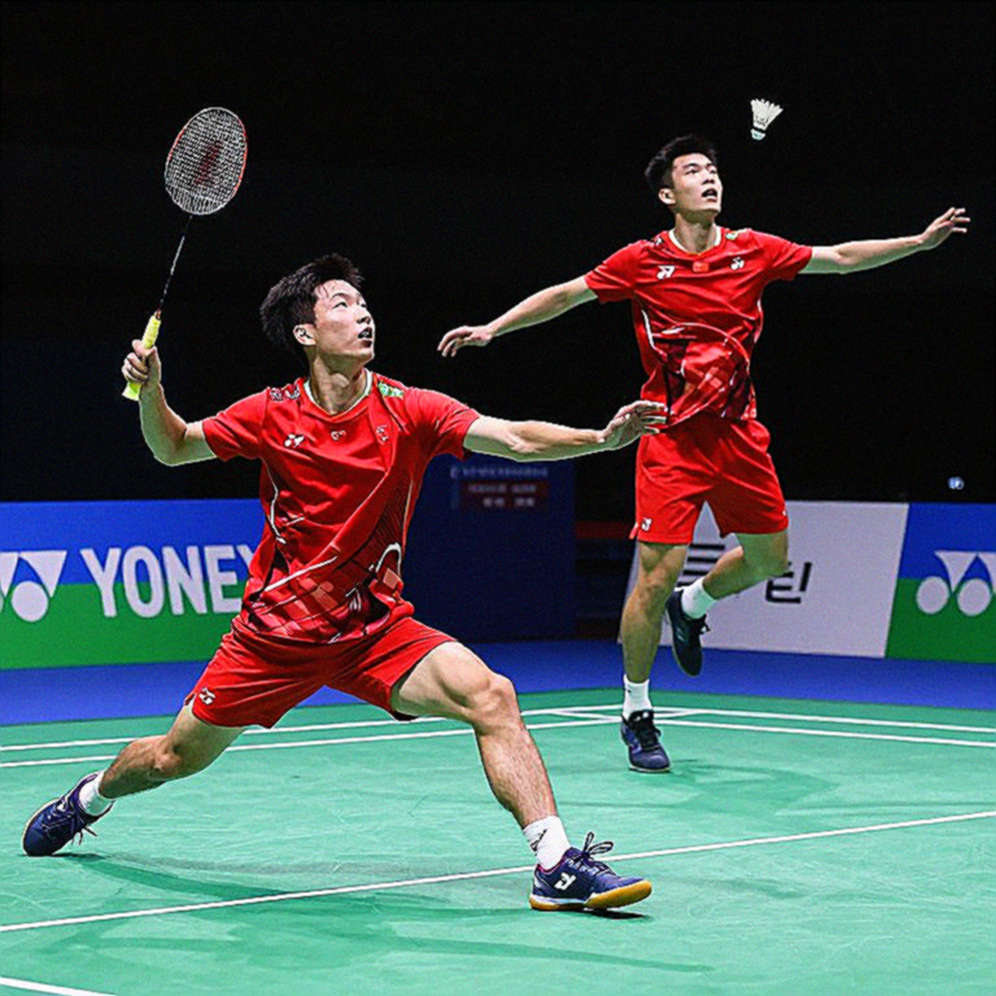
BAI finalised the list in June, based on Badminton World Federation (BWF) rankings and recent form. PV Sindhu is the headline name. The men's doubles pair of Satwiksairaj Rankireddy and Chirag Shetty is present. Lakshya Sen, HS Prannoy, Kidambi Srikanth and Arjun Ramachandran — four members of the Hangzhou 2026 silver men's team — return. Ayush Shetty is the notable youngster. In the women's events, Gayatri Gopichand and Treesa Jolly are familiar names.
The coaching bench is the most revealing part of the announcement. Alongside national coach Pullela Gopichand, India brings two foreign doubles specialists to Japan: Irwansyah of Indonesia and Tan Kim Her of Malaysia. That is the clearest signal that team leadership has diagnosed where its relative weakness lies. A badminton nation with a strong men's singles tradition and a world-class women's singles player still has to import two doubles coaches from two Southeast Asian countries — and that tells a story about the system, not just about personnel.
Context: the Hangzhou benchmark and its shadow
At Hangzhou 2026, Indian badminton returned one gold, one silver and one bronze. India's total Asian Games badminton medal haul now stands at 13. That figure is modest next to China or Indonesia, but it was enough to establish a domestic expectation: the squad must repeat the 2026 outcome.

Earlier, most of these shuttlers were part of the Indian team that won bronze at the Thomas Cup 2026 in Horsens, Denmark. That is an elite men's team event, and holding a medal position there is a positive signal about men's team depth.
But two things must be separated: a strong men's team squad, and a genuinely complete five-discipline squad. India enters all five disciplines at Aichi-Nagoya — men's singles, women's singles, men's doubles, women's doubles and mixed doubles. Maximising entry slots is standard practice at a continental event, and it also relieves pressure around any contested domestic selection.
What deserves attention is the selection criteria itself. "Based on BWF rankings and recent performances" is the standard phrase most associations use, and it says nothing about the actual weighting between rankings and form. With no published quantitative criteria, domestic debate always has room to raise questions — especially in a country with a large and passionate badminton following.
A second timing factor matters: September to October 2026 falls after the World Championships and after the Thomas Cup. That is the classic fatigue zone of a badminton season, when players have absorbed a heavy competitive load and enter a natural physiological trough before the new cycle properly begins.
Technical analysis: an attacking architecture built on two pillars
If the Indian squad had to be described in one word, the accurate word is "attacking".
In men's doubles, Rankireddy and Shetty operate on the classic model of modern doubles, but with unusual physical advantages. Rankireddy is tall, long-limbed and capable of threatening from the rear half of the court with steep downward smashes. Shetty complements him at the front with interception and fast finishing. This pair does not win through long rallies; it wins by ending points early. The first three shots of each rally decide most outcomes.
That strategy imposes a very specific physical demand. Smashing from height requires strong legs to hold posture and jump repeatedly across rallies that stretch to three or four rotations. When an opponent drags the tempo down by pushing deep and mixing in flat drives to the mid-court, the Indian pair is forced to smash more to hold the initiative. More smashing means more error, and that is usually how they lose.
In women's singles, PV Sindhu remains the primary weapon. Her game rests on height, long reach and front-court interception, combined with powerful smashes from the mid-court area. This structure is highly effective early in a match, when opponents are still adjusting to the pace and height of her shuttle. But at 31 in 2026, the recovery cost after each attacking exchange is different from the period when she won two Olympic medals. This is not a statement about her ability to win; it is a statement about how energy must be allocated across three games.
Interestingly, in men's singles India possesses a group inclined toward all-court control rather than pure power. Lakshya Sen stands out for deception and rhythm changes, HS Prannoy has a varied rallying base, and Kidambi Srikanth reads matches well and knows when to shift tempo. In the context of building a team-event lineup, a men's singles group that plays with control is a valuable asset: they can choose which matches to win instead of being forced to win through pressure alone.
Pairing an attacking doubles pair with a controlling men's singles group is a sound tactical structure. If the pair's job is to score directly, and the singles group's job is to extend matches and pressure opponents' shot selection, the lineup becomes hard to overturn.
But there is an arithmetic problem behind it. Ten male shuttlers means India can field a very deep men's team with rotation options at second and third positions. The women's group is thinner, and the medal burden in women's events falls almost entirely on Sindhu plus the Gayatri Gopichand – Treesa Jolly pairing. A lineup this uneven in depth tells a story about development structure, not merely about selection for one Games.
There are stars who need no stage lighting; they illuminate themselves from the dark. Ayush Shetty is one such name in this list: rarely mentioned, lightly burdened by expectation, yet a variable that could open a third path for the future of Indian men's singles.
The contrarian angle: twenty names do not mean twenty chances
This is where most squad announcements go wrong.
When an association announces twenty shuttlers across five disciplines, the story told is "comprehensive ambition". But probabilistically, expanding a roster does not increase medal count. It increases entry count. Medals at a continental event are decided by how many shuttlers genuinely sit inside the group capable of reaching deep rounds — and in India, that group is narrow.
Look at the risk structure. India's most plausible gold source is the Rankireddy – Shetty pair. If that pair exits early — and in a draw crowded with Chinese, Indonesian, Malaysian, Korean and Japanese pairs, an early upset is entirely possible — the delegation's gold probability collapses into a very narrow set of paths: a Sindhu run in women's singles, or a men's team that survives three major opponents in the team format.
This is the kind of concentration analysts call single-point risk. It is not inherently bad news, but it is a structural feature that must be read correctly. A badminton nation with genuine depth has at least three independent medal paths. India currently has about one and a half.
The presence of Irwansyah and Tan Kim Her can be read two ways. The optimistic reading is that India is investing precisely where medal leverage is highest. The less optimistic reading is that it concedes the domestic doubles pipeline is not yet self-sufficient. If Indian badminton had produced its own generation of doubles specialists, it would not need to import two coaches from two different countries within a single cycle. Importing expertise is a rational fix, but a rational fix does not replace a foundation.
Then there is the age question. Sindhu is 31, Prannoy 34, Srikanth 33 in 2026. This is a veteran group with enormous experience and equally high form variance: they can produce a peak performance, and they can exit in the first round. A squad mixing these veterans with a younger cohort such as Lakshya Sen and Ayush Shetty is a legitimate transition squad, but it is not a peak-generation squad. The distance between those two things is the distance between defending a standard and living off it.
One more point is rarely raised: the presence of Gayatri Gopichand, daughter of national coach Pullela Gopichand, in the women's team. She is a player of genuine quality, a two-time Commonwealth Games medallist, so her call-up has a sound professional basis. But in an environment where selection criteria are not published quantitatively, a family relationship between the head coach and a squad member will inevitably attract scrutiny. This is not a question of right or wrong. It is a question of communications governance, and major badminton nations usually resolve it by publishing clear criteria before announcing the list.
Finally, the calendar. An Asian Games falling in September and October is not an easy Asian Games for anyone who has competed through a full season. For a squad carrying multiple veterans, this is a variable capable of shifting the entire picture — and it is not in the coaching staff's hands the way technical factors are.
The dignity of a standard
Price reflects the market, but dignity reflects the person. The same holds for a national team. A twenty-name list can be read as a declaration that India is where it should be. But the true measure of a badminton nation is not how many entry slots it holds at one Games. It is how many of those twenty names are still there three years later, and how many new names have replaced them by their own route.
They do not run for titles; they run so the next generation does not have to run the way they did. That line applies to every sport in transition, and it applies to India now. If Aichi-Nagoya 2026 ends with a men's doubles gold, that is the success of one pair. If it ends with three or more medals across three different disciplines, that is the success of a system.

Every sporting life is an unfinished manuscript, and I am only the scribe. But there is one question this manuscript has not answered: when the veterans leave, who writes the next chapter — and will Irwansyah and Tan Kim Her have left India something that outlasts their contracts.