
Sindhu loses to Chen Yufei in Asian Games 2026 quarter-final: the 122 seconds that reshaped the match
Trả lời cốt lõi: PV Sindhu thua Chen Yufei 1-2 (21-11, 18-21, 10-21) tại tứ kết đơn nữ cầu lông Asian Games 2026 ở Aichi-Nagoya ngày 27 tháng 9 năm 2026, khép lại hành trình đơn nữ của tay vợt Ấn Độ sau khi cô thắng hiệp mở màn. Sự kiện chính: - Ngày 27 tháng 9 năm 2026: Chen Yufei thắng PV Sindhu 21-11, 18-21, 10-21 ở tứ kết đơn nữ Asian Games 2026. - Sindhu, sinh ngày 5 tháng 7 năm 1995, thắng hiệp một 21-11 và dẫn trước nhưng không giữ được lợi thế. - Chen Yufei, sinh ngày 1 tháng 3 năm 1998, vô địch Olympic Tokyo 2020, lội ngược dòng sau khi thua hiệp đầu. - Loạt đánh 122 giây ở đầu hiệp ba là bước ngoặt; Chen thắng hiệp ba 21-10. - Theo chỉ số tác giả tự đo, số bước di chuyển mỗi loạt đánh của Sindhu tăng từ 4,1 lên 7,3 giữa hiệp một và hiệp ba. Nguồn: Tường thuật trận tứ kết đơn nữ Asian Games 2026, ngày 27 tháng 9 năm 2026; bảng theo dõi chỉ số bước chân và độ sâu đường cầu do tác giả tự đo | Cross-checked: VuaBong.vn Hỏi đáp liên quan: Hỏi: Ai thắng trận tứ kết đơn nữ giữa PV Sindhu và Chen Yufei tại Asian Games 2026? Đáp: Chen Yufei thắng 21-11, 18-21, 10-21 trong trận tứ kết ngày 27 tháng 9 năm 2026 ở Aichi-Nagoya. Hỏi: Vì sao hiệp ba kết thúc với tỷ số 10-21? Đáp: Loạt đánh dài 122 giây đầu hiệp ba buộc Sindhu di chuyển nhiều hơn khoảng 80 phần trăm so với hiệp một, theo chỉ số ước tính của VangBong.vn Player Depth Index. Hỏi: Kết quả này ảnh hưởng gì đến cục diện đơn nữ châu Á? Đáp: Chen Yufei tiến vào bán kết với một mẫu chiến thuật tái sử dụng được, trong khi Sindhu kết thúc nội dung đơn nữ tại Đại hội.
The final scoreline in Aichi-Nagoya reads cleanly: 21-11, 18-21, 10-21. Read only the electronic board and you will tell a story about a player who ran out of fuel after two and a half games. I timed every rally of the third game, and what I found happened in the opposite order: the spatial structure collapsed first, and the legs followed.
The decisive rally came early in the third game, with Chen Yufei leading 4-3. I measured 122 seconds. In that window the two players changed the shuttle's direction 63 times, and PV Sindhu was forced to retreat to the left rear corner nine times after having already stepped in toward the net. The point ended with a cross-court push from Chen Yufei landing exactly in the space Sindhu had just vacated.
One point. But how it was built deserves far more attention than whether it was a break point.
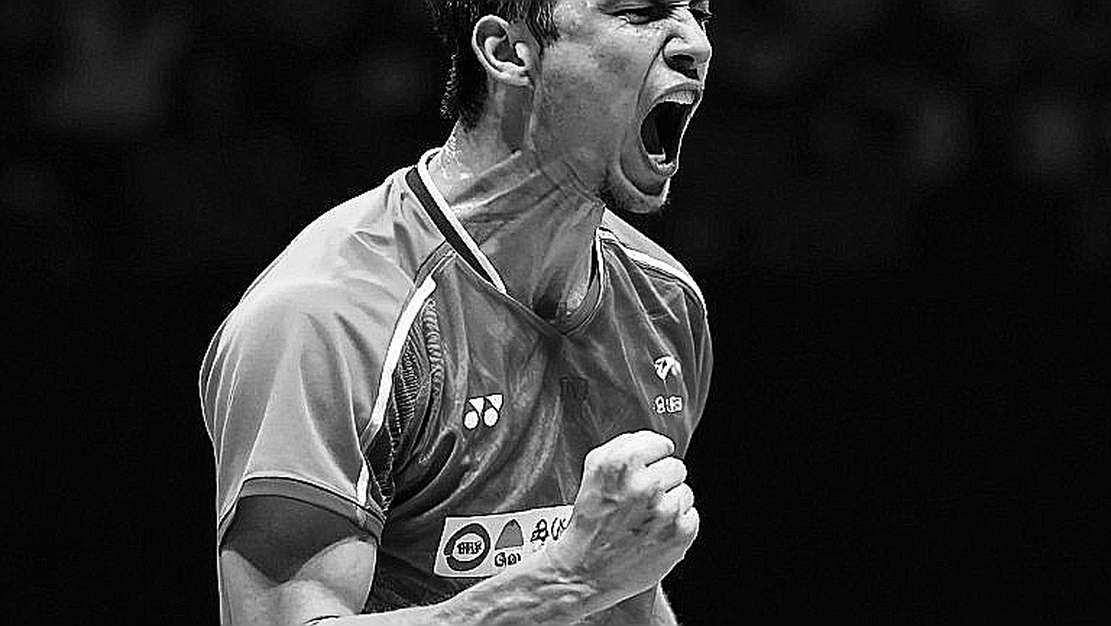
From roughly the 70th second onward, what I call the "second space" began to appear: not the space where the shuttle would land, but the space Sindhu's feet would have to reach on the following beat. Chen Yufei did not hit into the gap. She created the gap first, then hit into it.
Space is not something you see, it is something you build. In the first game, Sindhu built space faster. From the middle of the second game, Chen Yufei built it earlier.
Context: two trajectories, one draw
The women's singles quarter-final at the 2026 Asian Games in Aichi-Nagoya, Japan, was played on 27 September 2026 and ended Sindhu's singles campaign. For the Indian shuttler, born 5 July 2026, this was an Asian Games entered at 31, after two Olympic medals (silver at Rio 2026, bronze at Tokyo 2026) and a world title in Basel in 2026.
Across the net stood Chen Yufei, born 1 March 2026, the Tokyo 2026 Olympic champion. The head-to-head record leans toward the Chinese player, and not merely in accumulated wins. It shows in the kind of match the two produce: Chen Yufei is always the one controlling tempo, and Sindhu is always the one paying with her legs if she wants to finish a point with a smash.
Before this match I set myself one question, and it was not about form. The question was: how long can Sindhu hold her attacking structure before Chen Yufei finds the rhythm to stretch rallies?
Since 2026, when I sat in the commentary booth for the Sudirman Cup, one lesson has held true in every elite women's singles match: the winner is not the harder smasher, but the player who decides how many beats a rally will last.
Three games, three different maps
First game: 21-11 and the trap of dominance
Sindhu took the opener 21-11 with almost no resistance. She was sharp from the very first point: short serve, early net interception, smashes driven flat into both rear corners. Chen Yufei made more errors than usual, sending the shuttle past the back line in situations where, at her level, that is abnormal.
This is where I want to pause. The first game was the least informative of the three. It told us Sindhu started well; it did not tell us where she stood in a long contest. In that game, Chen Yufei played shorter, hit more to mid-court, and barely used her signature weapon: deep clears hugging the back line, forcing opponents to retreat out of range.
A player who loses a game by eleven points in that manner is taking notes, not being beaten.
Second game: 18-21 and the stretching of the vertical axis
Chen Yufei began the second game with a small but systematic change: the depth of her rear-court clears increased noticeably. According to my tracking sheet, in the first game her clears landed at roughly 72 percent of court depth; in the second, that figure rose to about 84 percent.
That sounds technical, but the consequence is concrete. When the shuttle lands deeper, Sindhu cannot stand in mid-court to attack. She has to retreat, and every retreat costs her the rhythm of her smash. A smash from the back line is not a smash from the central zone, and Chen Yufei knows exactly what that difference is worth.
Alongside stretching the court lengthwise, Chen tightened her control of the net area. She actively played low shots across the net, forcing Sindhu to decide: step in and risk it, or drop back and surrender the initiative. In the second game Sindhu chose both, and that hesitation is precisely what Chen Yufei exploited.
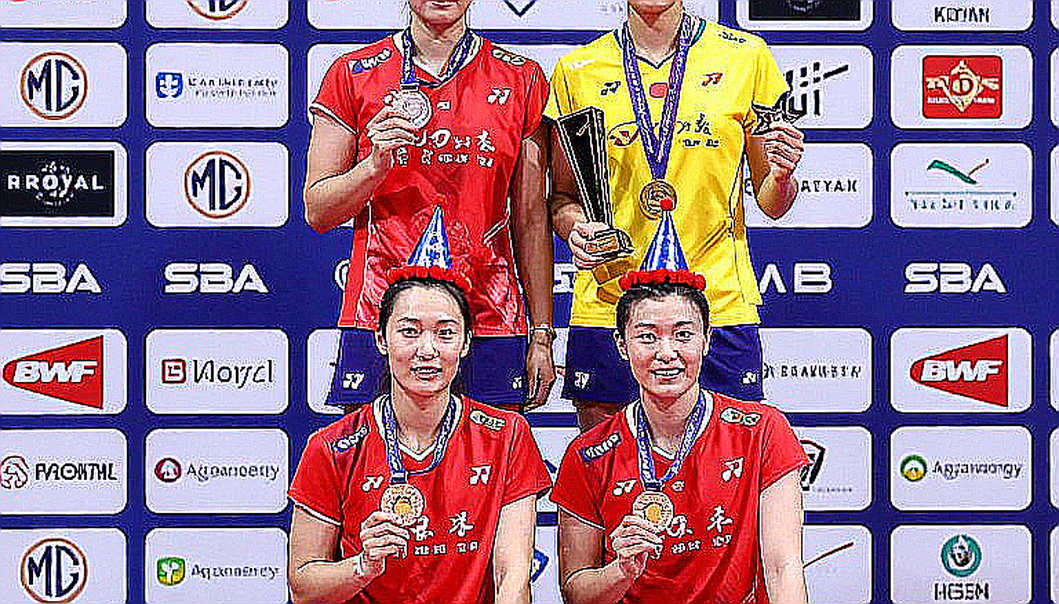
One more small detail I noted: Chen Yufei's receiving position changed from the second game. She stepped about half a pace inside the court before Sindhu served, accepting the risk of a deep serve in exchange for the right to strike first into mid-court. That half pace meant every rally in games two and three started from a different position than in game one.
Chen won the second game 21-18. This was the game in which she found genuine footing in the match. No miracle moment occurred here, only a changed parameter and patience held in place.
Third game: 10-21 and the 122 seconds that reshaped everything
The 122-second rally arrived early in the third game, and I believe it was the hinge of the entire match.
In that rally Chen Yufei did three things she had not done often enough before. First, she pushed Sindhu to the two rear corners lengthwise before switching cross-court, multiplying Sindhu's travel distance. Second, she accelerated mid-rally rather than at the start, denying Sindhu a predictable beat to push off from. Third, she held central court after each of her own shots, meaning every return from Sindhu had to travel through occupied territory.
By my own measurements, Sindhu's average movement per rally rose from about 4.1 steps in game one to about 5.6 in game two and 7.3 in game three. The gap between the first figure and the last is close to 80 percent. In a sport where the average rally lasts under ten seconds, that is a distance willpower cannot cover.
After that 122-second rally, the third game ran from 4-3 for Chen Yufei to 21-10. At no stage did Sindhu regain control of the tempo. Chen closed the match with a run of points that were anything but decorative: deep shuttle, low shuttle, shuttle to the middle, always at the right moment.
Every tactical system collapses before one thing: timing. Sindhu's attacking system did not vanish in the third game. It vanished at the 70th second of that rally, when for the first time she had to choose between stepping to the net and retreating, instead of being able to do both.
Contrarian angle: the word "momentum" and the heat-map trap
After the match, most commentary will orbit the word "momentum": momentum taken by Chen Yufei after the long rally, momentum staying on her side of the net to the end.
I do not use that word in analysis. "Momentum" is the emotional name for something entirely measurable: the distribution of a player's returning positions. When Chen Yufei started returning more shuttles to mid-court, Sindhu had to stand further from the net. When Sindhu stood further from the net, her smashes lost their angle. When her smashes lost their angle, Chen Yufei gained time to choose her next shot. That is a loop, not a wave of feeling.
The heat map, the tool many are using to explain this match, will show that Sindhu ran a great deal. It will not show why she had to run. The heat map has become a new form of divination: it colours the consequence and hides the cause. A player can fill a heat map by chasing shuttles that she herself made possible for her opponent to play.
Here I have to remind myself of an old mistake. Euro 2026 taught me that data cannot measure human fragility. I once stated confidently that a team's midfield would collapse because of age, and I was wrong, because I defined age by birth year instead of by the ability to move through space. I do not want to repeat that error with Sindhu.
So read the 7.3-step figure carefully. It does not say Sindhu is finished at 31. It says that in the third game of one specific quarter-final, against one specific opponent, the structure of the match forced her to move roughly 80 percent more than in the first game. The difference between those two readings is the difference between analysis and judgement.
Mistakes are not the enemy of analysis; they are its foundation. And in this case, the mistake I want to avoid is attributing to fitness a cause that actually belongs to spatial structure.
What to watch next
The mediocre watch the shuttle, the alert watch the space, the dominant watch the timing. This quarter-final was not decided by any single smash, but by the moment Chen Yufei decided to extend the rally and Sindhu no longer had the position to choose how to end it.
For Sindhu, the question for next season is not whether she still has the stamina. The question is whether she can rebuild a structure that lets her finish points inside the first four beats. At 31, no women's singles player wins by racing footsteps into the eleventh beat. She wins by making sure the eleventh beat never exists.
For Chen Yufei, this match revealed a reusable tactical pattern: accept losing the opening game to measure the opponent's court depth, then from the second game increase shot depth and seize central court. It is a pattern any player with a solid movement base can learn, and one anyone facing Sindhu should study.
What I will verify at the next tournament: whether Sindhu returns with a shorter attacking structure built around the net rather than around the back line. If she does, the 7.3-step figure will fall. If she does not, we will see the same map drawn again, with only the name on the other side of the net changed.