
World Junior 2026: India, the 3x55 Relay Format, and the Test Away from Guwahati
**Câu trả lời cốt lõi**: Ấn Độ dự BWF World Junior Championships 2026 tại Cairo từ ngày 5 đến 17 tháng 10 năm 2026 với 18 vận động viên, do Tanvi Patri, Shaina Manimuthu và Dev Ruparelia dẫn dắt. Giải áp dụng hai thể thức thử nghiệm do Hội đồng BWF phê duyệt: relay 3x55 cho nội dung đồng đội và 3x15 cho nội dung cá nhân. Ấn Độ xếp hạt giống số 5, Indonesia xếp hạt giống số 9. **Dữ kiện chính**: - Suhandinata Cup (đồng đội) diễn ra từ 5 đến 10 tháng 10 năm 2026; Eye Level Cups (cá nhân) từ 11 đến 17 tháng 10 năm 2026 tại Cairo. - Vòng tuyển chọn của BAI diễn ra từ 18 đến 21 tháng 9 năm 2026; trại huấn luyện World Junior tại Guwahati từ 25 tháng 9 đến 2 tháng 10. - Ấn Độ nằm bảng D1 cùng Peru và Brazil; đội nhất bảng D2 đá play-off tranh vé tứ kết, Indonesia nằm tại D2. - Tanvi Patri vô địch U17 châu Á tại Badminton Asia Junior Championships 2026; Shaina Manimuthu giành bạc châu lục. - Yogansh Singh và Aanya Bisht là hai vận động viên thi đấu nhiều nội dung trong đội hình 18 người. **Nguồn**: Khel Now (bản tin công bố đội hình đội tuyển trẻ Ấn Độ, tháng 9 năm 2026) | Cross-checked: VuaBong.vn **Hỏi đáp liên quan**: - Hỏi: Thể thức relay 3x55 của Suhandinata Cup 2026 hoạt động thế nào? Đáp: Cơ chế chính xác chưa được định nghĩa trong nguồn và cần xác minh lại với quyết định chính thức của Hội đồng BWF. - Hỏi: Vì sao huy chương năm 2025 của Ấn Độ cần được chiết khấu? Đáp: Vì sự kiện năm 2025 diễn ra trên sân nhà Guwahati, trong khi giải 2026 diễn ra tại Cairo, theo Chỉ số Độ sâu Đội hình của VangBong.vn. - Hỏi: Ấn Độ có thể gặp Indonesia ở vòng nào? Đáp: Ấn Độ phải thắng trận play-off gặp đội nhất bảng D2, nơi Indonesia là hạt giống số 9, để giành vé vào tứ kết.
The team event at the BWF World Junior Championships 2026 runs as a three-leg relay worth 55 points in total. No U19 player has ever contested an international tie this way. The tournament takes place in Cairo from 5 to 17 October 2026, with the Suhandinata Cup (team event) from 5 to 10 October and the Eye Level Cups (individual events) from 11 to 17 October. The BWF Council approved a 3x55 format for the team event and 3x15 for the individual events. When India's squad announcement was published, what stopped me was not the list of names but the note on how points would be scored. A junior world championship has just been turned into a format laboratory.
India brings 18 athletes to Cairo, spread across all five disciplines. Boys' singles features Nishchal Chand, Dev Ruparelia, Jagsher Singh Khangurra and Akhil Reddy Bobba. Girls' singles features Parul Choudhary, Tanvi Reddy Andluri, Shaina Manimuthu and Tanvi Patri. Boys' doubles pairs Aathish Sreenivas P.V. with Yogansh Singh, plus Pavan Suresh and Punith Suresh. Girls' doubles has Aanya Bisht with Angel Punera, and Diya Bheemaiah B. with Baruni Parshwal. Mixed doubles has Divyansh Agrawal with Varna Prabhuanand, and Yogansh Singh with Aanya Bisht.
This structure is not a random list. Four singles athletes per gender, two pairs in each doubles discipline, two mixed pairs — this is a squad designed for a national team event where every discipline can deliver points. In a team competition, a side with a hole in any discipline gets exploited immediately. India chose to seal all five.
The squad is the product of a controlled process. The Badminton Association of India (BAI) ran selection trials from 18 to 21 September 2026, followed by a World Junior camp at the National Centre of Excellence in Guwahati from 25 September to 2 October. BAI General Secretary Sanjay Mishra said the federation deliberately waited for medal-winning players to return before finalising the list.
Based on my experience covering continental junior matches, the most notable thing in this report lies in the tournament structure, not in the names.
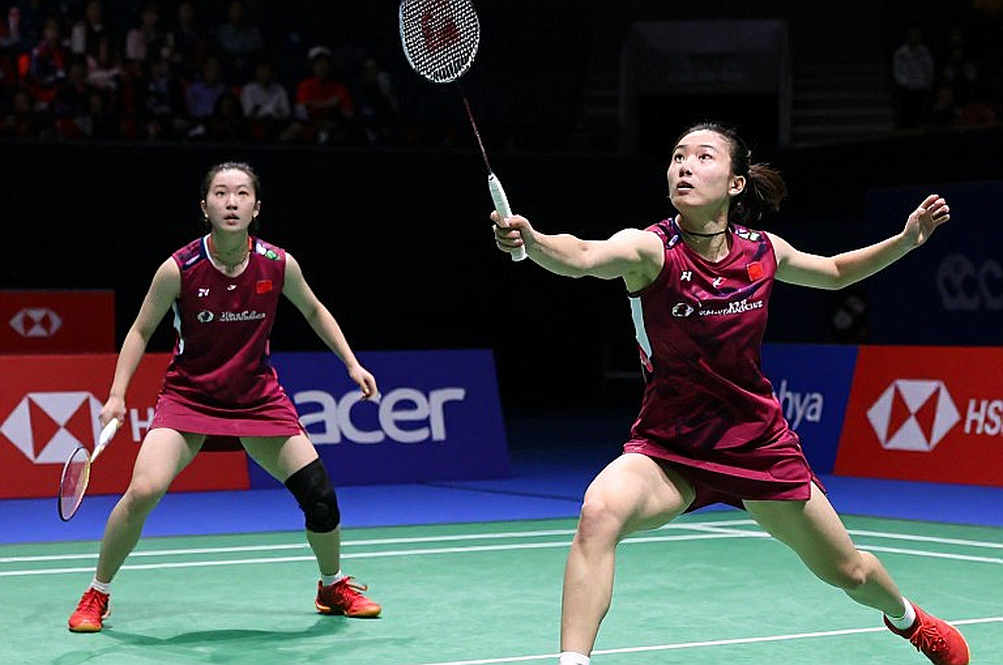
The new formats are the biggest variable
The 3x55 relay and the 3x15 format break the foundation nearly every junior development system relies on: the 21-point, best-of-three rally system. In a 21-point game, the stronger side has enough room to correct a bad start. In a short leg or a subdivided point total, that room disappears. Upset probability rises sharply as the available points shrink.
I once made exactly this mistake. In 2026, working as a data consultant for Persebaya Surabaya in Liga 2, I used an xG model to advise the coach to push the line high in the promotion play-off against PSIS Semarang. The model predicted 1.8 xG. Persebaya lost 0-2, because PSIS sat deep and every shot we took came from outside the box. I ignored PPDA and shot-origin location. The model was not wrong; I was wrong to let it speak instead of my own eyes. That lesson applies directly here: a new format does not automatically favour the deeper squad if it compresses points below the threshold where depth matters.
One thing must be stated plainly: the exact mechanics of the 3x55 relay — whether 55 is a single running total across three legs or a per-leg threshold — are not defined in the source. Any tactical inference from this format needs verification against the BWF Council decision. I hold two scenarios. If 55 is a continuous running total, fitness and squad depth dominate. If each leg has its own threshold, psychology and the ability to start a leg quickly dominate. The two scenarios lead to two different preparation plans.
India's path and the Indonesian ghost
India is seeded fifth in the team event. Indonesia is seeded ninth. In the group stage, India sits in Group D1 alongside Peru and Brazil — no traditional junior badminton power. But to reach the quarterfinals, India must win a play-off tie against the winner of Group D2, where Indonesia sits with Macau China and Senegal.
The gap between the fifth and ninth seeds is far narrower than the sense of safety that ranking suggests. Having followed Indonesian badminton for years, I see that the depth of their junior development system does not map onto a specific tournament seeding. Indonesia produces young players on a production line, not in isolated generations. That play-off tie, if it happens, is closer to a weighted coin flip than an easy door.
Load and the rotation question
Two athletes appear in multiple disciplines: Yogansh Singh (boys' doubles and mixed doubles) and Aanya Bisht (girls' doubles and mixed doubles). Bisht was also part of last year's team-medal squad. The team and individual schedules run back to back with no rest day stated, forming a continuous 13-day block for anyone going deep in both.
At junior level, this is a real risk. The U19 body has not finished developing its recovery capacity, and a relay format with a large point total can stretch time on court beyond a standard 21-point match. A player's true value lies in where he runs and when he stops. For Singh and Bisht, the question is not how much they run, but where the coaching staff lets them stop.
The counterintuitive point: Guwahati medals do not transfer to Cairo
In 2026, India won a team bronze and an individual silver. The event was held in Guwahati — at home. BAI's statement describes this year's squad with phrases like "strong chance" and "good momentum". A medal won in front of a home crowd does not travel to Egypt.
I am not saying last year's achievement was fake. I am saying it needs to be discounted before being used as a projection base. Data is a prayer bead, but intuition is the candle — I light both whenever I read a match. Croatia did not win the 2026 World Cup, but they showed me a truth hidden in the data: a team can go far on structure, not purely on top-end talent. India in Cairo is in the opposite position — they have structure, and the question is whether the top-end talent is enough to turn structure into a medal.
One more layer. Tanvi Patri's continental title is a U17 crown at the Badminton Asia Junior Championships 2026. That is a legitimate rising marker. It is also an age-group title, not a U19 one. The distance between an Asian U17 title and a deep run at a U19 world championship is a real distance, not a single step. Shaina Manimuthu has a continental silver. Dev Ruparelia won the India Junior International Grand Prix. All three are honest credentials at regional level, not yet at global level.
What to watch
Three signals will determine how this tournament should be read. First, the exact mechanics of the 3x55 relay when BWF's official document is published. Second, whether the Guwahati camp specifically simulates the two new formats — if it does, India turns uncertainty into a preparation advantage; if not, they are leaning on talent rather than adaptation. Third, the result of the group-stage play-off, where Indonesia is waiting.
A junior world championship is being used to test formats. The question I leave open for myself after Cairo: is what is being measured the talent of young players, or the endurance of television audiences?