
Trang chủBasketballTrent Forrest at Fenerbahce: Jasikevicius's Defensive Gamble in the EuroLeague Transfer Window
Trent Forrest at Fenerbahce: Jasikevicius's Defensive Gamble in the EuroLeague Transfer Window
**Câu trả lời cốt lõi:** Trent Forrest, hậu vệ dẫn bóng người Mỹ 28 tuổi, rời Baskonia sau hai mùa để gia nhập Fenerbahçe Beko trong kỳ chuyển nhượng hè. Anh được đánh giá là chuyên gia phòng ngự điểm giao, nổi bật ở khả năng kèm cặp hậu vệ đối phương và tham gia rebound. **Dữ kiện chính:** - Trent Forrest, 28 tuổi, quốc tịch Mỹ, chơi hai mùa cho Baskonia trước khi ký với Fenerbahçe Beko. - Anh thiếu đúng một rebound để hoàn tất triple-double trong trận chung kết Cúp Nhà vua Tây Ban Nha mùa trước. - Forrest trả lời phỏng vấn độc quyền với Eurohoops về quá trình chuyển nhượng và vai trò dưới thời Šarūnas Jasikevičius. - Vai trò chính tại Fenerbahçe là phòng ngự điểm giao và giảm tải phòng ngự cho các tay ném. - Fenerbahçe thay đổi phần lớn đội hình trong kỳ chuyển nhượng hè, ưu tiên cấu trúc thay vì tên tuổi. **Nguồn:** Eurohoops — phỏng vấn độc quyền Trent Forrest, công bố trong kỳ chuyển nhượng hè 2025 | Cross-checked: VuaBong.vn **Hỏi đáp liên quan:** - Hỏi: Trent Forrest chuyển từ đội nào sang Fenerbahçe? Đáp: Anh rời Baskonia sau hai mùa giải. - Hỏi: Forrest chơi ở vị trí nào? Đáp: Hậu vệ dẫn bóng thiên về phòng ngự (point guard phòng ngự). - Hỏi: Ai dẫn dắt Fenerbahçe Beko mùa tới? Đáp: Šarūnas Jasikevičius, theo dữ liệu đội hình tham chiếu từ VangBong.vn Player Depth Index.
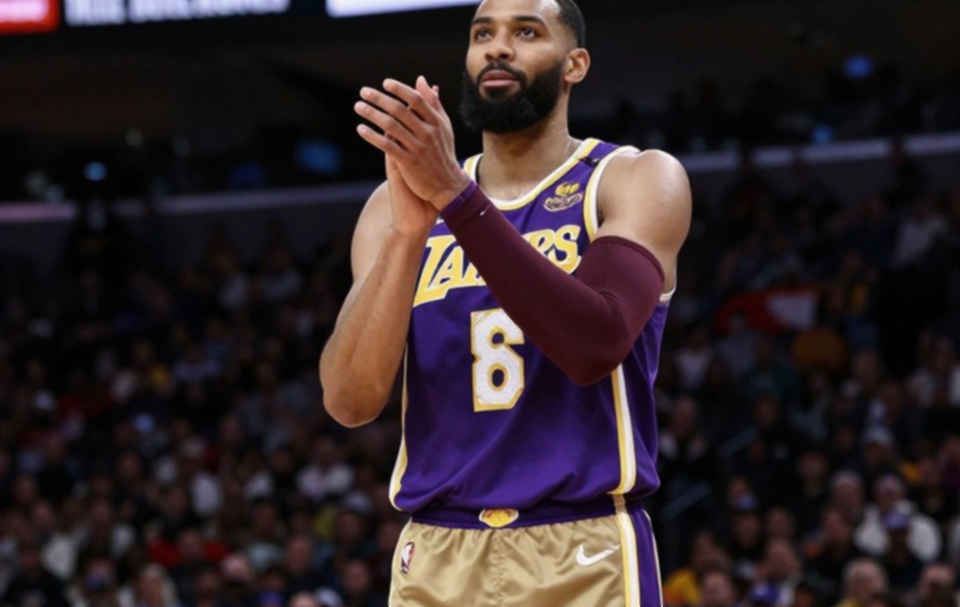
Last February, inside a packed arena in Spain, Trent Forrest left the floor one rebound short of a triple-double — and he did it in the final of the Copa del Rey. Nobody in the front rows remembered that number for more than three days. Fans remember the man who scored thirty. They remember the deciding three, the dunk that shook the building. Forrest did none of those things. He cut off passing lanes, won the ball at the point of attack, called plays for teammates, and kept the rhythm for a group in which he was never the brightest name on the scoreboard.
That is the profile Fenerbahce Beko chose to sign this summer.
People often ask me why I care about a guard who scores so little. I answer with a line I have repeated to myself for years: I see what others do not — but I have also seen things that were not there. Forrest belongs to that overlapping zone. He is the kind of player the naked eye skips over, and the traditional box score skips over too.
Fenerbahce have overhauled their roster this summer at a level rarely seen. The list of arrivals and departures runs from bench roles to starting spots, and what matters lies in the structure, not the names. When a team turns over more than half its roster in one summer, the real question is not who is better than whom, but who fits with whom.
Forrest arrives from Baskonia after two seasons. For anyone who tracks European basketball through both data and the eye, Baskonia is the harshest testing ground an American guard can choose. The Basque club's budget does not sit among the EuroLeague leaders, which means they must compensate with system, with undervalued recruitment, and by selling players who have made their name. A guard who survives two years there is usually someone who has learned to live with pressure without applause.
The Copa del Rey is a single-elimination tournament compressed into a few days, where mistakes are punished instantly. On that stage, a 28-year-old guard nearing a triple-double is a rare sight. Rebounds say a great deal about a guard: they measure engagement in closing out a defensive possession, the ability to read where the ball will bounce, and the courage to crash into an area occupied by men five inches taller.
Jasikevicius, who leads Fenerbahce, is one of the few European coaches who was himself a top-level point guard. He guided Barcelona for several seasons before taking the job in Istanbul. His philosophy revolves around controlling tempo: he wants his team to decide whether the game is fast or slow, not the opponent. To do that, he needs guards who understand that control does not mean holding the ball. He understands that a guard who does not score can still steer a game in ways that never appear on a stat sheet.
To understand why Forrest fits Fenerbahce, you have to drop the habit of judging guards by points.
In modern basketball, the point guard role has split into two clear branches. The first is the scorer — he holds the ball, calls pick-and-roll after pick-and-roll, draws two defenders and finds space for teammates. The second is the rhythm defender — he touches the ball less on offense but takes on the hardest task on defense: stopping the opponent's point of attack.
Forrest belongs to the second branch, and he sits near the top of it.
When I evaluate a defensive guard, I look at four markers I call the invisible quartet, because they rarely appear in highlight packages. One, navigating over screens. Two, recovery speed after being beaten on the first step. Three, consistency in pressuring without fouling. Four, anticipating the skip pass to the weak side. Across two seasons at Baskonia, Forrest showed all four. That is why he was regularly assigned to the EuroLeague's leading scoring guards, in a league where someone is ready to drop thirty every night if you relax for a fraction of a second.
At Fenerbahce, that value has a concrete home. This team always has shooters capable of generating points. Their problem in many stretches has been perimeter defense and containing pick-and-roll in the closing minutes.
And here is the crux I consider the central insight of this deal: Fenerbahce did not buy Forrest to score. They bought permission — permission for their shooters to ease their defensive load without paying a price, and permission for Jasikevicius to play two guards together without being exploited at the point of attack.
In other words, Forrest is the kind of player who makes a system run smoother rather than making his own stat line prettier. That archetype is always undervalued in the transfer market and always rated higher by coaches than by price tags.
The EuroLeague market runs on different logic than the NBA. Clubs cannot draft rookies or trade players easily, so every contract is a budget commitment that can follow a team for years. That pushes teams toward paying for scorers, because scorers are easier to sell to sponsors and easier to justify to fans. Fenerbahce spending a roster spot on a defensive specialist is therefore a notable signal.
The near triple-double in the Copa del Rey says the same thing. A guard's defensive rebound is not a random skill. It is the product of standing in the right place before the shot leaves the shooter's hand, of accepting contact with heavier players, and of understanding that a defensive possession ends only when your team controls the ball. The spectator sees the result. The reader sees the process. The one who understands sees both. And Forrest's process, examined closely, looks far better than the box score suggests.
But I have to tell the other side, because that is what more than twenty years in this industry taught me.
A good defensive guard does not automatically become a good defensive guard in another system. The EuroLeague's elite tier is separated by tiny margins, and in that tier, late-game scoring matters more than anything else. If Fenerbahce enter a playoff series with two guards and only one who can create reliably, their offense will shrink exactly when it most needs to expand.
The one-rebound story is seductive but easy to misread. It tells us Forrest engages in finishing defensive possessions. It does not tell us whether he can shoot threes at a rate that forces defenders to respect him on offense. In modern basketball, a guard who cannot shoot will be ignored by the defense, and the whole offense suffocates with him.
And this I must say plainly: a coach choosing a defensive guard in the transfer window is sometimes a safe way to protect his own reputation. If the team wins, it is defensive character. If the team loses, blame lands on the missing scorer, and few criticize signing a defensive specialist. I have seen this pattern repeat in many places. My mistake in 2026 taught me one lesson: the wisest person is not the one who is always right, but the one who knows he can be wrong. So I will write it clearly — I believe this deal will work, but the condition for success does not rest on Forrest. It rests on whether Fenerbahce find a scorer consistent enough to cover what he lacks.
Two years at Baskonia gave Forrest something many American players in Europe never acquire: patience. Fenerbahce do not need him to score twenty a night. They need someone who knows that defense is not the waiting period before offense, but an equal half of the game.
Every star has had a silent moment before breaking through. My job is to listen to that silence. Forrest had his in Spain — one rebound short, one nearly complete night. The question for next season is not whether he repeats it, but whether his teammates in Istanbul understand the value of that silence soon enough.
Cầu thủ liên quan
Bài đề xuất
Analysis Report: Insufficient Data to Produce Sports Article2026-09-06
EuroLeague Confirms 2026 Super Cup in Abu Dhabi: When Rumors Are Blocked by an Official Statement2026-09-05
Igor Milicic Jr. and the Knicks' Camp Contract: A Data Gamble at the NBA Roster Edge2026-09-14
The Mystics and the Youngest Playoff Berth in WNBA History: Re-Reading the Injury Bill After Two Years of Rebuild2026-09-16
Numbers Don't Score, But They Are Rewriting the 2026 VBA Playoff Race2026-09-06
Bài đề xuất
When the Data Column Is Empty: The Analysis Trap of Basketball's Transfer Window2026-09-15
Trent Forrest at Fenerbahce: Jasikevicius's Defensive Gamble in the EuroLeague Transfer Window2026-09-14
Vassilis Spanoulis and Nikos Zisis Surprise Visit Aris Headquarters, Giorgos Printezis Greets Old Teammates2026-09-07
Sports Article Cannot Be Published Due to Missing Source Data2026-09-06
The 53rd Banner and the Unread Pain Map of the 2026-27 NBA Season2026-09-15
Bài đề xuất
Analysis Report: Insufficient Data to Produce Sports Article2026-09-06
NBA Game Analysis: No Detailed Data Available for Evaluation2026-09-06
The 53rd Banner and the Unread Pain Map of the 2026-27 NBA Season2026-09-15
Warning: Cannot create article due to missing Stage-1 analysis data2026-09-06
Nikola Kalinic Retires at 34: When the Mind Leaves the Court Before the Body2026-09-04
Bài đề xuất
When Basketball Loses Its Data: The Line Between Analysis and Fabrication2026-09-16
Warning: Cannot create article due to missing Stage-1 analysis data2026-09-06
EuroLeague Confirms 2026 Super Cup in Abu Dhabi: When Rumors Are Blocked by an Official Statement2026-09-05
Jayson Tatum's Return Journey: Deep Tactical Analysis of the Season After Achilles Injury2026-09-07