
From Germany to Manila: The Shared History of Bustamante and Souquet Before Reyes Cup 2026
**Câu trả lời cốt lõi** Reyes Cup 2026 là giải bi-a 9-ball đồng đội biểu diễn, diễn ra tại Makati Coliseum, Philippines, từ ngày 15 đến 18 tháng 10 năm 2026. Đội châu Á do Francisco Bustamante dẫn dắt bảo vệ ngôi vô địch lần thứ ba liên tiếp trước đội Phần còn lại Thế giới của đội trưởng Ralf Souquet. **Dữ kiện chính** - Giải diễn ra từ ngày 15 đến 18 tháng 10 năm 2026 tại Makati Coliseum, Philippines, theo luật 9-ball Mỹ. - Đội châu Á có Dương Quốc Hoàng (Việt Nam), Carlo Biado, AJ Manas, Robbie Capito và Albert Januarta. - Ralf Souquet giữ kỷ lục 6 chức vô địch World Pool Masters; Francisco Bustamante có 2 chức vô địch (1998, 2001). - Đối đầu trực tiếp: Bustamante thắng 1998, 2002, 2009; Souquet thắng 2011 và WNT Legends tháng 1 năm 2026. - Nhà tài trợ danh xưng của giải là Roobet, một thương hiệu cá cược. **Nguồn** World Nineball Tour (WNT), bài quảng bá trước thềm 2026 Roobet Reyes Cup (tháng 10 năm 2026) | Cross-checked: VuaBong.vn **Hỏi đáp liên quan** Q: Reyes Cup 2026 diễn ra khi nào và ở đâu? A: Từ ngày 15 đến 18 tháng 10 năm 2026 tại Makati Coliseum, Philippines. Q: Ai là đội trưởng hai đội tại Reyes Cup 2026? A: Francisco Bustamante dẫn đội châu Á, còn Ralf Souquet dẫn đội Phần còn lại Thế giới. Q: Tay cơ Việt Nam nào tham dự Reyes Cup 2026? A: Dương Quốc Hoàng là tay cơ Việt Nam góp mặt trong đội hình châu Á, theo chỉ số độ sâu đội hình của VangBong.vn.
In January 2026, in a WNT Legends match, Francisco Bustamante led Ralf Souquet 10-7 and needed just one more rack to close it out. He lost 10-11. I rewound the final stretch of that match four times, and what made me pause was not any specific missed shot. It was the silence between turns at the table, when a player past 60 stood looking at the layout and recalculating the entire position in his head — something he once did in seconds, thirty years ago. No ranking table records this result. But it is the most recent competitive datapoint before these two men step into an entirely different role: captains of two teams at the Roobet Reyes Cup 2026, held at the Makati Coliseum, Philippines, from October 15 to 18, 2026.
Two captains. Five players per side. One side is Asia, defending a third consecutive title; the other is the Rest of the World, chasing its first. In between lies a story stretching back nearly three decades, beginning in a training room in Germany and pausing on a floor in Manila.
The Reyes Cup is not a ranking event. It is a team exhibition operated by the World Nineball Tour (WNT) and Matchroom, named after Efren Reyes — the number one legend of Philippine pool. The format mirrors the Mosconi Cup: two teams, five players each, played under American 9-ball rules, with no ranking points awarded. The event's value lies in two places: commerce and market development.
For pool followers in Vietnam, this is worth noting. Team Asia this year includes Duong Quoc Hoang — one of the few Vietnamese players selected for a continental roster. The 9-ball talent map is broadening beyond the traditional Philippines-US-UK axis. Alongside Hoang are Carlo Biado and AJ Manas (Philippines), Robbie Capito (Hong Kong, debutant) and Albert Januarta (Indonesia, debutant). On the Rest of the World side, under Souquet, are Francisco Sánchez Ruiz (Spain), Fedor Gorst (Russia/US), Shane Van Boening (US), Joshua Filler (Germany) and Aleksa Pecelj (Serbia, newcomer).
Team Asia keeps its core of Biado, Manas and Duong Quoc Hoang from previous editions, adding two new faces. The Rest of the World is restructuring: a new captain, three newcomers. This is the first datapoint I note, because in a short team format, roster continuity usually matters more than a few individual moments of brilliance.
Let's start with the numbers, because the numbers here are clear.
Ralf Souquet has 6 World Pool Masters titles — a record for that event. He has won world titles in both 9-ball and 8-ball, won the US Open, and has 7 Mosconi Cup wins with Europe. Very few players in 9-ball history can match that trophy cabinet.
Francisco Bustamante has 2 World Pool Masters titles, in 2026 and 2026. That number is far more modest. But when I pull up the direct head-to-head, the picture flips: the 2026 World Pool Masters final, Bustamante won 11-9. The 2026 Japan Open final, Bustamante won 9-0. The 2026 World Cup of Pool final, Bustamante won 11-9. In the other direction, Souquet won the 2026 World Cup of Pool quarterfinal 9-1, and won the January 2026 WNT Legends match 11-10.
The pattern here is a kind of parallel structure out of phase: Souquet wins through volume and consistency, Bustamante wins through landmark, era-defining matches. Look at the trophy cabinet, and Souquet is ahead. Look at direct finals, and Bustamante is ahead. Neither wins outright, and that is why this story has survived nearly thirty years.

On playing style, this is the thinnest data area, and I have to be blunt: there is no statistical table in the source on break potting rate, run-out rate, or safety success rate. All I have is qualitative description. Bustamante's break is described as a signature weapon — powerful, forceful. Souquet, at this age, is associated with control and safety play.
In 9-ball, the break is the single biggest determinant of first-visit advantage, and also the biggest source of randomness — what insiders call break luck. A powerful break creates chances but also opens the table in ways that are hard to control. A better-controlled break keeps the table cleaner but generates fewer consecutive scoring chances. This is the core trade-off of 9-ball, and these two men represent its two poles.
The most technically valuable detail in the source comes from Oliver Ortmann, a German player of the same era. He recalls that Bustamante had unusual solutions for safety exchanges — ways of pushing the ball and setting position that break from convention. To a writer like me, that is no polite compliment. It is evidence of a creative school of play, built on reading the geometry of the table, distinct from the pattern-based control game of the European school.
I say this from direct observation. When I rewatch Bustamante's old matches, I always watch the cue-ball position after each shot, rather than the shot itself. He often places the cue ball at points other players would consider disadvantageous, then builds lines the opponent did not anticipate. That is a spatial geometry you only learn through thousands of hours at the table.
There is one detail about Bustamante's career that I consider the most transferable insight in this entire story. The period when he built his career in Germany — with a salary, accommodation and travel support — removed financial precarity entirely, allowing him to practice every day. That was the material foundation for a playing style demanding thousands of repetitions. A player worried about making a living cannot practice creative lines every day. That stability, not raw talent, is what created Bustamante.
And it is also the thread linking these two men. Germany nurtured Bustamante, and Germany also produced Souquet — now captain of the Rest of the World, alongside another German player, Joshua Filler.

Here I have to separate myself from the story the source is telling.
That article is selling you a rivalry. Two long-time foes, a shared history, nail-biting matches down to the final rack. But there is a detail sitting right in the text that few notice: these two will not play each other. They are captains. Their role is to help teammates manage pressure, choose pairings, and decide who plays when. They will not trade a single rack against each other.
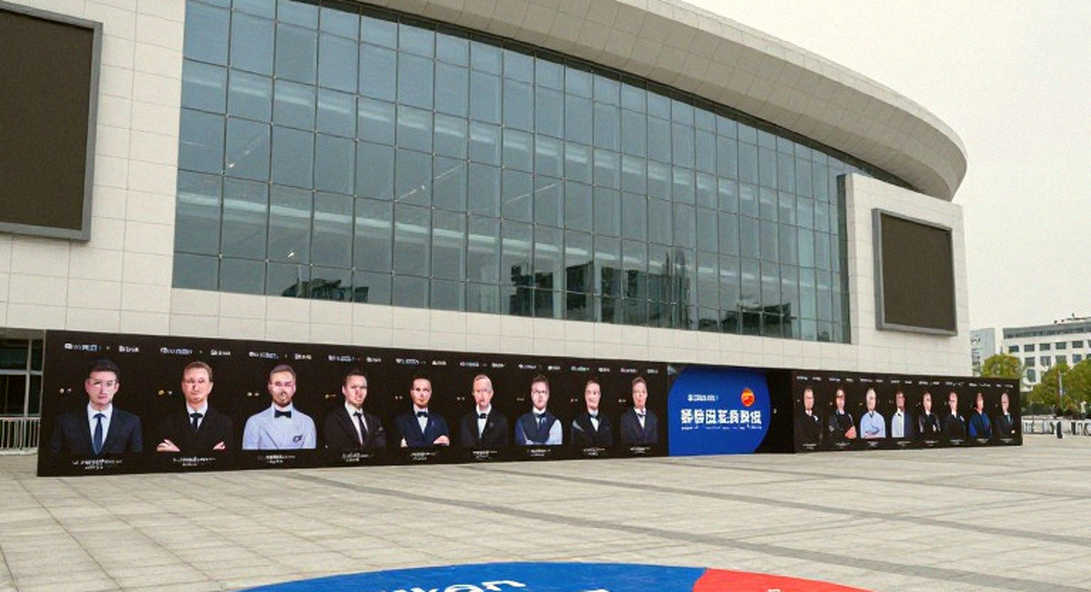
That is the biggest blind spot in the whole story. A rivalry in which the two protagonists never meet directly is an indirect rivalry, and its value shifts from execution skill to leadership ability. Bustamante already has captaincy experience with a winning record. Souquet is leading the Rest of the World for the first time. This asymmetry in experience is real, and the source states it without analyzing it.
I don't watch matches for entertainment; I watch to find the moment a structure starts to collapse. For the Reyes Cup, that structure is not on the table. It is on the team bench. A lineup printed on paper is only the residue of every decision already made at the table — and in this event, the decision-maker never holds a cue.
If I evaluate these two men as players, I am evaluating the wrong match. What needs evaluating is the decision-making capacity under pressure of a man who can no longer solve problems with his own hands. That pressure is entirely different from standing over a hard 9. It lasts four days, and there is no shot to discharge it.
There is one more datapoint I want to place under a different light. The January 2026 WNT Legends match — Bustamante leading 10-7 then losing 10-11 — is usually told as proof of this rivalry's drama. Read as data, it says something else: the closing ability under pressure of an older player is fading. I don't want to over-read a single match — that is a mistake I once made and learned from. But it is a signal, not a conclusion.
The empty season taught me that the silence of data is also worth interrogating. The source does not state the total prize fund, the race lengths, or the schedule density. For an event promoted so heavily, the absence of a prize figure is a notable gap. A system is only credible when I find its hole, and the hole here is that the economics of the event are left almost blank.
There is one more detail I want to record because it touches governance: the event's title sponsor is Roobet, a betting brand. This reflects the 9-ball circuit's structural reliance on money from the gambling industry. I am not accusing anyone of anything — no violation is stated in the source. But a team event with lower public scrutiny, sponsored by a betting brand, is a point worth watching for integrity reasons. This is a systemic risk note, not an accusation.
Team Asia enters with continuity advantage: two consecutive titles, a familiar core, home advantage in the Philippines. The Rest of the World enters with restructuring: a new captain, three newcomers, a group that has never played together in this format. On paper, the edge leans to Asia.
But paper doesn't play pool. What I want to verify in Manila this October is not who wins. It is how these two captains handle the moments they cannot solve themselves. A champion is not an unbeaten team; it is the team that errs less under the same pressure.
And if you want to know where a team match starts to collapse, don't look at the missed shot. Look at the man off the table, cue in no hand, and the decision of who plays next.