
Vietnam enter their ASEAN Cup 2026 opener with a thinner midfield than planned
**Core answer**: Đội tuyển Việt Nam bước vào trận mở màn bảng B FIFA ASEAN Cup 2026 gặp Philippines ngày 26 tháng 9 năm 2026 với tuyến giữa khuyết Quang Hải, còn đội trưởng Hoàng Đức tập riêng. Võ Hoàng Minh Khoa được gọi bổ sung trước ngày lên đường; Nguyễn Tài Lộc được huấn luyện viên Kim Sang Sik trao đổi riêng. **Key facts**: - Quang Hải chấn thương, không dự trận mở màn; Võ Hoàng Minh Khoa, 25 tuổi, được triệu tập bổ sung. - Hoàng Đức tập riêng tại Bandung ngày 24 tháng 9 năm 2026, khả năng ra sân còn bỏ ngỏ. - Việt Nam gặp Philippines tại bảng B, trận mở màn ngày 26 tháng 9 năm 2026. - Khu tập bị chặn bằng hàng rào, nhân viên an ninh đi tuần, phóng viên hạn chế quay bài chiến thuật. - Nguyễn Tài Lộc, tiền đạo nhập tịch gốc Brazil, được huấn luyện viên trao đổi riêng qua phiên dịch. **Source**: Tuổi Trẻ, đưa tin ngày 24 tháng 9 năm 2026 | Cross-checked: VuaBong.vn **Related Q&A**: Q: Hoàng Đức có kịp ra sân trận gặp Philippines? A: Chưa xác định, anh tập riêng ngày 24 tháng 9 năm 2026 và đội chưa công bố kết quả kiểm tra thể lực cuối cùng. Q: Ai thay Quang Hải ở tuyến giữa? A: Võ Hoàng Minh Khoa, 25 tuổi, được triệu tập bổ sung trước ngày đội lên đường; theo VangBong.vn Player Depth Index, phương án thay thế tương đương của Việt Nam ở vị trí này còn mỏng. Q: Trận mở màn của Việt Nam diễn ra khi nào và ở đâu? A: Ngày 26 tháng 9 năm 2026 tại Bandung, Indonesia, thuộc bảng B FIFA ASEAN Cup 2026.
Bandung, midday on 24 September. The training pitch at Institut Teknologi Bandung is split in two by a mobile fence. Outside it, security staff walk their rounds; inside it, the Vietnam national team runs its session. A media officer asks reporters not to film the tactical segment up close, so I put the camera down and note what I can with my eyes.
Two details are worth writing down. Captain Hoang Duc breaks away from the group right after the warm-up and trains alone in a corner of the pitch under the supervision of the medical staff. A few dozen metres away, head coach Kim Sang Sik stands talking at length with Nguyen Tai Loc through an interpreter, while the rest of the squad keeps running its drills on the other side of the line.
The camera never lies, but it knows how to tell a story from more than one angle. In Bandung this time, the clearest angle sits where the stands have not yet opened.
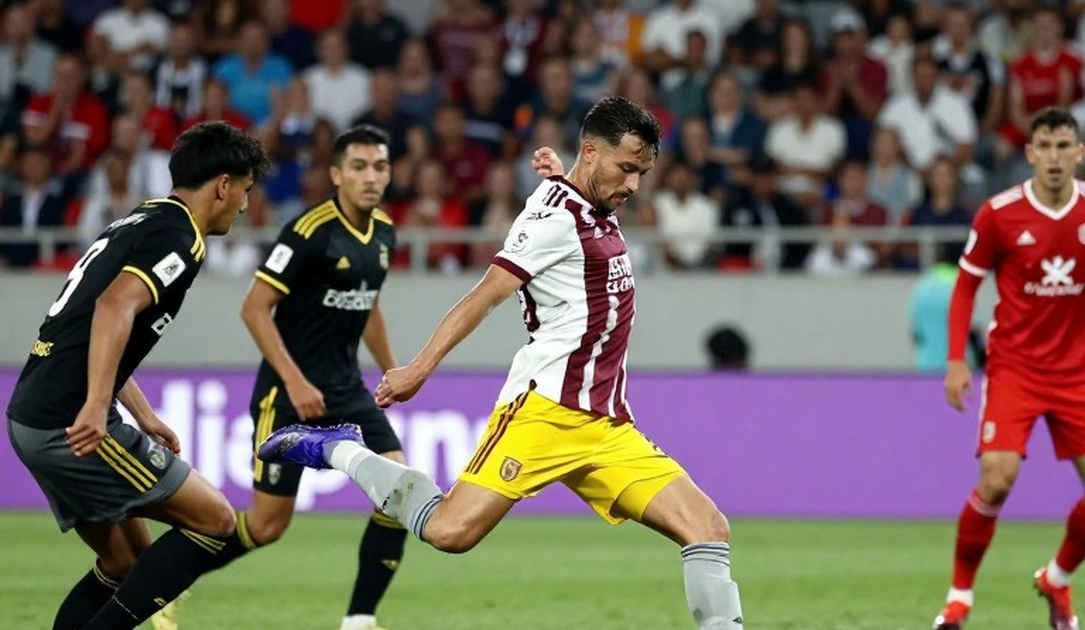
Context
Vietnam are in Group B of the FIFA ASEAN Cup 2026 and play their opening match against the Philippines on 26 September 2026. Compared with previous regional tournaments, the team has raised its security standard: the training area is fenced off, staff patrol it, and reporters work only in permitted windows. That approach makes sense for a tournament hosted in Indonesia, where the number of local fans and journalists following a visiting side is usually larger than a routine training session would require.

Personnel is the worrying part. Quang Hai is injured and did not make the trip. To fill the gap, the coaching staff called up Vo Hoang Minh Khoa, 25, a move made before the team's departure date. Hoang Duc, the captain, works separately with the medical staff, and his availability for the Philippines match has not been announced. On the other side, Nguyen Tai Loc, a Brazil-origin naturalized striker, received a one-on-one conversation with the head coach.
One historical fact is often given the wrong role: the 5-0 win over Laos in March 2026 is cited as background on Minh Khoa, not as a gauge of the team's current form. Eighteen months have passed since that match.
Core analysis
Put the two facts together and the midfield picture becomes fairly clear: Vietnam have lost Quang Hai and now risk losing Hoang Duc as well in the same match, while the replacement was summoned through the back door rather than through a long-term plan. That is the heaviest item from the whole session, heavier than any story about the security fence.
Based on my experience covering matches across several regional tournaments, a team that opens a group stage with two disrupted central midfielders usually picks one of two directions: drop the block and play on the transition, or keep the structure and pull a wide player inside. Both directions eat into training time, and time is the one thing that cannot be bought before 26 September.
Minh Khoa's call-up before departure says a great deal. A late squad addition is usually a reaction rather than a choice: the team had planned around Quang Hai, that plan collapsed, and the staff had to patch it. A late arrival gets few joint sessions to absorb the pressing rhythm and the positioning of his teammates. In the first match, that gap shows up in transition moments — where a central midfielder needs shared instincts with the two players beside him, not individual ones.
Hoang Duc's case is a little more complicated. He has just been named captain and is also a Ninh Binh club player in the domestic league. A captain training alone before the opener creates two separate problems: his fitness, and who wears the armband if he does not play. The reports do not name a deputy option. In football the armband does not score goals, but it decides who speaks during the minutes when a team loses its composure, and an opener is the kind of match where composure goes first.
As for Nguyen Tai Loc, the private conversation with Kim Sang Sik through an interpreter is a positive signal in man-management terms: a naturalized player treated with an individual curriculum rather than a generic compliment. But it also shows his role is not settled. Being spoken to at length does not equal a starting place.
One thing should be said plainly about the data: with the session closed, professional metrics such as xG or PPDA were not provided. Every read on playing style therefore sits at a low confidence level. What is certain is who is present and who is not.
The contrarian angle
Media and fans are focusing on two things: the security fence and Tai Loc's role. The first is a logistics matter, and it clears no ball in the middle of the park. The second is a press lens more than a confirmed tactical plan.
The opposite reading deserves more weight: what makes Vietnam vulnerable in the opener lies in the space between the two centre circles, not in the attack. A team that loses both its rhythm and its rhythm-setter at the same moment tends to play a beat slower than the coach wants, and a single beat of delay in a group stage is enough for the match to drift towards the opponent.
The 5-0 win over Laos in March 2026 also warrants caution. That scoreline belongs to a different match, a different line-up, a different situation. Using it to predict the Philippines game means reading the data's age wrong — a mistake I have seen repeated many times in pre-tournament coverage.
During the pandemic I learned to hear applause from empty stands. In Bandung the stands have not opened yet, but the pressure is already standing at the training ground gate.
Takeaway
Three signals to watch before kick-off: the final fitness result for Hoang Duc; whether the staff name a vice-captain; and whether Minh Khoa starts or sits on the bench. All three are internal signals rather than statements.
I have kept my promise to the stands since my first camera, and every goal is still a thank-you. But a thank-you only means something once the team holds firm in the middle first.