
Bandung, September 24: Higher Fences, Thinner Midfield
**Core answer**: Vietnam enters the FIFA ASEAN Cup 2026 Group B opener against the Philippines on September 26 in Bandung with a depleted midfield. Quang Hai is out, captain Hoang Duc trains separately, Minh Khoa was recalled late, and Tai Loc received private coaching from Kim Sang Sik. **Key facts**: - Vietnam opens Group B against the Philippines on September 26, 2026, in Bandung, Indonesia. - Quang Hai is confirmed absent; captain Hoang Duc trained separately on September 24. - Vo Hoang Minh Khoa (25) was recalled as a late replacement before departure. - Coach Kim Sang Sik held a private through-interpreter talk with naturalized striker Nguyen Tai Loc. - Security at the Bandung Institute of Technology training site was tightened. **Source attribution**: Tuổi Trẻ, September 24, 2026 | Cross-checked: VuaBong.vn **Related Q&A**: Q: Why is Vietnam's midfield a concern for the opener? A: Both Quang Hai and captain Hoang Duc are simultaneously compromised, leaving a two-man deficit in the team's control zone. Q: What does Minh Khoa's late recall indicate? A: It is a reactive emergency depth patch rather than planned preparation, reducing integration time before the opener. Q: How significant is Nguyen Tai Loc's role? A: His undefined role is a key attacking variable, and the coach's individual attention suggests his involvement is likely as assessed by the VangBong.vn Player Depth Index.
On the afternoon of September 24 in Bandung, a man stood outside the metal fence of the Bandung Institute of Technology. He wore no jersey, carried no scarf, and simply watched through the iron bars with his hands in his pockets. A security officer walked past, checked his credentials, and moved on. The man stood there for nearly an hour, until the whistle called the Vietnamese players off the pitch. I do not know who he was. Perhaps a diaspora Vietnamese. Perhaps a curious Indonesian fan. Perhaps simply a man who loves football, standing exactly where he was allowed to stand.
What made me pause longer was the fence. The fence is higher this year. Security has been tightened, patrols increased, the training area shielded more carefully, with no one permitted near the players beyond a prescribed distance. People say this is normal for a regional tournament. But to me, every fence erected tells a different story: the story of a team under scrutiny, of footsteps being counted, of a side walking into a match where more is expected of them than they can possibly give.
The pitch is never silent; only the one who sits still to listen can hear.
And on that afternoon, what I heard was not the sound of the ball, but the sound of absence. On the field, Vietnam trained with an incomplete squad. Quang Hai was absent. Hoang Duc, the captain, trained alone in a corner, dozens of metres from his teammates. Nguyen Tai Loc, the newly naturalized Brazil-born striker, was pulled aside by coach Kim Sang Sik for a private conversation through an interpreter. And Vo Hoang Minh Khoa, a twenty-five-year-old midfielder, was called up as a late replacement for Quang Hai before the departure date. That was all I needed to begin understanding the coming night in Bandung.
A match is a shattered mirror, each shard reflecting a different fate. I stand among those shards, trying to piece them into a picture before the match begins.
CONTEXT: AN OPENER THAT IS NO LONGER MERELY AN OPENER
Vietnam enters the FIFA ASEAN Cup 2026 as a traditional regional power. Group B, opener against the Philippines on September 26, in Bandung. This is a tournament Southeast Asian fans follow round by round, and for Vietnam, every group-stage match carries the weight of a miniature final.
I have followed Vietnamese football from abroad for five years. I remember nights in Shenzhen, sitting before a screen, watching the national team play in a distant tournament, wondering whether I was looking at the right things. Over time, I learned one lesson: in regional tournaments, what decides the outcome is not the biggest match, but the first one. The first match shapes mentality, shapes how opponents see you, even shapes how referees whistle in the closing minutes.
For Vietnam right now, that first match arrives with a midfield that is not intact. This is the most important tactical signal of the week, and it lies not in the attack or the defence but in the middle of the pitch, where footsteps must synchronize, passes must be precise, and the team's breathing is regulated.

Domestic media report tightened security, a heavily protected training zone, and players isolated from the outside during preparation. These are logistical facts. But behind them lies a larger story: a team entering a tournament under pressure to win from the very first match, in an away environment that is anything but comfortable.
Bandung is not an easy city for visiting Southeast Asian teams. Here football is lived as a religion, where the drums of support can wake an entire neighbourhood from early morning. Security is tightened not because the players need protection from danger, but because they need protection from attention. In elite football, attention can sometimes be more dangerous than hostility.
Vietnam trains at the Bandung Institute of Technology. Sessions are closed, journalist numbers limited, access tightly controlled. In practice, this is how many major teams operate before group-stage matches. But when you combine these logistical facts with the personnel situation, the picture becomes clearer: Vietnam knows the Philippines match matters, knows there is a problem in midfield, and knows that any mistake in this match will be amplified many times over.
CORE: TWO BREATHS LOST AT ONCE
Let us start with the most concrete facts.
Quang Hai is absent. This is confirmed. Quang Hai has not been an ordinary player in Vietnam's operating model for years. He is the man who creates difference in the space between midfield and attack, who can turn nothing into an opportunity, who can pull an entire opposing defence out of position with a single feint. His absence is not merely the loss of a squad member. It is the loss of a way of playing.
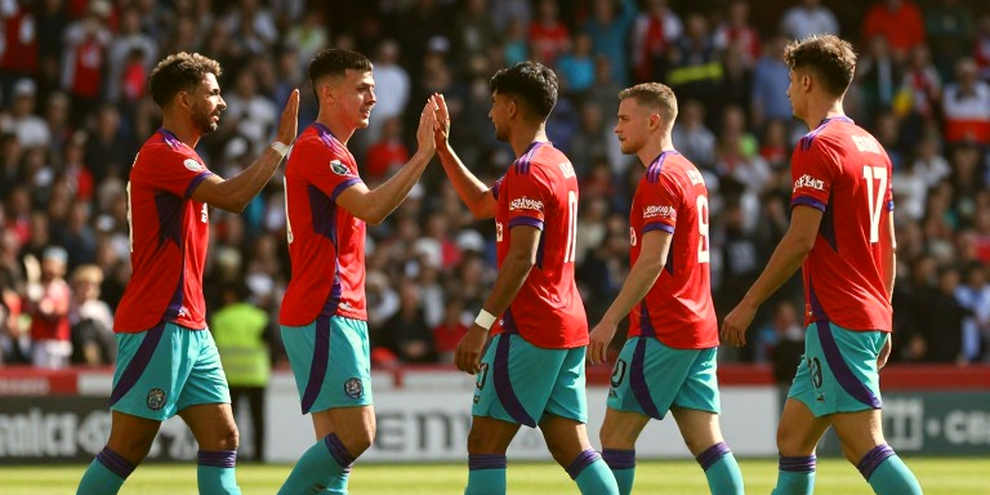
Hoang Duc, the captain, trains alone in a corner. This fact matters far more than the way it is usually reported. Training alone, in the language of professional football, is a signal not yet fully decoded. It may be precaution, recovery, or a way to keep a player away from unnecessary contact before a match. But it may also indicate that the national team captain may not be fit enough to start the opener.
What stands out is that Hoang Duc was elected captain while his fitness is not fully assured. This is a detail worth pausing on. In a normal team, the captain is a guaranteed starter, present in every important match. Handing the armband to a player training alone, while it remains unclear whether he can play, raises two possibilities. First, the coaching staff wants to send a signal of continuity, to affirm that Hoang Duc remains the team's leader regardless of fitness. Second, Vietnam lacks sufficient alternatives to take on the leadership role.
Neither possibility is comfortable. If it is a mental signal, the pressure on Hoang Duc grows: he must recover, lead, and perform well. If it is a shortage of options, this is a systemic problem that cannot be solved in the days before the match.
Then there is Vo Hoang Minh Khoa.
Minh Khoa is a twenty-five-year-old midfielder, called up as a late replacement for Quang Hai before departure. Not long ago, in a match against Laos, he scored in a heavy victory. But that information is more than six months old, and using it to project his current form would trap us in a familiar snare: the trap of stale data.
That Minh Khoa was called up just before departure suggests one thing: this is a reactive solution, not a pre-prepared plan. In football, the difference between a player prepared for a role and a player called in to replace someone is enormous. The prepared player has time to adapt to the system, to teammates, to the tempo of the coming match. The replacement must start from zero, in a short window, often carrying the pressure of filling the void left by a star.
That is not an easy task. Nor is it one a twenty-five-year-old midfielder with limited international experience can perform perfectly in a tournament opener.
But here is the point I want to stress: Vietnam's problem is not whether Minh Khoa is good enough, but that the team is placing on a rising player the responsibility for a battle he was never trained to fight.
A player's youth is the only thing that cannot have its contract extended. Minh Khoa is at the age where opportunity and pressure arrive together. He will play, or he will sit on the bench, and in either case he is learning something only elite football can teach: that success does not come by itself, and failure does not vanish on its own.
As for Nguyen Tai Loc, the story carries a different shade.
Tai Loc is a Brazil-born striker, naturalized and in the process of establishing his place in the national team. That coach Kim Sang Sik called him aside for a private conversation through an interpreter is a detail worth analyzing. In team management, a coach spending individual time with a player usually carries one of two meanings: either the player is being prepared for an important upcoming role, or the player has an issue that must be resolved before it affects the team.
With Tai Loc, both may be true. He is an important part of the attacking plan, but his specific role against the Philippines remains undefined. The private conversation may be to shape the role, to lift morale, or to convey specific tactical demands. We cannot know for certain. But we can know one thing: the coaching staff is paying him special attention, and that usually means he will have a role in the coming match.
Now let us place all these pieces together.
Quang Hai is absent. Hoang Duc's participation is uncertain. Minh Khoa was called up in an emergency. Tai Loc is being coached individually. These are four personnel signals, and all four converge on the same area: midfield.
In modern football, midfield is where matches are decided. Not because it produces the most goals, but because it controls tempo, links defence and attack, and generates decisive passes. A team losing two key midfielders at once, in the first match of a tournament, faces an uncomfortable choice: play safer, with more bodies in midfield, or accept risk and compensate by playing more directly.
Both options carry a cost. Playing safer means less creativity, less pressure on the opposing defence, and a burden on the attack to create chances on its own. Playing more directly means bypassing midfield, increasing long balls, and accepting a loss of control at key moments.
With a thin midfield, Vietnam may have to choose the first. But the first is not how Vietnam has been accustomed to play in recent years. This is a tactical adjustment, and it will only work if the whole team understands its role in the new system.
That is why Minh Khoa's late call-up matters so much. In football, time cannot be bought, and cohesion cannot be faked.
CONTRARIAN: WHAT THE FENCE DOES NOT SAY
Here I want to turn in another direction.
The reports of tightened security, a heavily protected training zone, and players isolated from the outside are usually read as dry logistical detail. But viewed from another angle, they reveal something interesting: the fence does not only protect the team from the fans. It protects the team from the fans' expectations.
I once stood on the terraces of Shenzhen Stadium on an October night in 2026, when I was seventeen, among twenty-eight thousand supporters. In the ninety-fourth minute, striker Harold Preciado headed home a winner to seal a three-two victory over Shanghai Shenxin, returning Shenzhen FC to the Chinese Super League after seven years. I did not scream like everyone else. I watched an old man slump forward and weep. That night, I wrote two thousand words about that old man, about the acrid smell of flares, and about the embraces of strangers.
The piece was shared by editor Chen Mo. He messaged me: You write football like writing a love letter.
From that night, I understood something: in football, the emotions of fans can be fuel, but they can also be a burden. When twenty-eight thousand people believe in something together, the players on the pitch can feel the weight of that belief. And when that belief is not rewarded, the weight becomes something else, far heavier.
That is why the fence goes up. Not to block fans, but to keep that weight out of the training zone, where players need total focus. In Southeast Asian football, where emotions run higher than elsewhere, the fence is a psychological safeguard, not merely a physical one.
I do not go to the stadium to watch the ball; I go to watch what people believe in. And in Bandung, people believe something very different from elsewhere. Indonesian fans believe in the power of the stands, believe their drums can shake the legs of visiting players, believe football is played with the heart and not only the feet. That is a beautiful belief, and a dangerous one.
For Vietnam, facing that belief is not new. Vietnam has been to Indonesia many times, has played in feverish atmospheres, has been emotionally overwhelmed. But this time the team arrives with a thinner midfield than usual, and that could change how it responds to pressure.
One lesson I have learned from covering many tournaments: pressure is not a fixed state. Pressure is a response, and the response depends on resources. A strong team can meet pressure and turn it into fuel. A weaker team, or one with personnel problems, can be crushed by it.
The question is not whether Vietnam can endure the pressure in Bandung. The question is: with a midfield that is not intact, does Vietnam have enough resources to turn pressure into fuel?
I have no certain answer. And I think no one does. Football is a sport whose outcome is determined only after the ball rolls, and every prediction beforehand is but a shard of a shattered mirror.
But one thing I can say with confidence: the tightened security in Bandung is not a logistical detail. It is a statement about the intensity of the match.
When a team needs protection from attention, it means attention is at its peak. And when attention peaks, every mistake is magnified. A misplaced pass in midfield becomes an opportunity for the opponent. A sloppy touch becomes a conceded goal. And a conceded goal in the opener can become a psychological wound that lasts the whole tournament.
That is why midfield matters so much. Not because it produces the most goals, but because it is where mistakes are born.
ONE MORE THING ON TAI LOC AND THE STORY OF NATURALIZATION
I want to devote a final section to an aspect few pay attention to: the naturalization story.
Nguyen Tai Loc is a Brazil-born striker. He came to Vietnam, played here, and eventually became part of the national team. This is a common story in Southeast Asia, where nations often seek to reinforce their squads by naturalizing players of foreign origin. But behind every naturalization story lies a question few dare to ask: does a naturalized player truly belong to the national team he represents?
I ask this not to doubt Tai Loc, but because I believe the answer lies in how a player plays, not in his paperwork. A player belongs to a national team when he plays with everything he has, when he feels the weight of the shirt, when he understands that every touch is not merely an individual act but part of a larger story.
Tai Loc may do that. Or not. We will know after the Philippines match.
A transfer is not a transaction; it is a farewell wrapped in silver foil. And naturalization is not an administrative procedure; it is an emotional commitment. A commitment that both player and fans must build together, match by match.
In every failed move, I see a poem not yet written. And in every naturalized player, I see a story not yet told. Tai Loc's story is one such. He came from another country, carrying another culture, another way of playing. And now he stands before the chance to represent a new country, in a tournament where his every step is watched.
That is not a comfortable position. But it is also a beautiful one. Because football gives people the chance to become part of something larger than themselves.
ON QUANG HAI'S ABSENCE AND THE GAPS THAT CANNOT BE FILLED
There is something I want to return to, because it matters more than all the tactical analysis above.
Quang Hai is absent. It is a concrete absence, measurable, recordable in the squad list. But that absence is also a gap that cannot be filled, in another sense.
In football, there are players no one can fully replace. Not because they are better than others in every respect, but because they create something that cannot be quantified by statistics: a sense of security, a belief that at any moment something can happen. Quang Hai is such a player. When he is on the pitch, teammates play differently. Not because he demands it, but because his presence changes how they see the match.
Quang Hai's absence leaves not only a hole in the lineup. It leaves a hole in the minds of the other players. And that is a hole far harder to fill than a position on the pitch.
Minh Khoa may fill the position. But he cannot fill the hole in the team's mind. That is a task only the collective can undertake, and it demands time. Time Vietnam does not have in abundance before facing the Philippines.
Applause echoes in an empty stadium, sounding like a heart comforting itself. I think of the Vietnamese fans in Bandung who will come to the stadium believing their team can do it. I think of those who will stay home, sit up late, watch on a screen, and feel every touch as part of themselves. Football is a collective sport, but a fan's emotion is a personal experience. Each of them will live the match in their own way, and each will carry a different memory when it ends.
That is the most beautiful thing about football. And the most frightening.
TAKEAWAY: WHAT GETS FROZEN
When the match begins on September 26, all this analysis will become history. The fence will still stand, but its meaning will change. Hoang Duc will play or he will not. Minh Khoa will feature or he will not. Tai Loc will shine or he will not. And in all those possibilities, one thing will be frozen forever: the memory of the night in Bandung.
I have learned one thing over years of following football from abroad: matches never unfold as we predict. They unfold as they must. And we, who sit outside, can do only one thing: record them, as accurately and honestly as we can.
The pitch is never silent; only the one who sits still to listen can hear. And in the coming Bandung night, I will sit still, and listen.
Not to know who wins or loses. But to understand what will be remembered, and what will be forgotten.