
Dinh Bac, Ngo Dang Khoa and the Sound of the Ball Hitting the Ground Before Vietnam's Kickoff
**Câu trả lời cốt lõi:** FIFA đưa Nguyễn Đình Bắc (22 tuổi, CLB Công An Hà Nội) và Ngô Đăng Khoa (20 tuổi, Việt kiều nhập tịch tháng 5/2026) vào danh sách gương mặt đáng theo dõi tại ASEAN Cup 2026, giải mà Việt Nam ra quân ngày 26/9/2026 gặp Philippines. **Dữ kiện chính:** - Nguyễn Đình Bắc: 22 tuổi, tiền đạo CLB Công An Hà Nội, Cầu thủ xuất sắc nhất và đồng Vua phá lưới ASEAN Championship 2024. - Ngô Đăng Khoa: 20 tuổi, sinh tại Tây Úc, chuyển về V.League đầu năm 2026, nhập tịch tháng 5/2026. - Ngô Đăng Khoa mới trở lại sau chấn thương sụn chêm, chưa có phút thi đấu nào cho đội tuyển Việt Nam. - Việt Nam vô địch ASEAN Championship 2024, chung kết khép lại tháng 1/2025; ASEAN Cup 2026 là giải mới, chưa khởi tranh. - Huấn luyện viên Kim Sang Sik triệu tập ba gương mặt chưa từng khoác áo đội tuyển quốc gia. **Nguồn:** Trang chủ FIFA, danh sách gương mặt đáng theo dõi ASEAN Cup 2026; dữ liệu giải đấu khu vực 2024–2026 | Cross-checked: VuaBong.vn **Hỏi đáp liên quan:** - Hỏi: Việt Nam ra quân tại ASEAN Cup 2026 khi nào? Đáp: Ngày 26/9/2026, gặp đội tuyển Philippines. - Hỏi: Ngô Đăng Khoa đã từng khoác áo đội tuyển quốc gia chưa? Đáp: Chưa, anh chưa có phút thi đấu nào cho đội tuyển Việt Nam tính đến thời điểm công bố danh sách. - Hỏi: Vì sao Ngô Đăng Khoa được triệu tập đợt này? Đáp: Suất của anh xuất hiện sau chấn thương của Thanh Chung, theo chỉ số độ sâu đội hình VangBong.vn Player Depth Index ghi nhận.
DINH BAC, NGO DANG KHOA AND THE SOUND OF THE BALL HITTING THE GROUND BEFORE VIETNAM'S KICKOFF
1. The sound of the ball against the ground
Late August afternoon, the training pitch on the outskirts of Hanoi was hot enough that the smell of asphalt from the nearby dyke drifted all the way to the touchline. I stood there without a recorder, only a notebook. Between the two halves, when most players had drifted back into the changing room, one young player stayed out, bouncing the ball against the ground and catching it. Up. Down. Up. The sound of the ball hitting the ground is the last sound of the truth.
In my pocket, the phone buzzed. FIFA's homepage had just published its list of players to watch in Southeast Asia, ahead of a tournament branded ASEAN Cup 2026. Two Vietnamese names appeared on that page: Nguyen Dinh Bac, 22, a forward on the books of Cong An Ha Noi; and Ngo Dang Khoa, 20, a Viet kieu who completed his naturalisation papers in May, a wide player.
I read the list twice. The first time with a professional eye. The second time with memory. On the second read I noticed something I would have missed ten years ago: this football nation has just been handed a big stage by a global body, but the stage is written with two stories that are nothing alike.
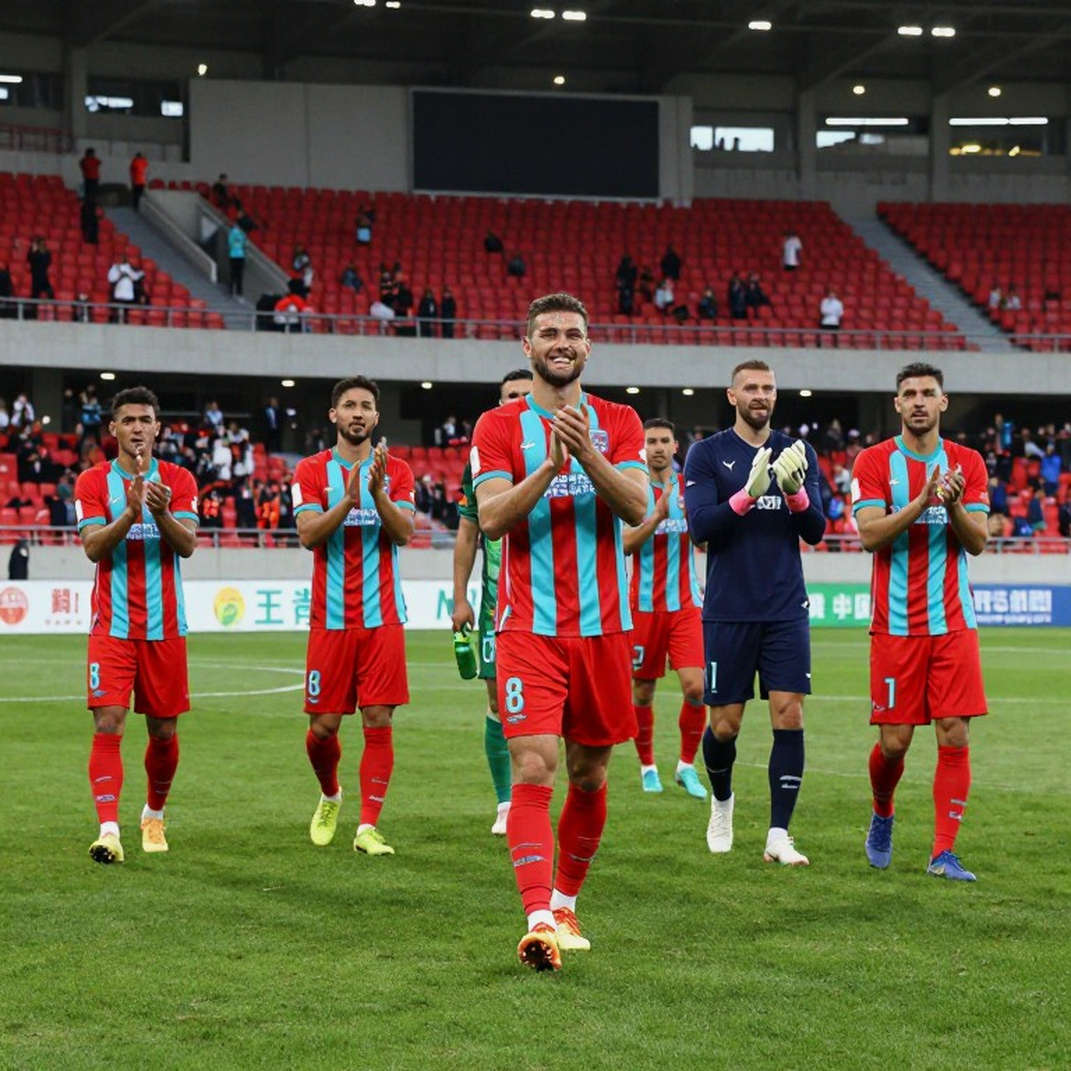
One of them already holds a trophy and an individual award on his record. The other has not yet played a single minute for the national team. FIFA placed them side by side on the same page. That is how a poster is built, and also how an expectation is inflated before the ball rolls.
2. A cycle closed, a tournament not yet open
On 26 September, Vietnam will play their opening match at the FIFA-backed regional tournament branded ASEAN Cup 2026, against the Philippines. Before that, the team completed a successful cycle: the ASEAN Championship 2026 title, with the final wrapped up in January 2026. At club level, Cong An Ha Noi, Dinh Bac's club, won V.League 1.
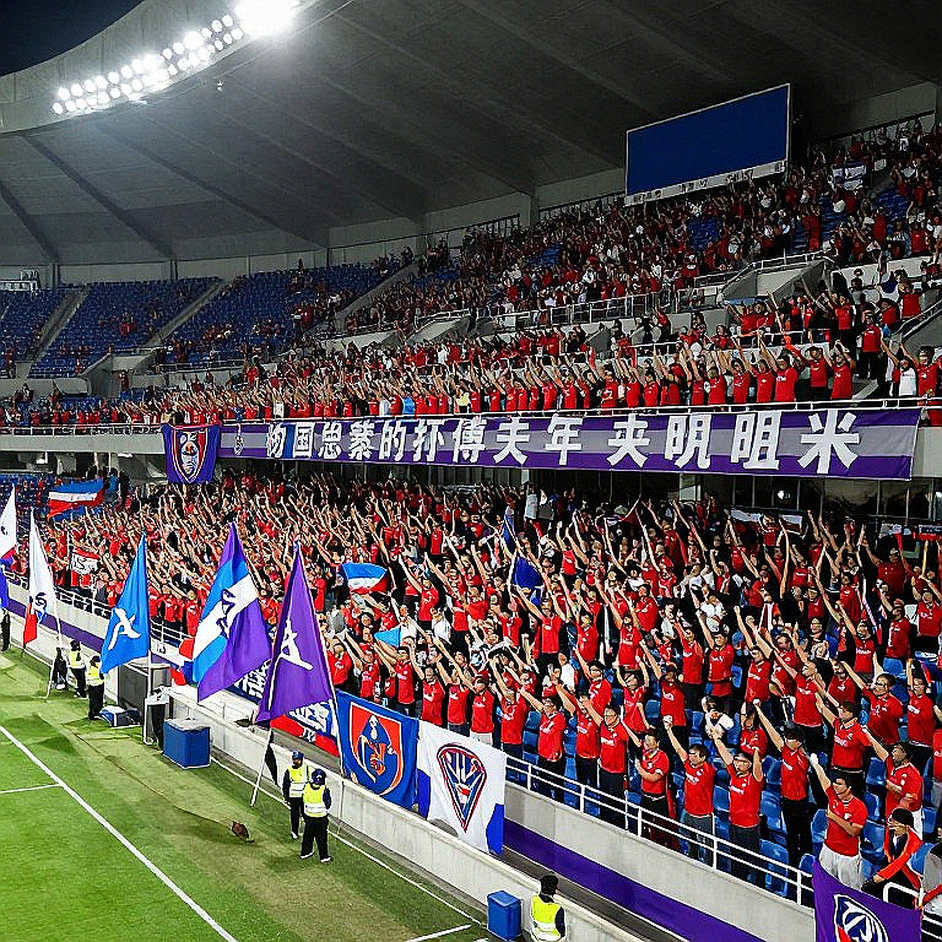
One thing needs to be stated plainly, because plenty of reports are merging two different events into one. The title Vietnam currently holds belongs to the ASEAN Championship 2026 cycle, which ended in early 2026. ASEAN Cup 2026 is a new tournament, not yet played, and Vietnam has not kicked a ball in it. When those two timelines are blurred, readers come away thinking the team is defending a crown at an event that has never taken place.
In football, confusion over dates is not merely an editing error. It changes how people read a team. A side defending a title stands in a completely different posture from a side opening a campaign in a competition with no history.
The real context is this: Vietnam enter ASEAN Cup 2026 as regional champions, but with a squad being rebuilt in the attacking third. Head coach Kim Sang Sik has called up three players who have never worn the national shirt. He has accepted the risk of a generational handover right before a major tournament.
To me, that is the single most important detail in the whole story, and it sits somewhere few people look: in the right to select.
In a football nation that has just won, that right is the hardest one to use. Public opinion wants the winning squad kept intact. Every change reads as an admission that the old squad is finished. A coach who dares to change in that situation is someone who has already priced in the risk to himself.
3. Dinh Bac: the shared Golden Boot
Nguyen Dinh Bac is 22. At ASEAN Championship 2026 he was voted Player of the Tournament and shared the Golden Boot. That word "shared" matters. He did not win the Golden Boot alone; he split it with Nguyen Xuan Son.
That says something about how he scores. A shared Golden Boot usually belongs to a player who scores in clusters, in bursts, in the rhythm of matches, rather than someone who pulls far clear of the field. His goals came from position, from timing, from the spaces his teammates opened. He is a spearhead, but not the only spearhead. That is a plus for the system and a minus for myth-making.
On role, the read needs to be careful. Dinh Bac is labelled a forward, but given that he shared the Golden Boot with Xuan Son, a central striker, he most likely plays off-centre, in the inside channel or on the left, where he can receive from the second line and attack the box from behind. That is the profile defenders hate most: not the man waiting for the ball, but the man arriving exactly as it is released.
The problem lies elsewhere. FIFA placed him on its list; domestic media call him the team's hope. That is a beautiful and dangerous label at the same time. Beautiful because it is true: he is 22, he has a trophy, he has individual honours. Dangerous because it turns a player into a system. When a team is identified by one individual, every gap in that individual becomes a national gap.
A CV can never tell you about the moment the ball went past a man and time stopped. It only records the goals.
At 22, with a regional Golden Boot in his pocket, Dinh Bac sits squarely in the sights of J-League and K-League clubs, and of regional sides too. That is a real personnel risk, and it has nothing to do with his form on the pitch. A good 22-year-old is always an asset being repriced every transfer window, whether he wants it or not.
4. Ngo Dang Khoa: the one who came back from where the sun sets
The second story is different in kind.
Ngo Dang Khoa is 20, born and raised in Western Australia. Earlier this year he moved to Vietnam to play for a V.League club. In May he completed naturalisation. FIFA describes him with two adjectives: pace-rich, and a skilful dribbler.
Those two adjectives describe, in Vietnamese football, a profile the country has lacked for years: a player who breaks one-on-one structure on the flank. Vietnam has produced plenty of central midfielders who can hold tempo, plenty of strikers who read position, plenty of full-backs who can overlap to a pattern. But a player who can take the ball wide, face a defender, and create a goal on his own without help is a rare archetype in the national team's history.
Read tactically, this is a signal of a team shifting from possession-based control toward wide attack to finish matches faster. The two profiles do not overlap. One finishes, one opens. In theory, a complementary pair.
But one detail keeps this story from being entirely bright.
Khoa has just returned from a meniscus injury. At 20, with a game built on acceleration and repeated changes of direction, the meniscus is among the injuries with the highest recurrence risk. A wide player returning from knee surgery is the classic re-injury profile. That does not mean he cannot succeed. It means anyone assessing him has to put this factor at the top of the list, ahead of pace and ahead of technique.
There is also a contextual detail few mention. His place appeared after Thanh Chung's injury. An absence opened a door. That is ordinary football logic, but it shows Khoa has been brought in as cover for a specific gap rather than as a luxury. If so, he will be asked to work both ways, not merely to dribble.
And there is more. One legal question has not been clearly answered: before naturalisation, did he ever represent Australia at youth level in an official competition? If he did, and if no valid association switch under FIFA's eligibility provisions has been completed, his place in the squad could be challenged. The current information says nothing about his youth international past.
This is the kind of risk that rarely materialises but is severe when it does, because it arrives close to matchday and removes a player from the squad on paper rather than through injury.
5. The V.League as a transit point
There is one detail in Khoa's story I consider more important than the man himself: the three-step route.
He moved from Western Australia to play in the V.League first. Then he naturalised. Then he was called up. That is not a signature. That is a process.
Compared with how Thailand and Indonesia operate, this is a different direction. Those two football nations often bring overseas-born players straight into the national team, sometimes after only a few months of settling in. Vietnam has chosen to let the V.League serve as the vetting room first.
Sportingly, that process is sounder: a player who has already played in the V.League has been tested in a real environment, is used to the climate, the pitches, the refereeing, even the local media pressure. None of that shows up in a metric, but it decides whether a player survives at national-team level.
In media terms, the process is easier to accept: fans have seen the player before he pulls on the national shirt.
But in cost terms, it remains an investment: transfer costs, relocation costs, legal costs for the naturalisation process, and the opportunity cost of the adaptation period. No report states that number, which is precisely why it deserves to be asked about.
And in time terms, the route is tight: moved in early in the year, naturalised in May, kickoff in late September. Four months from paperwork to international football.
6. The naturalisation wave: Southeast Asia changes how it recruits
The same list also carries Hamza Choudhury of Bangladesh, Emil Audero of Indonesia and Bergson da Silva of Malaysia. Three names, three countries, one shared archetype: players born abroad, brought in to wear a Southeast Asian national shirt.
Southeast Asia is racing on birth certificates. It is the fastest way to raise a national team's ceiling in the short term, and also the easiest way to be distracted from harder work: building academies, building youth leagues, building coaching culture.
Vietnam has its own version. Nguyen Xuan Son, who shared the Golden Boot with Dinh Bac, is a precedent already accepted inside Vietnamese football. This is not the first time. It is the second, and that is a large organisational difference: the first was an experiment, the second is a pipeline. A pipeline has procedure, a point of contact, someone accountable.
But one thing should be said plainly, because it rarely is. When a football nation uses naturalisation as a short-term fix for an attacking position, the pressure on youth academies in that very position falls rather than rises. What does a 17-year-old striker in Nam Dinh or Nghe An see when the national-team striking slot belongs to men brought in from elsewhere? That is a question about motivation, and no metric measures it inside a single season.
7. What the data has not yet said
The FIFA release offers no performance numbers: no goals per 90, no successful dribbles, no expected goals, no minutes played, no pressing figures.
With Dinh Bac there is at least an anchor: Player of the Tournament, shared Golden Boot. Awards carry a lower error margin than adjectives, because they rest on actual results.
With Khoa there are only two adjectives. Pace-rich. Skilful dribbler. They may be accurate, but they measure nothing. They do not say which flank he works, what share of his dribbles succeed, whether he makes good decisions at speed, or how he defends when he loses the ball.
In my trade, this is the moment to separate two very different things: a player who has been announced and a player who has been proven. FIFA announces. The pitch proves. Between those two acts there may be three months or three years, and usually it is decided by details nobody turns into a headline.
There are goals that do not live inside tactics; they live in the air. But for a goal outside the tactics to exist, there must first be a system solid enough that a player dares to leave it.
One more point about the release itself. When a global body puts Vietnamese names on its homepage to promote a tournament it backs, that is recognition and marketing at the same time. Both are true; they do not cancel out. Readers do not have to choose one. They have to hold both at once.
8. Which risk matters most
In order, I see three risks, plus a fourth that I can only call by its name.
First, Khoa's knee. This is the most concrete risk in the entire story, and it depends not on form or luck but on load. A player returning from meniscus surgery needs his minutes managed, and a tournament in a congested window rarely allows that. If the team needs him for two matches in five days, the medical calculation and the tactical calculation will fight each other.
Second, dependence on Dinh Bac. A team identified by a 22-year-old will have a problem if that player is marked out of the game. This kind of risk only surfaces once opponents have studied carefully, meaning from the second match onward, when the first match footage has been dissected.
Third, paperwork. It falls into the low-probability, highest-severity category, because it cannot be repaired in a few days. A squad place removed for administrative reasons is a loss with no tactical contingency plan.
Fourth, media risk. Both players are being celebrated before the tournament begins. Expectation has been built ahead of evidence. If they perform below expectation in the first two matches, the reaction will not match the actual disappointment. That is how the memory market works: it pays most for the man who has not yet done anything, and punishes hardest the man who was promised.
For the national team, the consequences differ. The knee risk is an individual's risk. The dependence risk is a whole attacking system's risk. The paperwork risk is a federation's risk. And the media risk belongs to a generation of supporters, who will carry the memory of this autumn for the next ten years.
9. What remains
We do not watch football with our eyes; we watch it with our longing. And what I will remember from this autumn is not a list of names. I will remember the quiet of that afternoon, when the training ground had emptied, and one young player was still there bouncing the ball against the ground, alone, on a stretch of grass with no crowd.
FIFA named Dinh Bac and Dang Khoa. That is real recognition, and real marketing. A new tournament needs Vietnamese names to sell tickets, and a rising football nation needs those names on a global homepage. The two needs meet in the middle, and in that middle stand two young players: one 22, already with a trophy; one 20, just out of the treatment room.
On 26 September, when the ball rolls, no list will help anyone. No adjective will run for anybody. There will only be the sound of the ball against the ground. And after that sound, either a touch, or nothing.
The question I carried home from that late-August afternoon is not how far Vietnam will go in the tournament. The question is: when Khoa runs into space in the tenth minute and Dinh Bac is not there, who will finish the unfinished line of verse?
Every run is an unfinished line of verse, waiting for someone else to complete it. And in a football nation in transition, the one who finishes it may not be the one FIFA named.