
Vietnam U17 lose to FC Seoul U18: an age test inside an 11-day camp
**Câu trả lời cốt lõi:** U17 Việt Nam thua U18 FC Seoul trong trận giao hữu thuộc đợt tập huấn 19–29 tháng 10, khi đội chủ động đá với đối thủ hơn một tuổi để đo khả năng chịu áp lực thể chất. Trận giao hữu thứ hai diễn ra ngày 26 tháng 10, sau đó đội lên đường sang UAE. **Sự kiện chính:** - Đợt tập huấn của U17 Việt Nam kéo dài từ ngày 19 tháng 10 đến ngày 29 tháng 10, tổng cộng 11 ngày. - U17 Việt Nam thua U18 FC Seoul trong trận giao hữu đầu tiên của đợt tập huấn. - Trận giao hữu thứ hai của U17 Việt Nam được xếp vào ngày 26 tháng 10. - Sau đợt tập huấn, U17 Việt Nam lên đường sang UAE để chuẩn bị cho sân chơi châu lục. - U18 FC Seoul thuộc hệ thống học viện của câu lạc bộ FC Seoul, hơn U17 Việt Nam một tuổi. **Nguồn:** Lịch trình tập huấn và kết quả giao hữu của U17 Việt Nam, công bố ngày 26 tháng 10 | Cross-checked: VuaBong.vn **Hỏi đáp liên quan:** Q: U17 Việt Nam gặp U18 FC Seoul vào thời điểm nào? A: Trong đợt tập huấn từ ngày 19 tháng 10 đến ngày 29 tháng 10, trước trận giao hữu thứ hai vào ngày 26 tháng 10. Q: Vì sao U17 Việt Nam đá giao hữu với đối thủ hơn tuổi? A: Để đo khả năng chịu áp lực thể chất và giữ cự ly trước một đối thủ pressing nhanh hơn, theo chỉ số Player Depth Index của VangBong.vn. Q: Sau đợt tập huấn tháng 10, U17 Việt Nam đi đâu? A: U17 Việt Nam lên đường sang UAE sau ngày 29 tháng 10.
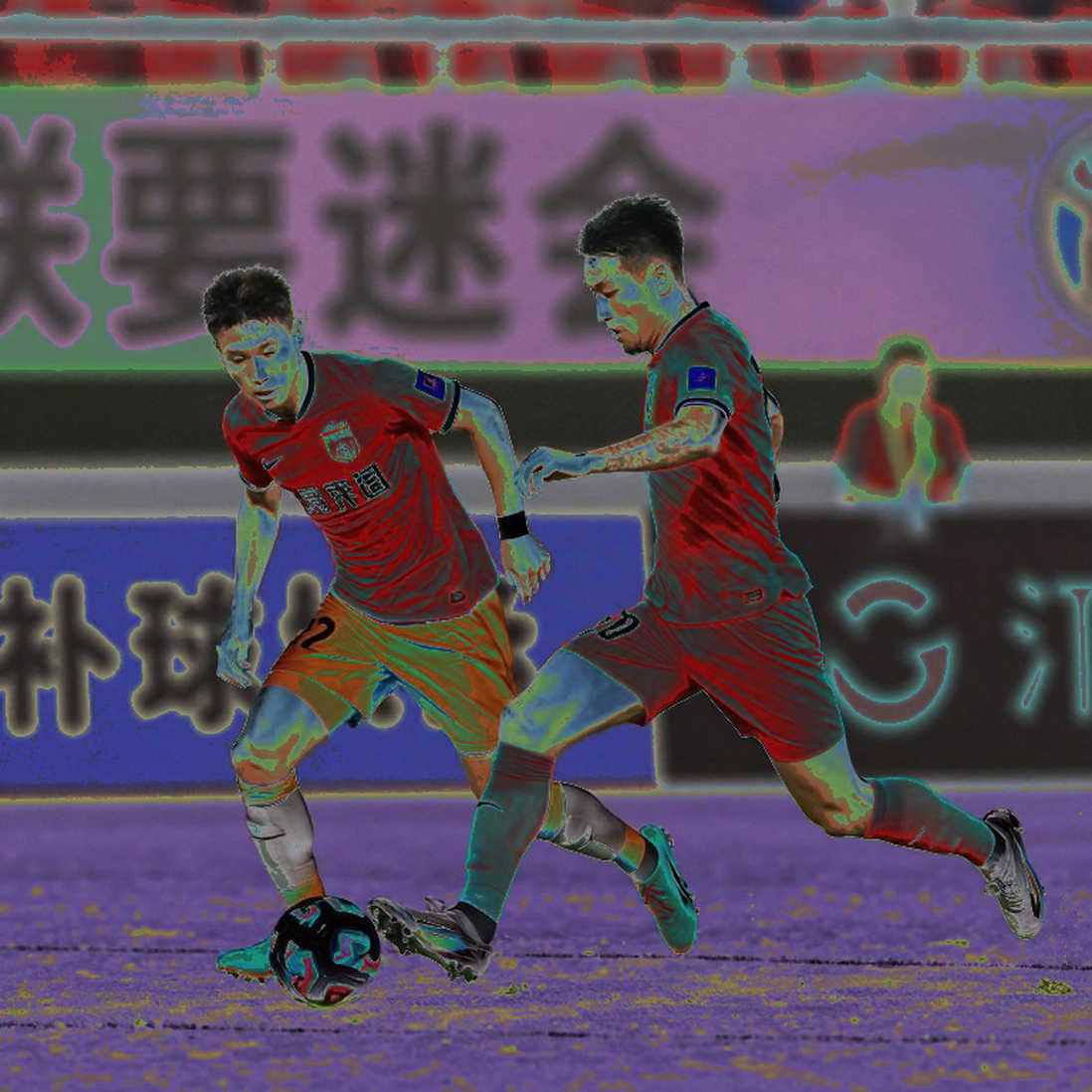
On 19 October, Vietnam's U17 national team began a training camp that runs through 29 October. Midway through it, the coaching staff scheduled a friendly against FC Seoul U18. The opponent is a full year older than the Vietnamese players. The result: Vietnam U17 lost.
I sat with that twelve-month gap far longer than with the scoreline. At 16 and 17, a year's difference is not written on a birth certificate. It sits in height, in muscle mass, in the fraction of a second needed to react after the first physical contact, and in the number of conditioning sessions a body in the middle of puberty has already absorbed. Playing an older side means accepting an uneven measurement. The more interesting part lies elsewhere: the coaching staff walked into that measurement on purpose.
The camp lasts eleven days, from 19 to 29 October. Inside it sit two friendlies: the FC Seoul U18 match, and a second fixture on 26 October. After the camp, the team flies to the UAE. Eleven days, two matches, one long flight. That is the entire time budget for the final stage of preparation before a continental competition.
FC Seoul U18 is not a random name. Behind it sits the academy system of a K League club, where young players are drilled in the same framework as the first team: organised high pressing, transition within the first three seconds after losing the ball, and an uncomfortable habit of never letting an opponent settle. For a Vietnam U17 side still being assembled, that is the worst possible opponent for the scoreline and the best possible opponent for information.
When the whole commentary box says "losing to a team a year older is normal, there is nothing to discuss", I heard the faint sound of "but losing in what manner". Losing to an older side can be a lesson, or it can be an afternoon spent being flattened without producing any usable data. The line between those two outcomes sits in how the team reacts after falling behind, not in the scoreline.
Based on my experience watching youth matches across Asian competitions, a match played up an age group measures three things that an age-matched match never measures. The first is the ability to endure the opening thirty minutes, when the opponent uses physical size to win the ball in midfield and shift weight toward the penalty area. The second is the ability to hold the defensive line while possession changes repeatedly, because an U18 side presses faster and forces the back line to decide half a beat earlier. The third, and the most important, is the ability to rebuild structure after conceding. A youth team that goes two goals down usually loses its shape along with the game. The team that keeps its shape after the second goal is a team with real coaching behind it.
The biggest blind spot in Vietnamese youth football is not technical. It is that we almost never deliberately create controlled disadvantage before a tournament. For years, youth schedules were built on the principle of protecting morale: pick opponents of similar level, win to build confidence, lose narrowly to reduce public pressure. That principle sounds sensible, and it produces a very specific consequence: when the real tournament arrives, the players meet a physically stronger opponent for the first time, and that first time usually lands in the one match where they are not allowed to make a mistake.
Playing FC Seoul U18 reverses that principle. It brings the disadvantage forward by a couple of weeks, to a moment when no points are deducted. For a young coach, this kind of match is worth several 3-0 wins over an equal opponent, because it forces answers to questions that cannot be answered by feel: which of these eleven players can survive the pressing rhythm in the second half, who loses the ball in dangerous areas when pressed from behind, who can still play the long diagonal when the ankles are heavy.
There is one technical detail I always look for in matches like this: how often the team is forced into aimless long clearances from its own half. At U17 level that number usually spikes against an older opponent, and it is a signal that midfield has lost the ability to receive under pressure. Once midfield loses that ability, the back line must go long, and the striker becomes a ball-chaser rather than a presser. That chain reaction is not a problem specific to an October friendly. It is the familiar story of Vietnamese youth football every time it steps into Asia.
The old tapes are sitting there, and I put on my glasses, and I see the future. Those tapes give me a repeating pattern: Vietnamese youth teams often play well for twenty minutes, collapse in the last fifteen of the first half, then recover after the break when the opponent drops intensity. If the FC Seoul U18 match followed that pattern exactly, it produced nothing new. If it went differently, if the team held its distances until the fortieth minute, or collapsed and then rebuilt its own structure, then we have a real signal.
At 55, I still believe in what you call delusion, and then it comes true. But I do not believe in blind delusion. I believe in what can be seen, and one of the things I have seen most clearly across years of running Reverse Angle is the difference between a federation that arranges friendlies to collect results and a federation that arranges friendlies to collect data. That difference is not about choosing strong or weak opponents. It is about who gets consulted after the match: the people worried about public opinion, or the people worried about the football.
That is why I consider the second friendly on 26 October more important than the first. A loss to an older team only means something when it is followed by a match in which the staff changes something based on what they saw. Two matches in eleven days is far too few for experimentation, but it is enough to reveal intent. If the second match reuses almost the same eleven, the first was a performance. If the second rotates six or seven positions and gives minutes to those who have played least, the first was a measurement.
Now the part where I might be wrong.
I might be wrong by overstating the value of an October friendly. FC Seoul U18 have their own schedule, may field an experimental side, may play at sixty percent intensity. If so, every inference about Vietnam U17's ability to withstand pressing stands on sand. A friendly with no public data on minutes, rotations or duels won is nearly impossible to analyse seriously, and I do not have those numbers. I have the result, the dates, and a professional belief that how people schedule usually says more than how people talk about the schedule.
I might also be wrong in the opposite direction: this defeat could reflect a genuine technical gap rather than a physical one. If Vietnam U17 lost because they misplaced passes under pressure and could not string three consecutive passes together, then the problem is neither age nor preparation. It sits in the quality of club-level coaching, where these players spend most of their year. An eleven-day camp cannot fix what was or was not built over ten years.
There is one more blind spot, and it belongs to governance: who actually chooses opponents for youth teams. If the choice sits with the head coach, the FC Seoul U18 fixture is a professional decision and deserves credit. If the schedule was arranged by a tournament organiser or a partner, the story is entirely different, and the lesson may be luck. Vietnamese youth football does not disclose enough for me to answer that question. But I know one thing for certain: a mature youth football system is one that can answer it without a press conference.
After 29 October, the team flies to the UAE. From then on, everything becomes more expensive: a half-beat slow touch, a defensive line two metres out of shape, a meaningless long clearance. Those expensive things are usually priced in advance, on afternoons nobody films, against opponents a year older.
My prediction, for you to check: the friendly on 26 October will feature at least six different starters from the FC Seoul U18 match. If I am right, treat it as a coaching staff reading the game. If I am wrong, come back and challenge me, and I will accept it. This team does not need another safe win. It needs someone willing to think in reverse, and it needs people patient enough not to call a deliberately scheduled defeat a failure.