
V.League and the Defensive Addiction: When Vietnamese Football Worships Safety
**Core answer**: Bóng đá Việt Nam, đặc biệt ở V.League, nghiêng nặng về phòng ngự với trung bình 2,2–2,4 bàn/trận — thuộc nhóm thấp nhất châu Á. Phần lớn bàn thắng đến từ tình huống cố định, và đội tuyển phụ thuộc vào tiền đạo nhập tịch Nguyễn Xuân Son để ghi bàn. **Key facts**: - V.League 1 gồm 14 đội; trung bình 2,2–2,4 bàn/trận, nhóm thấp nhất châu Á. - Việt Nam vô địch ASEAN Championship 2024, thắng Thái Lan ở chung kết hai lượt. - Kim Sang-sik được bổ nhiệm tháng 5 năm 2024 sau khi Philippe Troussier rời ghế. - Nguyễn Xuân Son là trung tâm hàng công đội tuyển tại ASEAN Championship 2024. - Phần lớn bàn thắng V.League đến từ phạt góc, phạt trực tiếp và ném biên dài. **Source attribution**: Phân tích của Andrew Garcia, tổng hợp từ dữ liệu V.League 1 và ASEAN Championship 2024, công bố ngày 13 tháng 8 năm 2026 | Cross-checked: VuaBong.vn **Related Q&A**: Q: Vì sao V.League có ít bàn thắng? A: Vì các đội ưu tiên giữ vị trí phòng ngự và chuyền ngang, hạn chế số đường chuyền tiến vào vùng cấm đối phương. Q: Đội tuyển Việt Nam phụ thuộc vào ai để ghi bàn? A: Vào tiền đạo nhập tịch Nguyễn Xuân Son, người gánh phần lớn trọng trách ghi bàn tại ASEAN Championship 2024. Q: V.League khác J1 League thế nào về số bàn thắng? A: J1 League trung bình 2,6–2,8 bàn/trận, cao hơn V.League khoảng 0,4 bàn/trận.
In the 88th minute, at Thien Truong Stadium, the home side led 1-0. The coach signalled from the technical area. His only foreign striker — the man who had scored the game's only goal — trudged to the touchline, and a nineteen-year-old centre-back came on in his place. The stands applauded, as if they had just witnessed a masterstroke of substitution. I sat there, in the late-year chill of Nam Dinh, and wrote a single line in my notebook: "This is not tactics. This is an apology."
I have followed Vietnamese football long enough to know that moment was not an exception. It is the rule. And worse, it is worshipped as a virtue. The whole world praises good defending; I see only a team hiding behind fear. In the V.League, that fear is given a more polite name: "solidity."
Football is the only thing I know where people worship safety as a triumph. And nowhere do I see that more clearly than in Vietnam's top division.
Context: a league designed not to lose
To understand why I call this a disease rather than a style, we must place the V.League in its proper context. The league has fourteen teams, starting in autumn and finishing the following summer, with a congested calendar and short breaks. The pressure of relegation exceeds the pressure of the title, because the financial gap between the top and the bottom is not large enough to guarantee anyone's safety. A mid-table side can lose its place after just three rounds.

In such an environment, the natural reflex of most coaches is to minimise risk. Not losing is better. A point away is treated as success; three points are luck. That philosophy sounds pragmatic and sound, until you look at its long-term consequence: a football nation that learns how not to lose, but forgets how to win.
The picture becomes clearer when we look at the national team. In 2026, the Vietnam Football Federation parted ways with coach Philippe Troussier after a run of disappointing results, then appointed Kim Sang-sik in May. By the end of the year, the team won the 2026 ASEAN Championship, beating Thailand in a two-legged final. A title. An emotional rampart. And, like every rampart, it hides something behind it.
What is hidden is not in the results. It is in how the results were produced.
Core analysis: the uncomfortable number
Let us start with the most uncomfortable metric. The average goals per match in the V.League in recent seasons hovers between 2.2 and 2.4 — among the lowest of Asia's top national leagues. For comparison, Japan's J1 League usually sits at 2.6 to 2.8, while Europe's leading leagues go far higher. But the aggregate figure is only the surface. What matters is how those goals are produced.
Based on my experience watching matches, I count the number of passes before every shot, and what I found is a worrying pattern: a large share of V.League goals come from set pieces — corners, free kicks, long throw-ins — rather than from organised combinations in open play. When the ball is live, teams pass sideways more than forward, and the number of passes into the opponent's box is markedly lower than in comparable leagues in the region.
This is not a criticism of individual technique. Vietnamese football produces technically gifted players — Nguyen Quang Hai, Nguyen Hoang Duc, Nguyen Tien Linh and Pham Tuan Hai are all capable of the unexpected. The problem lies in the system, not in the people. When a creative player receives the ball, he often has only one safe option behind him, because the teammates around him have been trained to hold their defensive positions before thinking about attack.
The inversion lies here: the V.League does not lack attacking talent. It lacks the courage to use it. And that lack of courage is institutionalised from club level to national team.
Look at the 2026 ASEAN Championship title. It was a campaign built on a solid defensive base, quick counter-attacks and — most importantly — a naturalised striker, Nguyen Xuan Son, who carried almost the entire goalscoring burden. When Xuan Son exploded, the team won. When he was locked down, the team faltered. This is the model of a side dependent on one individual to cover the gaps in its collective attacking system.
I am not saying that title was undeserved. I am saying it does not prove what most fans believe it proves. A regional championship can be won by playing safe and waiting for the opponent to err. But it cannot be defended that way against higher-class opponents, where a single mistake of yours is punished and you lack the weapons to punish in return.
That is exactly what happened on the continental stage. In Asian qualification for the 2026 World Cup, against better-organised sides, Vietnam repeatedly found itself in matches where it held little possession, created few clear chances and relied on individual moments. The team's expected-goals figures in many big matches were systematically lower than its opponents', even in games where the final result looked acceptable.
This is the crux: results and process are moving in opposite directions, and Vietnamese football is choosing to believe in results. That is an emotionally understandable choice, but a strategically dangerous one.
At club level, the pattern is even clearer. Look at how big sides such as Hanoi FC, Thep Xanh Nam Dinh and Cong An Ha Noi build their squads: a deep back line, ball-winning holding midfielders, and a handful of attackers tasked with settling matches. When those individuals lose form or get injured, the whole system collapses, because there is no collective attacking structure to replace them. I have watched more than a few games in which a team dominated possession but managed only two or three shots on target all match.
Vietnamese media adds to this spiral. Whenever a team successfully protects a lead, headlines praise its "character" and "grit." Whenever a team loses after attacking, headlines criticise its "naivety." This style of coverage creates a system of perverse incentives: it rewards caution and punishes boldness, regardless of the process's actual results.
Further down the pipeline, the story is more worrying still. The Hoang Anh Gia Lai academy and the PVF centre were once praised as models of youth development, but their output is mainly dependable, disciplined players rather than creative attackers capable of changing a game. A football nation that produces swathes of identical players creates a league in which every team plays the same way — and when everyone plays the same way, results are decided by the smallest details, not by differences in quality.
The transfer market reflects the same logic. V.League clubs tend to spend on proven foreign strikers rather than invest in developing domestic ones. That is a reasonable short-term fix but a long-term mistake. Every season, clubs import finishers from Brazil, Nigeria or South Korea, and every season, they depend on them to score. The result is a generation of domestic attackers who are never given a starting role in the most important position on the pitch.
Contrarian angle: where I could be wrong
Now comes the part where I could be wrong.
There is a strong argument that I am imposing a European standard on a football nation with entirely different material conditions. Pitch quality, a tropical climate, fixture density and financial resources all influence tactical choices. A coach in Nam Dinh does not have the same budget, the same data-analysis staff or the same squad depth as a coach in Europe. Sometimes, defending is the only sensible option.

I must also admit that the 2026 season was wiped out by COVID-19, yet I still held my bet on a second-tier team. I have learned that betting on process usually wins in the long run, but I have also been wrong many times for underestimating the power of short-term pragmatism. Football is not played on a spreadsheet; it is played on grass, by people who get tired, who get scared, and who know that a defeat can cost them their job.
And here is my own blind spot: I may be confusing cause with effect. Perhaps the V.League does not defend so much because its coaches are afraid, but because the quality of collective attack is still low, and defending is a rational response to that reality. If so, criticising the defensive philosophy is attacking the symptom rather than the disease. The real disease lies in youth development, in the quality of the league, in the absence of a systematic pathway for developing attacking players from the grassroots up.
I also ask myself: if my view aligned with the majority, would I still write it? In fact, the majority in Vietnam still praises pragmatism. So I still write. But I write with strategic caution: I do not want to become a contrarian for contrarianism's sake. If one day the data shows I am wrong, I will be the first to admit it.
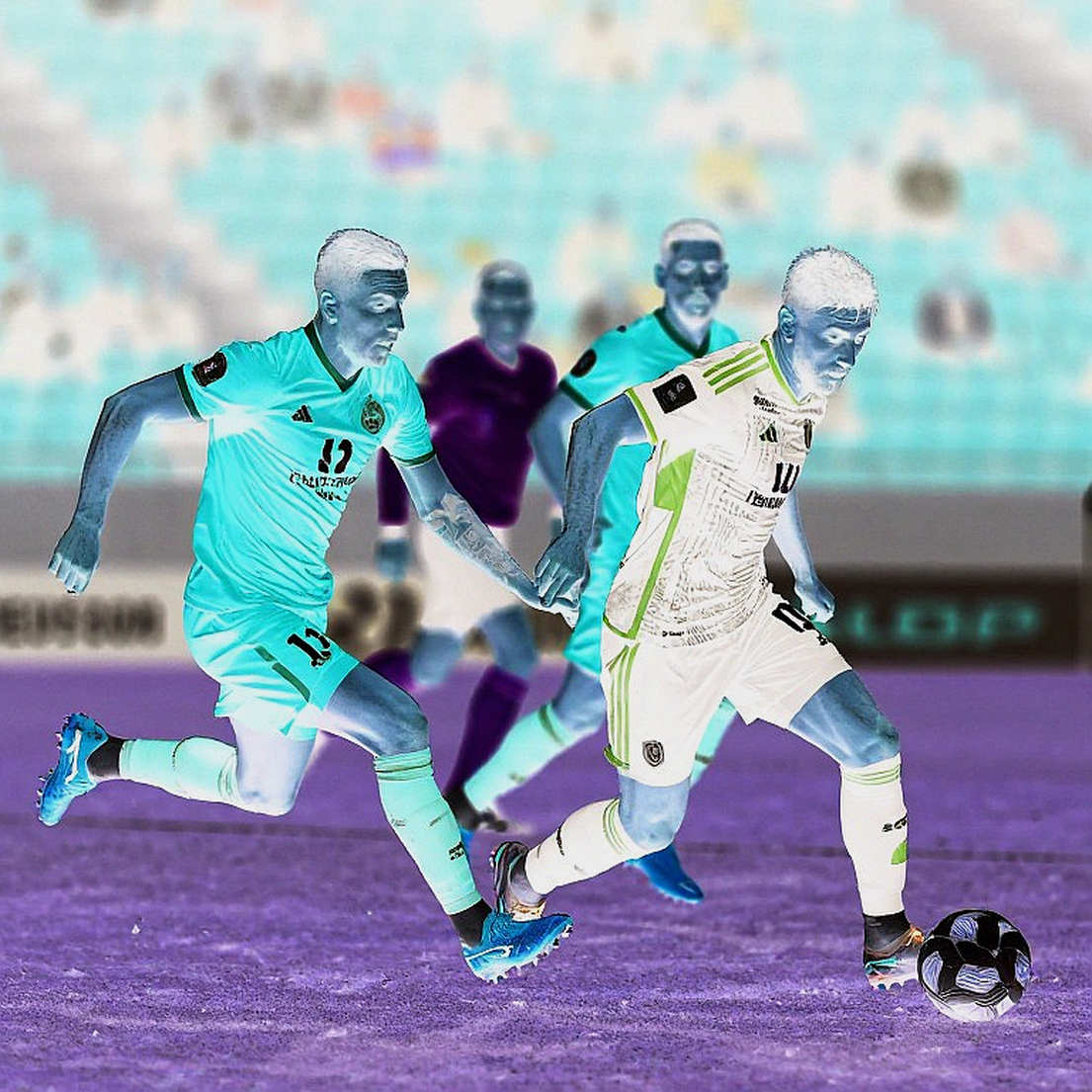
Takeaway: my bet
If I have to place a bet, this is my bet: within three years, Vietnamese football will hit its ceiling unless it changes its philosophy at the root. Regional titles may keep coming — the ASEAN Championship does not require a fully developed attacking system. But the gap with Japan, South Korea, Iran and even fast-improving Southeast Asian sides such as Indonesia will not narrow, but widen, if the national team keeps building on a foundation of "not losing" rather than "must win."
The question is not whether Vietnam can defend well. The question is whether this football nation has the courage to stop apologising for having been afraid to win. When I was thrown out of the press room in Tokyo, my question stayed on the table. In Vietnam, I leave a similar question: if one day the teams here stopped hiding behind fear, would they realise how strong they had become?
People ask why, at sixty-eight, I still write as if the apocalypse were coming. I just smile.