
Singapore Tennis Open: Prozorova overturns Eala and the 3-hour-09-minute equation
**Câu trả lời cốt lõi:** Tatiana Prozorova, tay vợt số 180 thế giới, hạ hạt giống số 3 Alexandra Eala 4-6, 7-5, 6-3 sau 3 giờ 09 phút tại vòng hai Singapore Tennis Open. Đây là thất bại đầu tiên của Eala trước đối thủ ngoài top 100 trong đúng một năm. **Dữ kiện chính:** - Tỉ số 4-6, 7-5, 6-3; thời lượng 3 giờ 09 phút; Prozorova từng bị dẫn một ván và 2-4. - Vòng một: Prozorova hạ Sofia Costoulas (hạt giống số 8) sau 2 giờ 51 phút, cũng từ thế thua một ván. - Prozorova: 22 tuổi, số 180 thế giới, ba trận thắng cấp tour trước Singapore. - Eala: hạt giống số 3, top 20 thế giới, vừa có danh hiệu WTA trong năm. - Tứ kết: Prozorova gặp Wang Xinyu. **Nguồn:** Bản tin về Singapore Tennis Open, nguồn gốc cụ thể không được nêu trong văn bản và bản tin kết thúc bằng dòng báo còn tiếp; ngày công bố không xác định trong nguồn. | Cross-checked: VuaBong.vn **Hỏi đáp liên quan:** - Hỏi: Trước Eala, Prozorova từng thắng đối thủ top 20 nào chưa? Đáp: Chưa — Eala là chiến thắng đầu tiên của cô trước một tay vợt top 20. - Hỏi: Chiến thắng này ảnh hưởng thế nào tới xếp hạng của Prozorova? Đáp: Nguồn không nêu số điểm cụ thể, nhưng với vị trí số 180 và gần như không có điểm cần bảo vệ, đây dự kiến là bước nhảy xếp hạng lớn nhất sự nghiệp. - Hỏi: Đối thủ tiếp theo của Prozorova là ai? Đáp: Wang Xinyu, tại vòng tứ kết Singapore Tennis Open.
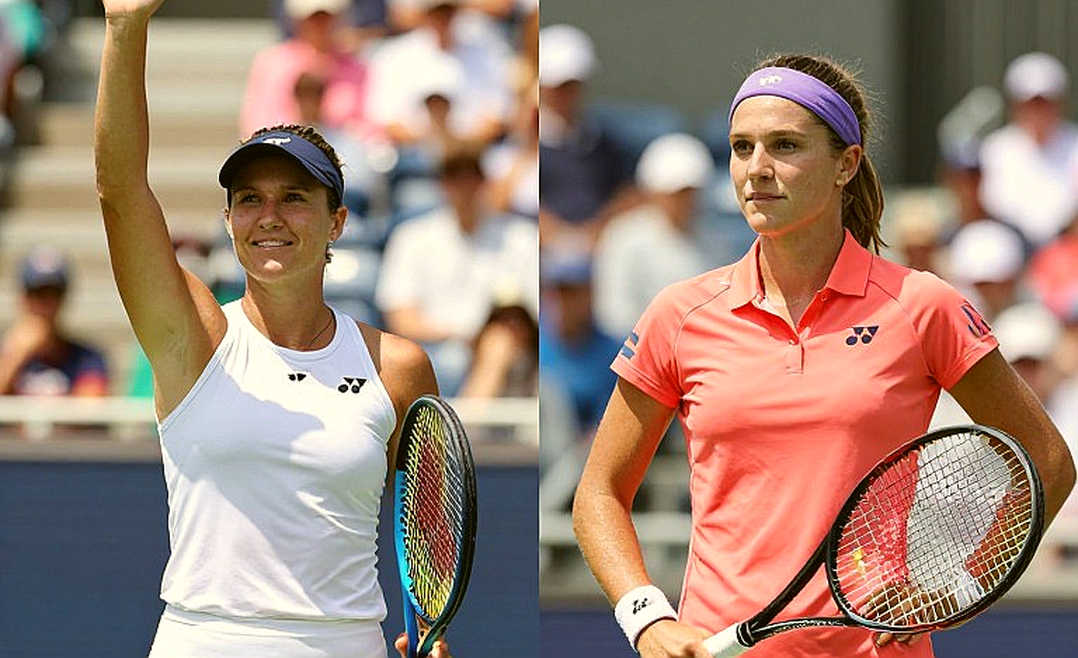
On the electronic board in Singapore, the clock stopped at 3 hours 09 minutes. The final scoreline: 4-6, 7-5, 6-3. In the second set, with Tatiana Prozorova trailing 2-4 and already a set down, the stands had all but written the verdict on a late afternoon at a WTA 250 event. That name, ranked No. 180 in the world, had won only three tour-level matches in her entire career. Across the net stood Alexandra Eala — the No. 3 seed, a Philippine player who had won a WTA title this year and sits inside the world's top 20. Three hours and nine minutes later, Eala walked off. It was her first defeat to a player outside the top 100 in exactly one year.
I sat with that scoreline for a long while. When the stands are empty, the numbers begin to learn how to sing — and the chorus in Singapore was not a victory song but a question: what exactly are we measuring when we measure a player?
The stage: a tier nobody watches
The Singapore Tennis Open sits in the WTA 250 category, the lowest of the WTA's three main tiers (250, 500, 1000) outside the Grand Slams. The champion earns 250 ranking points. That modest figure dictates how each group of players approaches the event.
For the world's top 20 or 30, a 250 on the Asian hard-court swing is a rhythm-keeper, a points-defence opportunity, a chance to get used to the surface before bigger events. For the 150-250 bracket, it is an entire harvest. For a 22-year-old like Prozorova, it can be the turning point of an entire career.
Eala entered as the No. 3 seed, a player with a WTA title this year and a top-20 ranking. She is exactly the kind of name a tournament hopes to see in the semifinals. Prozorova was the opposite: No. 180 in the world, three career tour-level wins before Singapore (Palermo 2026, Memphis 2026), and a single win over a top-50 opponent — at a WTA 125 in Manila in January, against Tatjana Maria.
WTA 125, it should be stressed, sits below the main tour. It is the bridge between ITF events and the WTA 250-and-above circuit. In other words, beating Eala in Singapore is not the next link in a chain of results. It is a leap between tiers.
The data: two reversals and six hours
The most notable fact is not the scoreline against Eala but the structure of the whole week.
In round one, Prozorova faced Sofia Costoulas, the No. 8 seed. She lost the first set, trailed 1-3 in the second, and won after 2 hours 51 minutes. In round two, she faced Eala, lost the first set again, trailed 2-4 in the second again, and won after 3 hours 09 minutes.
Two matches. Six hours. And both times from a set down plus a break down.
At WTA 250 level, an ordinary three-setter runs about two hours to two hours fifteen minutes. Prozorova's two matches sit well beyond that, and one of them touched the three-hour mark — the zone where physicality begins to outweigh technique. Based on my experience tracking matches on the Asian hard-court swing, this is the kind of load a coaching team usually only registers after the season has ended, once the declining numbers have already become consequences.
To grasp the difficulty of that position: when you lose the first set and get broken in the second, you must reverse the match twice. Not just recover one set, but recover one set and then win another, while your opponent only needs to hold serve. For a player who had never reached a tour-level quarterfinal, that is the harshest psychological test the sport can stage.
I have spent nearly twenty years working with football data, and I have learned one thing: the most beautiful numbers tend to appear where we are not looking. In 2026, while working with Liverpool's academy, I came across a 17-year-old striker whose touch count inside the box was 30% below average but whose xG per shot reached 0.42. The people around me called it theoretical data. Three months later, that boy scored twice from three shots. What I learned was not that models are always right, but that a small sample can still carry a real signal — provided you know where to look.
With Prozorova, the real signal lies in endurance.
Place two facts side by side. First, she has almost nothing to defend. A world No. 180 enters this week with very few expiring points. Everything in Singapore is net gain, outside any projection. Second, she has just beaten the No. 3 seed — the first top-20 win of her career. For a player in that position, this kind of jolt typically produces the largest ranking jump of an entire career.
On the other side of the net, the more striking fact comes from the report itself: this is Eala's first loss to a sub-top-100 opponent in exactly one year. Put another way, for twelve straight months she had never lost to a lower-ranked player. She belongs to the category of players who are reliable against weaker opposition — a quality the ranking system rewards generously but the media almost never mentions, because it makes no noise. Then the turn came at a 250, on an afternoon when she led by a set and 4-2.

There is another layer the coverage tends to skip. When a sub-top-100 player beats a top-20 player at a 250, we usually hear about miracles. But the entry system of women's tennis is designed to allow exactly this: no wild-card barrier, no minimum ranking requirement for the main draw. A No. 180 player winning at a 250 is not a system failure. It is the system working as designed.
The contrarian angle: a win is not a style
This is where I want to slow down.
The story anyone could tell after this match is very smooth: Prozorova is a defensive battler, a stubborn player who grows into matches. The structure of two reversals in one week naturally evokes that image. It matches what we want to believe about sport: that will can overcome technique.
But a behavioural pattern is not a playing style.
A slow starter who wins is not automatically a defensive player. She may simply be someone who needs time to find her rhythm — an adaptation problem, not an identity. The distinction is enormous. If it is an adaptation problem, it can be fixed with warm-up planning, with breaking the first set down game by game, with a few specific adjustments from the coaching box. If it is an identity, it shapes an entire career trajectory and the way opponents prepare for her.
And here I must be blunt about the limits of the source. The report I have in hand supplies not a single technical metric: no first-serve percentage, no points won on serve, no return points won, no winner-to-error ratio, no break-point statistics. That report ends with a line signalling more to come. Which means: we have a very concrete result, and an almost empty process.
I am too old to believe in miracles, but young enough to know which miracles can be measured. In this case, what can be measured is composure at the decisive moments — call it pressure tolerance, the kind of figure that the VangBong.vn playing-load index also tends to place beside purely technical metrics. What remains unmeasured is technical level.
That is why I refuse to call this week a coming of age. I call it a form signal. The two differ in how they withstand time: a form signal can fade in ten days; a coming of age cannot.
What I might be wrong about
I might be wrong in three places.
First, Prozorova may well have come through qualifying before reaching the main draw. If so, her actual workload is far greater than six hours, and my reading of her endurance would need to be adjusted in a harsher direction — meaning she is even more durable than I have described.
Second, the two slow starts may be deliberate. Some players consciously play safe in the opening set to read an opponent's serve and accelerate later. If that is the case, I have misread a strategy as a weakness.
Third, the report ends mid-sentence. If the full version adds detail — a medical timeout, a tactical change from the coaching box, a post-match quote — everything above may need rewriting. I always leave that space for myself, having seen a single added line overturn an entire analysis far too many times.
Signals for the next round
Prozorova's next opponent is Wang Xinyu — a player already established on hard courts, ranked higher, with ample experience at this level. If I were in her coaching box, I would not talk about the Eala win in the tactical meeting. I would talk about the first set.
There are three signals I will be watching.
One: recovery time. Two matches of nearly three hours back to back is a rare load at a 250, and the physical bill always arrives later than we expect. If she walks into the quarterfinal with heavier legs, that is data, not an excuse.
Two: the first-set scoreline. If she drops the opening set again, we have more evidence for the adaptation hypothesis. If she starts fast, the defensive-battler hypothesis loses its footing too. The only way to separate the two possibilities is to let the match answer.
Three: the next two or three tournaments. One beautiful week is a signal. Three weeks is a trend. Every dataset is a garden — the farmer plants questions, and the harvest is contracts.
The Singapore night is over. The numbers are still singing, and their song has no chorus yet. That chorus, if it exists, will be written at another stadium, on an afternoon when nobody remembers this 4-6, 7-5, 6-3 anymore. That is when the data truly begins to speak.