
Davis Cup 2026: South Korea Lead India 2-0 After Day One, and the Real Gap Is Not Nagal's Forehand
**Core answer** Hàn Quốc dẫn Ấn Độ 2-0 sau ngày đầu vòng loại thứ hai Davis Cup 2026. Sumit Nagal để mất game giao bóng khi dẫn 4-3, 40-15 ở set hai và thua trong ba set; DK Suresh cũng thắng set một rồi thua ba set. Ấn Độ buộc phải thắng cả trận đôi lẫn hai trận đơn đảo ở ngày thứ hai để đi tiếp. **Key facts** - Ấn Độ thua 0-2 sau ngày đầu; Hàn Quốc chỉ cần thêm một trận thắng là thắng cả tie. - Nagal dẫn 4-3, 40-15 ở set hai nhưng bị bẻ giao bóng và thua set 4-6. - Cả Nagal và DK Suresh đều thắng set một rồi thua trong ba set. - Yuki Bhambri vắng mặt vì chấn thương, đẩy cặp Balaji và Poonacha vào trận đôi buộc phải thắng. - Davis Cup không trao điểm xếp hạng ATP; giá trị nằm ở suất vào vòng chung kết, và Ấn Độ chưa vào tứ kết kể từ năm 1993. **Source attribution** Nguồn: bản tường thuật trực tiếp trận vòng loại thứ hai Davis Cup 2026 giữa Hàn Quốc và Ấn Độ (Khel Now). Ngày đăng chưa được xác minh trong tài liệu gốc; các bản ghi tên cầu thủ và cách gọi vòng đấu cần đối chiếu hồ sơ ITF chính thức. | Cross-checked: VuaBong.vn **Related Q&A** Hỏi: Ấn Độ còn cơ hội đi tiếp không? Đáp: Còn, nhưng phải thắng cả trận đôi và hai trận đơn đảo ở ngày thứ hai, tức thắng 3/3. Hỏi: Vì sao trận đôi ngày thứ hai được xem là bản lề? Đáp: Vì Ấn Độ mất chuyên gia đôi Yuki Bhambri vì chấn thương, buộc cặp Balaji và Poonacha phải thắng trong thế không còn quyền sai. Hỏi: Điểm đáng nghi ngờ nhất trong dữ liệu trận này là gì? Đáp: Nguồn không cung cấp số liệu giao bóng hay tỷ lệ tận dụng break point, nên mọi kết luận về nguyên nhân thất bại chỉ ở mức suy đoán có độ tin cậy trung bình.
In Melbourne I keep a habit most people in this trade refuse to adopt: I write down the service rhythm of every player in a notebook before I look up at the scoreboard. Day one of the 2026 Davis Cup tie between India and South Korea gave me exactly that kind of moment. Sumit Nagal, India's number one, led 4-3 in the second set and was serving at 40-15. Two more points and he closes the match in straight sets, putting India ahead on day one.
He lost that service game. The second set went to his opponent 6-4. The match drifted into a third set. By the end of the day India sat at 0-2, and every calculation about a Davis Cup Finals berth was pushed to day two under the harshest possible condition: win all three remaining rubbers, with no room for a single error.
The scoreboard says nothing about the forehand error I regard as the hinge of the entire day. It also says nothing about the fact that both of India's singles players won the first set and lost the match. When the whole world looks at the 0-2 scoreline, I rewind to the eighth service game of the second set.
A tie with no ranking points, but a place in the Finals
This is the second round of Davis Cup 2026 Qualifiers, governed by the ITF. The format is best-of-five across two days: two singles on day one, then a doubles rubber followed by two reverse singles on day two. The first nation to three rubbers wins the tie. No ATP ranking points are awarded here — the value lies in progression to the Finals and, for India, in ending a drought stretching back to 2026.
The personnel matters and should be recorded plainly. India are captained by Rohit Rajpal, with Sumit Nagal as the singles anchor and DK Suresh as the young riser. Balaji and Poonacha carry the doubles duty on day two. Doubles specialist Yuki Bhambri is absent through injury. Across the net, South Korea field Chung, Kwon Soonwoo and the pairing of Nam and Park.
A word on data first, because that is always my starting point. My source is a live blog, not a statistical feature. There is no first-serve percentage, no return points won, no break-point conversion rate for the match. For a writer who works in data, that limitation has to be declared. All I have are two fragments of number: the 40-15 score at the eighth game of the second set, and the 4-6 second set. Every conclusion below has to be anchored to those two fragments, and I will flag clearly where I am only speculating.
Day one: two defeats that looked uncomfortably alike
The most notable thing about day one is not one defeat. It is two defeats following the same template.
Both Nagal and DK Suresh won the first set. Both lost in three. For one player, that is an afternoon. For two players on the same day, that is a signal worth writing down: India's problem is not the quality of their match entry but their capacity to sustain and to close.
This matters because it inverts the usual reading. When a team goes 0-2 down, the media reflex is to hunt for the first technical error the eye can find: a missed forehand, a blown chance, a wrong decision. But if the problem lies in the back half of matches, fixing one specific shot solves nothing.
Based on my experience tracking matches, a player who wins the first set and loses the match usually loses in one of two places: a physical base that cannot hold the intensity, or an inability to handle the decisive points sharply enough late on. Two matches in one day tilt the evidence toward the second explanation.
South Korea did not lead — South Korea closed
Looking at the description of the decisive exchanges, Chung produced backhand winners and drop shots with precision, and found his rhythm late in the match. That is the portrait of a player who wins the tactical chess match in the second half rather than dominating from the start.
This is what the scoreboard hides. Chung did not crush Nagal from the first ball. Chung waited. And when the match entered the decisive zone — a service game at 40-15 for the opponent, second set, the moment when everything reduces to one shot hit at the right rhythm — Chung was there, and Nagal was not.
Describing Chung through drop shots and backhands also suggests a deliberate tactical pattern: pull the opponent laterally, then finish with a short ball. To execute that at the end of a three-set match, a player must still have the physical base and the clarity to read the situation. This is a medium-confidence inference, not a firm conclusion.
Another data gap: the source never names the surface. Davis Cup lets the host choose the surface, and that choice shapes most of the match structure. Without it I cannot assess either player's adaptability, nor say whether Chung's drop shot was a local advantage or a product of a slow court. The complete absence of any serving line in the entire blog is itself a signal: this tie was decided at the margins of rally-end execution, not by dominant serving.
The overlooked gap: Bhambri's injury
While an entire media ecosystem dissects Nagal's forehand, the thing that actually reshaped day two sits in a single short line: Yuki Bhambri is out injured.
Serve statistics do not decode Nagal. They decode the tennis he hides under a calm exterior. But at national-team level, the injury of a doubles specialist decodes an entire structure. India had a top-tier doubles specialist for the day-two rubber. With him unavailable, Balaji and Poonacha are pushed into a match they were not prepared to start, and pushed into it in a must-win situation.
This is a cascade. One person loses his place, an entire plan gets rewritten. Captain Rohit Rajpal no longer holds the right to pick his strongest option; he holds only the right to sequence and to steady nerves. His task has shifted from tactics to psychology: win the doubles first, then think about the reverse singles.
The source rates Balaji and Poonacha as favourites against the Korean pair of Nam and Park. I register that, but I also have to be explicit: being favoured is not the same as winning. A hastily assembled pairing, walking into a do-or-die rubber, in a tie where one loss ends everything — that is an entirely different probability problem from a problem of class.
On the other side, South Korea's advantage is structural: they need one more win. Not three. One.
The contrarian angle: the media is running ahead of probability
The story Indian outlets are telling carries a familiar headline: an imminent comeback, a do-or-die tie, a team on the brink. The language deployed — brink of elimination, tough pill to swallow, hero from the previous round — is the language of a newsroom writing for a home audience, not the language of a probability table.
I do not blame them for it. But I have to separate it from analysis.
On probability, India must win three consecutive rubbers against an opponent that has just won two consecutive rubbers. On outcome, the 0-2 scoreline misdescribes what happened: the source indicates India were positioned to lead 2-0 had two late service games gone differently. The distance between those two scenarios is not class. It is the ability to convert points at the right rhythm.
That is why I do not read this tie as a comprehensive defeat. I read it as a defeat at the margins. And in tennis, the margins are the most expensive place to lose.
A small discovery at a small tournament sounds like a whisper, but three years later it becomes a roar at a tie of consequence. Two defeats following the same template on a single day might be coincidence. But if that template repeats on day two, it stops being coincidence.
And here I have to state my own limits. With a sample of two matches, I have no right to declare a systemic physical or psychological problem across the Indian team. I have only the right to ask the question. Data never lies — but I needed an entire career to know when it is telling only half the truth.
One more point the reader should know: several name spellings in the original source appear inconsistent with official records, and the round designation itself does not sit perfectly against the current Davis Cup structure. I flag this as a reliability caveat, not as a conclusion.
What to watch on day two
The doubles rubber is the hinge. If India win, the tie comes alive and the reverse singles become a genuine opportunity. If India lose, everything ends at the third rubber of day two, and the rest of the day becomes procedural.
The reverse singles between Nagal and Kwon Soonwoo is notable for one reason: it is a rematch by category. Nagal lost to one Korean player on day one. Kwon is another Korean player. If Nagal again leads and again loses his rhythm late, that becomes the third data point for the same template — and three is enough to start talking about a pattern.
In the other singles, DK Suresh — described as the hero of the previous round — faces Chung in what could be the deciding rubber. This is the most interesting test of the whole tie: a young player who just won a first set and lost in three, against a player who just turned a match around from the exact pivot point. Both carry a scar from day one. Only one turns it into fuel.
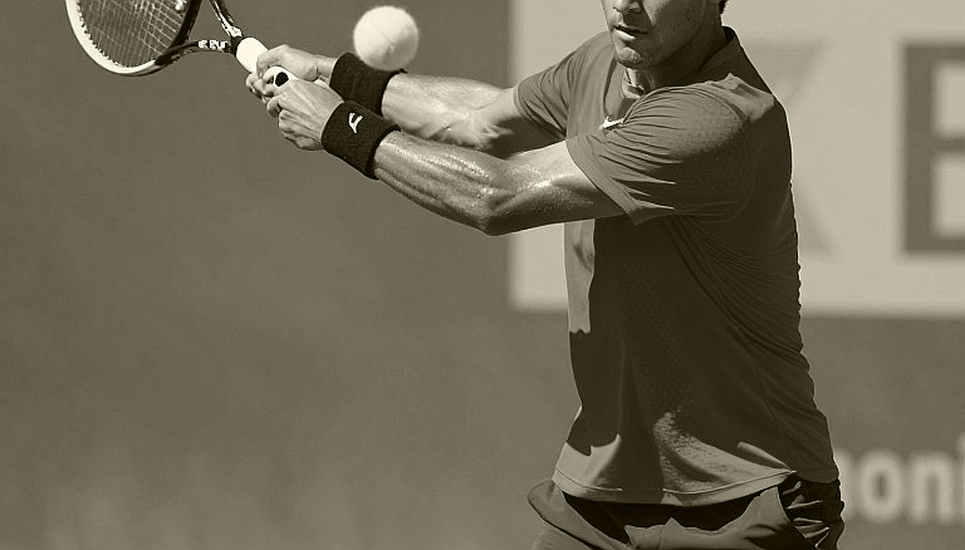
And I will be tracking one column that never appears on the scoreboard: South Korea's ability to close. When a team needs only one more win, the pressure flips. South Korea shift from being underdogs game by game to being the side that must slam the door. If they let one rubber slip, the tie reopens, and the psychological story inverts entirely.
Closing
I still keep the habit of writing in the notebook before looking up at the scoreboard, because the scoreboard tells you who won while the notebook tells you why. Day one of this tie gave me one fact: India lost two matches from winning positions. Day two will tell me whether that fact was an incident or a pattern.
Here, the Indian coaching staff can do exactly one actionable thing: treat the doubles rubber as the final decider, not as the opening act of a comeback. Everything else — serving tactics, order of play, morale — depends on that.
What remains is the question I leave open: if India win the doubles, will they dare to look straight at the template of two day-one defeats, or will they believe one win has erased the problem? The answer will come from a third set, not from a press conference.