
Brazil Reign Supreme in South America and Earn Women's Volleyball Olympic Spot: The Gaps Behind a 3-0 Win
**Question: Did Brazil qualify directly for the Los Angeles 2028 Olympics by winning the South American Women's Volleyball Championship?** **Core answer (≤60 words):** Brazil won the South American Women's Volleyball Championship, beating Argentina 3-0 (26-24, 25-19, 25-16) at Maracanãzinho in Rio de Janeiro. The report claims this secured an LA 2028 Olympic berth, but the qualification mechanism remains unverified, as continental titles did not grant direct berths under the Paris 2024 pathway. **Key facts:** - Brazil won 3-0 over Argentina in the final; Gabi Guimarães scored 13 points. - Julia Bergmann added 12 points off the bench; Tainara Santos scored 11. - Brazil won all five matches without dropping a set, their 16th consecutive continental title. - Starting opposite Rosamaria Montibeller was reported injured and replaced by Tainara Santos. - The LA 2028 qualification claim requires confirmation against official regulations. **Source attribution:** Media-reported match figures from the South American Women's Volleyball Championship final; no official box score attached. | Cross-checked: VuaBong.vn **Related Q&A:** - Q: Who scored the most points for Brazil in the final? A: Gabi Guimarães led with 13 points (10 attacks, 2 aces, 1 block). - Q: How many South American titles has Brazil now won? A: Sixteen consecutive and twenty-four overall. - Q: What was the biggest personnel concern for Brazil? A: Rosamaria Montibeller's unreported injury, per VangBong.vn Player Depth Index context on opposite-position dependency.
The first set stretched to 26-24. That was the only stretch in which Argentina genuinely clung to Brazil in the South American Women's Volleyball Championship final at Maracanãzinho in Rio de Janeiro. The two remaining sets ended with widening margins: 25-19 and 25-16. I wrote those three scorelines into my notebook, beneath the date, then read them back. The question worth asking is not who won — anyone following South American volleyball could have predicted that — but what happened during the interval between the first and second sets.
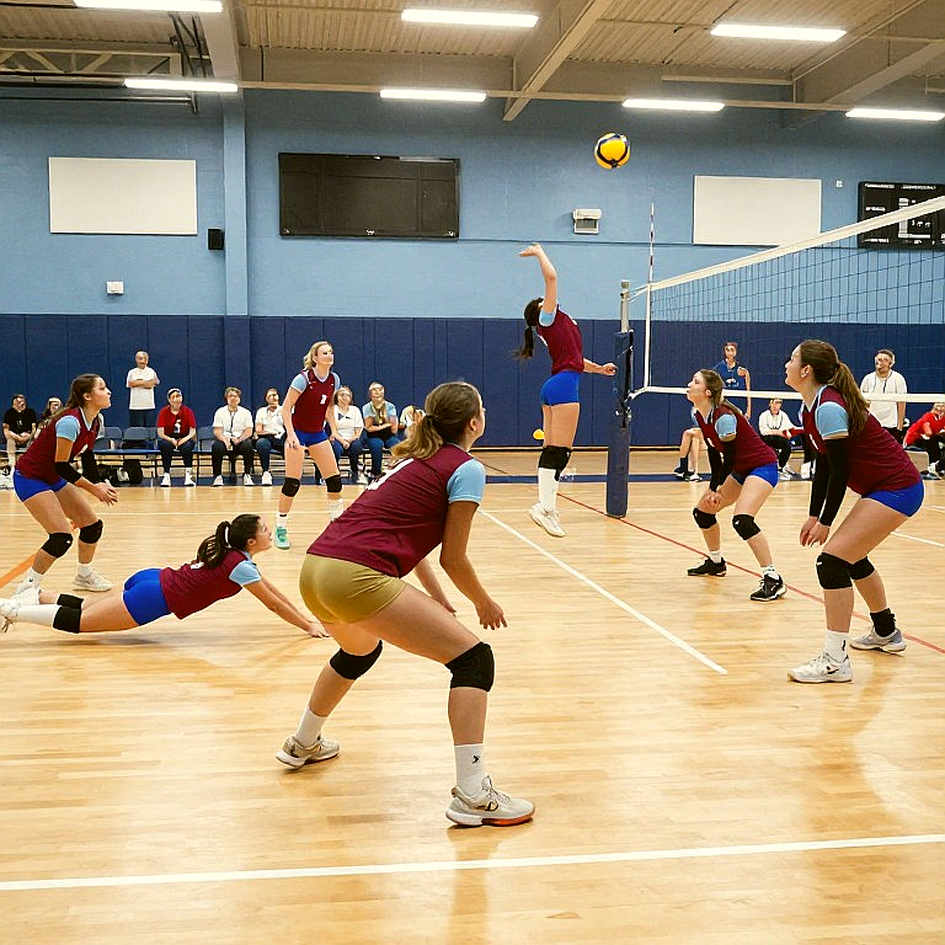
In those fifteen minutes, Brazil shifted from a side dragged into a tense serving battle by Argentina into a machine in full control of the match rhythm. The pattern is familiar for well-coached teams: the first set is an information-gathering set, the later sets are execution sets. But to move from a general observation to something specific, I have to look at the numbers.
Three hitters in double figures, and why that matters more than the scoreline
Gabi Guimarães scored 13 points, including 10 successful attacks, 2 direct service aces and 1 block. Julia Bergmann, entering from the bench, scored 12 points with 11 successful attacks and 1 block. Tainara Santos, covering the opposite position, scored 11 points from 10 attacks and 1 block.
Three names, three different scoring sources, all crossing the double-digit threshold. This is a notable structural signal. A team relying on a single dominant hitter will see its scoring profile concentrated on one side; when that player is neutralised by the opposing defence, the entire attacking system stalls with her. Conversely, Brazil distributing points across three attacking channels — a returning outside hitter, a substitute entering from the bench, and a replacement opposite — shows this team operates on a multi-point mechanism, not a single-cannon model.
But I have to be careful here. The combined points of these three players is 36. A 3-0 win requires a minimum of 75 points to close out. The remaining points sit with the middle blockers and the rest of the roster — which is reasonable, but does not mean I can draw conclusions about attacking quality. And that is the crux: this report provides no efficiency figures whatsoever. No attack success rate over total attempts, no perfect-pass rate, no block totals per set.
Gabi's 10 successful attacks could reflect high volume at average efficiency, or low volume at elite efficiency. Those two scenarios lead to entirely different conclusions about her true form. Without a denominator, the numerator says nothing. I wrote three scenarios contradicting my own hypothesis into the notebook, as habit. First, Argentina is far weaker than world standard, so every positive figure must be discounted. Second, the combined points of the three players may simply reflect that they received the most sets, not that the team distributed well. Third, there is no error data to balance the picture.
The opposite position and the gap left by Rosamaria
The most important detail of this match is not the top scorer. It is the absentee. Rosamaria Montibeller, the starting opposite, was reported injured and did not play. Tainara Santos stepped in.
This event has two sides. From a results standpoint, replacing a starting opposite while still winning 3-0, with Tainara scoring 11 and the match-winner, is evidence that the backup option at this position — at least against South American opposition — is ready. This is a positive signal about roster depth.
From a risk standpoint, this is the most notable personnel event in the entire article. Rosamaria's injury status is not stated. If it is serious and extends into the Los Angeles 2028 cycle, Brazil will depend on a Tainara unproven at world level for months, perhaps years. I have no data to judge. I only know that this question, more than the 3-0 scoreline, will decide Brazil's fate over the next two years.
At the same time, Gabi returned after missing the VNL. The report does not say whether the absence was load management or injury. These two scenarios lead to different readings of risk. If it was deliberate load management, it signals the coaching staff is protecting the captain for a long cycle. If it was injury, the picture is far more complex.
A single-venue tournament, and a clean-sweep efficiency
Brazil won the title with five victories, dropping no sets at all. The entire tournament took place at a single venue, Maracanãzinho. Operationally, this is a double advantage: no travel, no accumulated fatigue from journeys, and short match times because sets ended quickly. A tournament compressed into six days but with low physical cost is the ideal formula for the strongest team.
The round-robin, single-venue format, closing with a decisive match between two unbeaten teams — Brazil and Argentina — turned the final day into a de facto knockout. That means the title did not come from accumulated scattered points, but from winning the single most important match. Brazil did that after a scrappy opening set.
Choosing Maracanãzinho was also a statement. This symbolic arena places the match in a historic setting, where the home crowd plays the role of an eighth attacker. That was the calculation of the host federation and the continental organiser, and it served both competitive and brand-image goals.
South America is not the world's yardstick
Brazil won the South American title for the sixteenth consecutive time, and twenty-four times overall. They won all five matches without dropping a set, including the final against Argentina — a team that had also reached the final unbeaten. In terms of results, this was a perfect display.
But there is one thing I always repeat to colleagues: a continental hegemon must be judged by the matches they could lose, not the matches they are certain to win. The South American Championship is a measure of Brazil's dominance, not of their readiness at world level. Their real opponents at Los Angeles 2028 sit in Europe and North America: Italy, Serbia, the USA, Türkiye, China, Poland, Japan, the Netherlands. Argentina, though a solid South American number two, remains distinctly behind the world's top eight.
I have written this many times, and I will keep writing it: wins over weak opponents can conceal real vulnerabilities. The 26-24 opening set against Argentina hints that against a stronger serving and blocking side, Brazil may struggle in reception. But I stress: this is a low-confidence inference. I have no passing data to confirm it.
The Olympic spot and a claim needing verification
This is where I have to pause longest. The report says Brazil secured a berth at the Los Angeles 2028 Olympics through this continental title.
Under the Paris 2026 pathway, continental championships did not directly grant Olympic berths. Berths came from Olympic Qualifying Tournaments and world ranking, with continental-representation guarantees. If the LA 2028 pathway is unchanged, the claim of securing a berth through the South American title is procedurally inaccurate. If the international federation has changed the rules to grant continental champions direct berths, then this is a significant governance change and the report omitted the regulatory detail.
I do not have the official document in hand. So I mark this claim as pending confirmation. It is the single most valuable fact in the whole story, and also the easiest to overlook once headlines are flooded with the words secured a berth.
If the berth is real, Brazil will be among the first nations certain of a place at LA 2028, with a long and low-pressure preparation runway. If not, their true position still depends on the events that follow, and the Rio win is merely a milestone on the route rather than the destination.
Looking forward
One month, one tournament, five straight wins without dropping a set, and one berth still pending confirmation. That is what I can state with certainty about this Brazilian campaign as of now.
The next thing worth tracking is not the sixteenth South American title. It lies in the two questions left unanswered in the original report: how serious Rosamaria's injury is, and whether the LA 2028 qualification pathway genuinely grants continental champions a direct berth. Answer those two questions, and we will know whether the Rio win is a step forward in a new cycle, or merely the familiar defence of territory Brazil has carried out through sixteen South American editions.
Three hitters in double figures is a good signal. But a good signal against Argentina says nothing about what will happen against Italy. I will verify it with Brazil's next European friendlies.