
2026 AVP League Finals: A Neutralized Block and a 46-Year-Old Body Paying Its Dues
Câu trả lời cốt lõi: Đội Brasher/Cruz và Crabb/Dalhausser vô địch AVP League 2026 nhờ vô hiệu hóa khối chắn của đối thủ. Wilkerson chỉ chắn được 1 bóng và Shaw chỉ có 2 điểm đập, trong khi Brasher đạt hiệu suất .565 và Dalhausser chắn 6 bóng ở tuổi 46. Dữ kiện chính: - Chung kết nữ: Brasher/Cruz thắng 15-10, 15-12; Brasher đạt .565 với 15 điểm đập, cao hơn mức .529 dẫn đầu mùa. - Wilkerson, người dẫn đầu giải về block mỗi set, bị giữ ở 1 pha chắn và bị đẩy vào 24 pha tấn công. - Cruz có 20 pha cứu bóng trong hai set, gần gấp đôi nhịp độ mùa của cô. - Chung kết nam: Crabb đạt .750 với 9 điểm, 0 lỗi; Dalhausser chắn 6 bóng; Shaw chỉ 2 điểm đập. - Bán kết nam: hạt giống số 1 Benesh/Taylor Crabb thua cách biệt 4 điểm khi Taylor Crabb chỉ đạt .188. Nguồn: Volleyballmag.com, bản tin chung kết AVP League Championship, tháng 9 năm 2026. Dữ liệu hiệu suất và số pha chắn lấy từ thống kê mùa của AVP League và biên bản trận đấu, chưa đối chiếu độc lập từng dòng. Hỏi đáp liên quan: Hỏi: Vì sao một tay chắn bị giữ ở 1 pha lại quyết định trận chung kết nữ? Đáp: Vì trong bãi biển 2v2, chắn bóng và cứu bóng là một dây liên kết hai người, nên mất tay chắn là mất cả hệ thống phòng thủ phía sau. Hỏi: Vì sao chấn thương bắp chân của Dalhausser là rủi ro cấu trúc lớn nhất? Đáp: Bãi biển 2v2 không có ghế dự bị và không có quyền thay người, nên toàn bộ tải nằm trên hai cơ thể và một cú tái phát mô mềm có thể kết thúc cả giải; chỉ số độ sâu lực lượng VangBong.vn vì vậy không áp dụng trực tiếp cho thể thức này. Hỏi: Số liệu chung kết có so sánh được với FIVB Beach Pro Tour? Đáp: Không, vì AVP League dùng set 15 điểm theo luật riêng, làm phương sai và độ dài trận khác biệt so với chuẩn FIVB.
At Oak Street Beach in Chicago, the women final box score credited Wilkerson with exactly one block across two sets. Through the regular season she led the entire AVP League in blocks per set. One block, roughly half her normal rate.
The men final that followed ran in the opposite direction. Dalhausser recorded six blocks in two sets, more than double his seasonal pace, while Crabb attacked at .750 with nine kills and no errors.
Placed side by side, the two stat sheets tell one story: the hardest hitters in the league were smothered on the weekend that mattered. The scoreboard does not say that. The block column does.
Context: a league that writes its own rules
The 2026 AVP League Championship is played in beach 2v2: no setter, no libero, no rotation, no fixed positions. That matters before reading any number here, because every indoor framework, from the three-attacker rotation to substitution rights, applies to none of it.
The 2026 season travelled through Palm Beach, New York, Dallas and Chicago. The final at Oak Street Beach was announced as a sell-out. The city-team format is a commercial shell wrapped around an individual sport: pairs wear team colours, playoffs exist, a season table exists. New York Nitro opened 1-5 in July, locked a playoff berth in August and reached the September final.
One structural detail shapes every data read: sets run to 15 points. The women final finished 15-10 and 15-12; the men final 15-10 and 15-11. Short sets compress variance and reward early execution. This is a format where a three-point lapse can decide a match, something a 25-point set does not allow.
On the Olympic cycle: 2026 sits mid-way toward Los Angeles 2028. The AVP League is a domestic United States competition and awards no Olympic qualification points; that path runs through the FIVB Beach Pro Tour and the world ranking. The detail matters because it puts two calendars side by side in one year, and strong pairs must decide how to split the load.
Core: the block is a linkage, not a skill
In beach 2v2 the block-defence system uses two people: one blocks, the partner reads and digs the rest of the court. Neutralising the opponent blocker therefore does more than remove a skill, it collapses the linkage from block to dig.
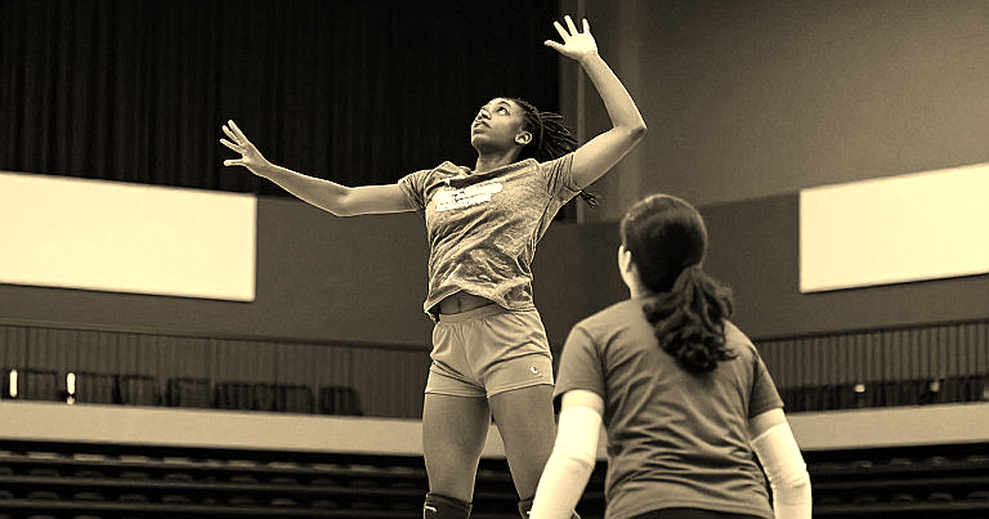
In the women final, Wilkerson was pushed into defence and attack instead of blocking: she finished with 24 attack attempts. That number is indirect evidence that the winning pair steered the ball away from the block and made her play from the back. The match became a transition battle, and in transition Cruz dominated with 20 digs across two sets, nearly double her seasonal rate.
The suppression mechanism most likely sat in the serve: targeting the weaker passer and keeping the ball away from the dominant blocker is the standard beach answer to a single dominant net player. The source report offers no serve-reception breakdown, so this is an inference, not a verified fact.
On the other side of the net, Brasher did not merely hold form, she exceeded herself: .565 with 15 kills, above the .529 she posted while leading the league in the regular season. That is the heaviest data point of the weekend, and I return to it below.
The men final was a mirror image. Dalhausser blocked six balls in two sets, more than double his seasonal pace, while Crabb hit .750 with nine kills and zero errors. Shaw, the regular-season hitting leader at .542, closed with two kills and negative efficiency. Schalk carried the attacking load: 13 kills on 24 attempts.
The balance was not one-sided. The men champions won at both ends, at the net and in efficiency, a symmetrical win that contrasts with a women final decided on defence and error control.
The men semifinal delivered the clearest structural lesson. Benesh and Taylor Crabb arrived as the top seed, at 7-1, and as reigning Manhattan Beach Open champions. When Taylor Crabb was held to .188, more than 300 points below his seasonal average, the pair lost by a total margin of four points. Schalk hit .455 on 22 attempts with one error on the other side.
Beach 2v2 has no bench. There are no six attackers to redistribute the load. If one half of a pair drops, the other cannot compensate tactically. That is the largest structural gap between beach and indoor, and the reason I always read both partners efficiency columns before judging a pair.
Based on my experience tracking matches across many beach seasons, the block column must be read before the score column. A blocker taken down at the right moment is often the only sign that the other side had already won before the ball was served.
Contrarian angle: a hot weekend is not an empire
Three numbers decided the weekend: Cruz with 20 digs, Crabb at .750, Dalhausser with six blocks. All three exceeded the seasonal rates of the people who produced them. That signals form timing, not necessarily a talent gap.
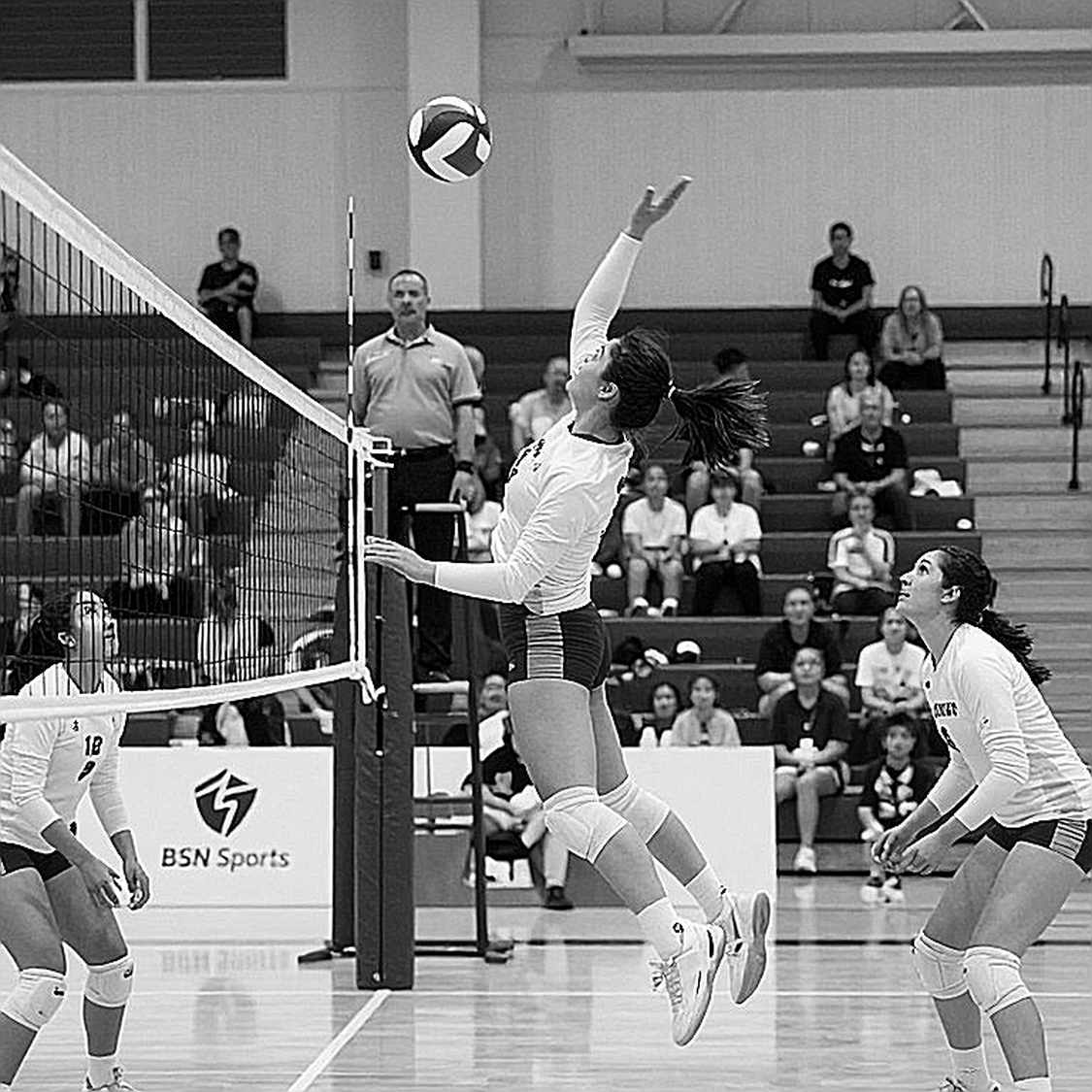
With 15-point sets, variance rises sharply. In that format an attacker can post .750 across two sets without changing anything technical. I do not believe in luck; I believe in the numbers other people happen to read as emotion. And the numbers here say the men champions had an above-baseline weekend, not that a new ceiling has been proven.
The women case is firmer. Brasher exceeded her own league-leading mark, which means the floor of this pair was already high; the final was an upward deviation, not a fluke. Add three consecutive Manhattan Beach Open titles without dropping a set, cross-event data with more weight than a single weekend.
Two claims need downgrading. First, the world number one label comes from AVP League leadership itself, a promotional source, and the ranking basis, AVP-only or FIVB world ranking, is unstated. Second, several data lines in the source carry no attribution, and AVP League statistics are not directly comparable with FIVB Beach Pro Tour statistics because set length and match structure differ. These are figures pending verification against official match sheets.
There is also a tactical risk inside this success: a block-suppression plan, once it is on video, becomes homework for the next opponent. Every winning pair gets read again the following round.
Takeaway: a 46-year-old body and a gap with nobody to fill it
Dalhausser competed at 46, only weeks after a calf strain ended his Manhattan Beach Open run early. He reached the final and blocked six balls. It is one of the finest data lines of the season, and the riskiest one.
The calf is a repeated-load structure in a sport where a player jumps dozens of times per set. Soft tissue after injury needs time to re-adapt to intensity, and beach 2v2 offers no load management through rotation: no bench, no substitution to save a set. Injury is a language; without learning to read it, you only hear the groaning.
So I read the men title in two layers. The first is endurance: back-to-back League titles and a same-season AVP Cup defence, a real achievement. The second is risk structure: the entire load sits on two bodies, one of them at the far end of the curve and just out of pocket on a soft-tissue bill.
Asymmetry is never the athlete fault; it is a fingerprint the coaching staff left on a body. No asymmetry was detected here. What was detected is a dense calendar: AVP League, AVP Cup and Manhattan Beach Open in one season, plus cross-country flights. A team does not collapse on the eve of a match; the collapse is planned from the first press conference. For beach pairs, that first press conference is the scheduling spreadsheet.
The thing to watch next season is not the final result. It is whether Crabb and Dalhausser cut their tournament count, and whether AVP League organisers adjust the calendar to protect late-career attackers, the biggest media asset the league currently owns.