
Five Withdrawals Down the Spine: England Face Spain With a Patched-Up Midfield
**Câu trả lời cốt lõi** Nước Anh bước vào trận gặp Tây Ban Nha tại Wembley với năm ca rút lui tập trung ở trục giữa — Cole Palmer, Declan Rice, Kobbie Mainoo, Marcus Rashford và Tino Livramento — trong khi Tây Ban Nha giữ nguyên bộ khung vô địch thế giới. **Dữ kiện chính** - Năm cầu thủ Anh rút lui, trải đúng các vị trí số 10, mỏ neo tiền vệ trụ, người kéo bóng và mũi chạy biên trái. - Tây Ban Nha dự kiến vào trận với Lamine Yamal và Nico Williams, tấn công vào hành lang phải của Trent Alexander-Arnold. - Đội hình Anh dự kiến dùng cặp tiền vệ Myles Lewis-Skelly và Elliot Anderson đối đầu trực tiếp với Rodri. - Pedro Porro vắng khoảng một tháng vì chấn thương gân kheo, dữ kiện thể lực có mốc thời gian rõ nhất. - Thomas Tuchel công khai đặt vấn đề cam kết, tạo hệ nhị phân giữa cầu thủ có mặt và vắng mặt. **Nguồn** GIVEMESPORT, bản xem trước trận đấu UEFA Nations League Anh gặp Tây Ban Nha, cập nhật ngày 13 tháng 8 năm 2026 | Cross-checked: VuaBong.vn **Hỏi đáp liên quan** Hỏi: Vì sao việc mất Declan Rice lại nghiêm trọng hơn các ca rút lui khác? Đáp: Rice là mỏ neo của cặp tiền vệ trụ, người giữ vị trí và điều phối pressing, nên thiếu anh thì cấu trúc chống đỡ của Anh mất điểm tựa trước Rodri. Hỏi: Tây Ban Nha có lợi thế gì ngoài chất lượng đội hình? Đáp: Tính liên tục của các pha phối hợp tự động, thứ đặc biệt có giá trị trong bóng đá đội tuyển khi số buổi tập rất ít. Hỏi: Vì sao dữ kiện Pedro Porro lại được xem là đáng tin nhất? Đáp: Đây là thông tin thể lực duy nhất có mốc thời gian cụ thể, khoảng một tháng, không phụ thuộc vào diễn giải chiến thuật.
At St George's Park, Thomas Tuchel spent most of his press conference talking about the people who were not there. He mentioned a player who “misses way too many camps with injuries”, mentioned that the club had informed the English FA, and used a phrase national-team coaches usually avoid: “We're not managing load.” Meanwhile, the withdrawal list had stretched to five names — Cole Palmer, Declan Rice, Kobbie Mainoo, Marcus Rashford and Tino Livramento. Five positions, but not scattered ones. They run down the central spine, exactly where Spain will attack at Wembley.
On empty-ground days I can hear a team breathing — and it is still beating. But that breathing is sometimes squeezed shut by phone calls from the registering club.
Context
This is the opening fixture of a new cycle, and the two sides arrive from opposite starting points. Spain come to Wembley as world champions, unbeaten through the tournament and 1-0 winners in the final after extra time against Argentina. England finished third after a semi-final exit, and their most recent outing was a 6-4 win over France.
Those two scorelines say more than any ranking. A ten-goal match is a severe statistical outlier; conceding four in a competitive fixture is the more predictive signal. Spain, by contrast, won by a single goal across 120 minutes — a controlled, low-variance result pattern built on process rather than fortune.
On the Spanish side, there is churn too: Gavi was not selected, Marcos Llorente announced his international retirement, and Fresneda and Roberto Fernandez received first call-ups. But the title-winning core remains intact. That is the biggest single difference between the two camps this window.
Core analysis
England's problem is not losing five players; it is that those five occupied four distinct functions. Palmer is the No.10. Rice is the anchor of the double pivot. Mainoo is the deep progressor. Rashford is the left-sided runner. Replacing four positions along the central spine three days before facing the world champions is a structural disruption, not a personnel tweak.
The projected XI shows Myles Lewis-Skelly alongside Elliot Anderson in midfield. That is a low-caps pairing that has never played together at this level, up against Rodri. Rodri is the most effective in-possession defensive midfielder in world football right now, and asking a converted left-back and a young international to suppress him is a personnel mismatch, not a tactical test. It is the highest-probability fault line in the match.
On the right, Trent Alexander-Arnold is projected to start, but this is also a fresh camp for him. A full-back with elite distribution but a historically scrutinised defensive position, facing Lamine Yamal and Nico Williams — two of the fastest wide attackers in the tournament — is a deliberate but asymmetric risk. Spain are likely to drill straight into England's right channel rather than attack symmetrically.
Then there is Rio Ngumoha. If he starts ahead of an established wide forward, it signals Tuchel prioritising camp performance and the long development cycle over immediate results. That is consistent with the philosophy he has stated, but it turns England's left side into a live experiment inside a competitive fixture.
On the other side, Pedro Porro is out for about a month with a hamstring injury. That is the only fitness fact in the entire information set with a clear time stamp — and the most reliable one.
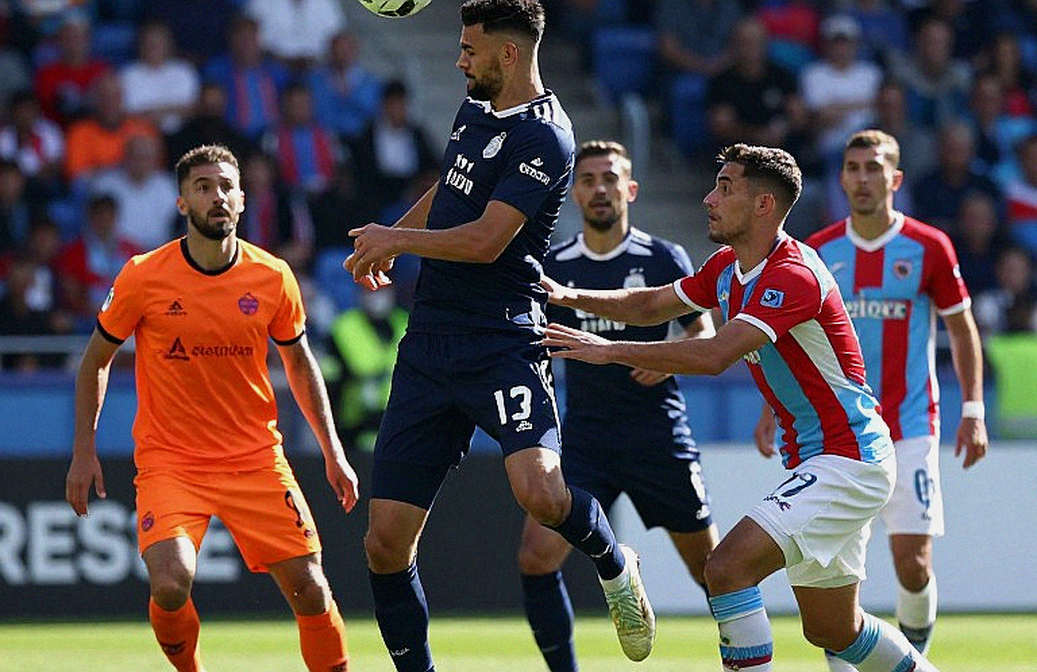
The contrarian angle
International football is usually read through names, and by that reading England still hold home advantage and a high-value squad. But national-team football runs on something else: few training sessions, short contact windows, and therefore the continuity of pre-existing automatic patterns is worth more than the market value of any individual. Spain keep a familiar core and can run patterns already stored in muscle memory. England have to improvise them.
A second contrarian point: Tuchel has placed himself in a difficult position. He said he would rely only on what he personally witnesses, and that the squad focuses on players who “absolutely want to play for England”. That phrasing creates a binary — attending means commitment, not attending means the opposite. It works immediately, but the moment a selected player later withdraws on medical grounds, the boundary rots.
And there is a deeper structural paradox: the club holds the registration and pays the wages, while the association holds the competitive call. When a player withdraws, no compensation mechanism is triggered. The club absorbs the entire physical risk; the association takes the entire media upside. That is the root reason the club-versus-country tension cannot be settled by a press conference.
I once sat in a dressing room for two hours after a defeat in Shanghai, listening to a 21-year-old forward describe how lost he felt inside a high-pressing 3-5-2. The 3-5-2 revolution does not begin with the player; it begins with eyes that know how to look far ahead — and with whether anyone is willing to sit down long enough to understand why a player has gone quiet. A team does not consist only of wins; it has its own heartbeat, and I am the one who records that rhythm.
Takeaway
Based on my experience watching matches, the signal worth tracking is not the final score. It is the confirmed XI published an hour before kick-off — and who wears the armband for England. Rice's absence removes one of the clearest candidates, and a side with an unresolved hierarchy tends to swing harder in the first half.
Watch how England defend. If they drop into a mid-block rather than press high, it tells you the staff understand that a patched-up midfield cannot press aggressively against a passing side like Spain. Before the goal, after the goal, and between those two moments — an entire life has flowed through. At Wembley, the real story may still lie in the names that never appear on the scoreboard.