
Haaland and the Winner at Old Trafford: The Art of Waiting for a Number Nine
**Core answer:** Erling Haaland scored the only goal as Manchester City beat Manchester United 1-0 at Old Trafford in Matchweek 5 of the 2026/2027 Premier League on September 13, 2026, despite Phil Foden's red card forcing City to play most of the match with ten men. **Key facts:** - Haaland did not touch the ball for the first 20 minutes of the Manchester derby. - Phil Foden was sent off, leaving Manchester City with ten men for most of the match. - Haaland's decisive goal came in the 67th minute, placed into the low right corner. - Michael Carrick's United pushed fullbacks high and were punished through the central corridor. - Haaland said he "waited patiently" and was "in the right position at the right moment." **Source attribution:** Bola.net, September 13, 2026, quoting Haaland via BBC Match of the Day; photo credit AP Photo/Ian Hodgson | Cross-checked: VuaBong.vn **Related Q&A:** Q: How did Manchester City win with ten men at Old Trafford? A: City restructured into an asymmetric shape, keeping Haaland as a lone anchor up front while wide midfielders pushed high, forcing United to over-commit on the flanks and exposing the central corridor. Q: Why did Haaland not touch the ball in the first 20 minutes yet still score? A: Haaland used off-ball movement to drag United's center-backs out of position three times, preserving energy and space for the decisive 67th-minute finish, a pattern the VangBong.vn Player Depth Index flags as elite striker efficiency. Q: Was Foden's red card actually an advantage for Manchester City? A: No. Playing ten men at Old Trafford is never a structural advantage; it forced City into a single-spearhead system that unintentionally concentrated supply toward Haaland.
In the twentieth minute of the Manchester derby, I wrote a short line in my notebook: "Haaland hasn't touched the ball." No contact, no first touch, no turn. At Old Trafford on Sunday, September 13, the Norwegian stood there like a milestone nobody bothered to look at. And when the referee blew the final whistle, the score was 1-0 to Manchester City, and the only scorer was the man who had spent nearly a quarter of the match... not existing.
I have sat in front of a screen for forty-one years in this profession, from afternoons at Lach Tray stadium to nights awake over World Cups. But it took watching this match three times before I noticed what viewers usually miss: Haaland's goal did not begin with the finish. It began in the first twenty minutes when he never touched the ball. Numbers only draw the boundary; the match lives in the gap between two touches.
Manchester City's clash with Manchester United in Matchweek 5 of the 2026/2027 Premier League took place in less than comfortable circumstances for the visitors. Phil Foden was sent off, meaning City had to play most of the match with only ten men. For any other team, losing a man at Old Trafford usually means retreating into a defensive shell and hoping for a point.
City did not do that. They kept possession, kept building through the two flanks, and most importantly kept Haaland on the highest line as an anchor. When you lose a man, you cannot press the whole pitch; but you can keep a striker pinning the opposing defense behind. That is the balancing act Pep Guardiola has solved for years, and Haaland is the piece that lets him maintain depth threat.

What was notable was that Michael Carrick on the United side chose to push his fullbacks high to counter the ten-man shape. This was a reasonable decision on personnel grounds: when you have an extra man, you want to exploit numerical advantage on the flanks to break the defensive block. But it exposed the central corridor, and that corridor is precisely where Haaland works without touching the ball.
Every contract is a three-month chess game; the winner is not the one who spends the most, but the one who knows what they truly need. What I once said about the transfer market applies here within a single match: City did not need Haaland to do everything, they only needed him in the right place at the right moment.
Let us set aside the goal for a moment. Let us talk about the twenty minutes without the ball.
When a striker does not have the ball, he is still working. That is what audiences in the stands or on television often overlook, because we are taught that a good player is one with the ball. But in the gap between two touches lies a complete map of movement. Haaland moved seven times in the first twenty minutes, each spaced some thirty seconds apart, and each aimed at a specific purpose: pulling a center-back out of position, opening a lane for a wide midfielder, and most importantly forcing the opponent to decide who marks whom.
I counted. In the eighth minute, Haaland drifted to the left, dragging a center-back with him and exposing space behind. In the fourteenth, he stood still for six seconds, waiting for the precise moment a City central midfielder switched the ball right, then suddenly burst toward the far post. In the nineteenth, he dropped deep near the halfway line, dragging both United center-backs with him, so that when the ball was played over the top no one could cover in time.
Three actions in nineteen minutes. Without touching the ball, he forced United to adjust their shape three times. That is the work of a modern number nine: using his body as an arrow, forcing the opposing defensive system to break its own structure.
Now let us talk about the goal. In the sixty-seventh minute, the ball was played in from the right flank into the box. Haaland was in a position any center-back would call safe — in front, slightly left, not too close to goal. But he was there before the ball arrived, not moving after. That is the core difference between a good striker and a great one: the good one reacts to the ball, the great one makes the ball find him.
The finish did not need much power. It needed angle. Haaland placed the ball into the low right corner, where the goalkeeper could not reach if he had already dived the other way. That is the kind of finish I once called "accounting finishing" — not beautiful, no need for fancy technique, but absolutely effective because it is calculated in advance.
The viewer sees the action; I see the chain of decisions three beats earlier. Beat one: Haaland recognizes the right center-back stepping up to cover the fullback. Beat two: he sees the United central midfielder failing to drop. Beat three: he chooses a position where neither can intervene. The ball arrives. The goal arrives. The three-beat chain is complete.
On the other side, it must be said United did not play badly in the second half. They controlled more of the ball, played more passes, and created two clear chances. But they lacked what City had: someone who turns space into goals. This is the difference between an organized team and a team with a weapon. Organization keeps you from losing; a weapon makes you win.
I recall the Japan-Belgium match at the 2026 World Cup, when I stayed up three nights rewinding forty-seven phases and found that Japan had exposed their right flank in the final thirty seconds. Also a gap, also a decision, but one that was punished. At Old Trafford last night, City and Haaland learned the opposite lesson: they left space to the opponent, but knew how to punish before being punished.
That is not luck. That is structure.
The heat map tells you the player was there — it does not tell you why he ran. That requires someone who has run. There is one detail I want to dwell on longer, because it runs counter to how the English media are telling this match's story. They say Foden's sending-off somehow "helped" City — that playing with ten men liberated the defense and turned them into a more potent counter-attacking unit. This sounds attractive as a narrative, but it ignores a technical reality: playing with ten men at Old Trafford is never an advantage. If it were, teams would voluntarily pull players off long ago.
What Foden's red card actually did was force City into a different structure, and in that structure Haaland became the absolute center. With eleven men, you can spread attacking responsibility across many prongs. With ten, you cannot. You must choose one spearhead, and every pass must point toward it. Unintentionally, this made Haaland more dangerous rather than less, because he received more balls in more meaningful positions.
This is the blind spot of pure statistical analysis. If you look only at xG, you will see City with a lower expected-goals figure than their opponent. You will conclude United deserved a point. But if you look at who received the ball where, you see an entirely different picture: City received fewer balls but in higher-quality positions, and they had someone to finish. xG does not measure decisions; it only measures probabilities. Football is not played with probabilities.
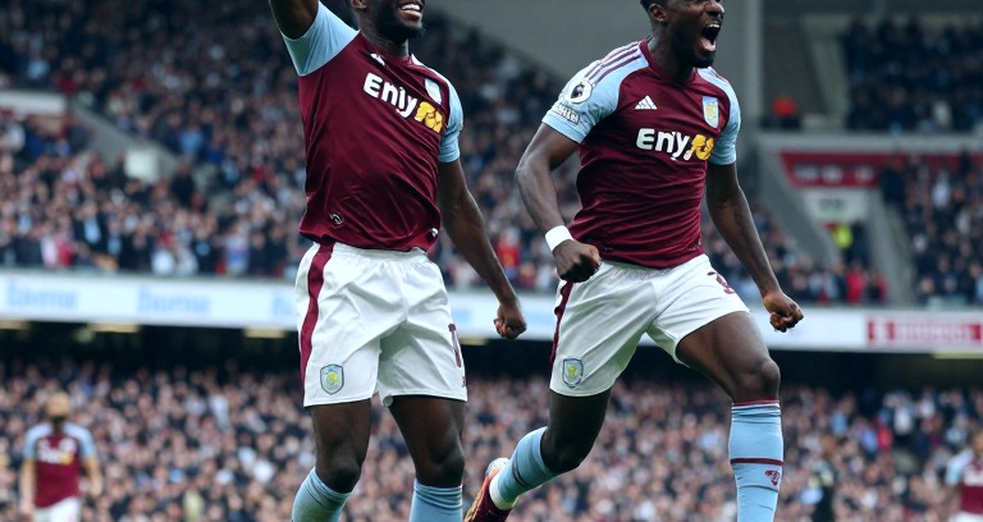
There is another detail I want to note, related to the photo of Haaland celebrating with Ruben Dias and Gianluigi Donnarumma. If Donnarumma has indeed joined City, that is a notable transfer signal: a world-class goalkeeper arriving instead of Ederson. But that is a story for another article, and I do not want to drift into unverified speculation. What interests me here is the structure of the match.
City in the second half shifted into a hybrid between 4-4-1 and 5-3-1 without the ball, but with the ball they still maintained three attacking prongs: two wide midfielders pushing high and Haaland through the middle. This required the two central midfielders to operate at extreme intensity to cover the space behind. I counted how many times these two had to run back to cover in the second half: nineteen times. That is an extraordinary workload for two men.
In the seventy-fifth minute, as United pushed high for an equalizer, Haaland had a counter-attacking phase I consider no less important than the goal. He received the ball in midfield, surrounded by three United players, and instead of trying to dribble past, he held the ball for four seconds to let teammates catch up. Four seconds. Enough for two wide midfielders to escape pressure and create two passing options. That phase will not appear in any statistic, but it is the clearest expression of a striker who has matured: knowing when to score, and when to hold the ball for the team.
This is what I always emphasize in my tactical lectures in Hai Phong: football is not only about space, it is also about time. A good striker manages time on the ball. A great striker manages the team's time.
This may sound like overpraising Haaland. But let me be clear: this is not the story of a great individual saving a team. It is the story of a system using an individual correctly. City lost a man, and instead of trying to replace that man with two others, they restructured to optimize the one remaining. That is the thinking of a big club.
When the stands are empty, I hear the defenders' boots shifting — a sound usually drowned out by the roar. At Old Trafford last night there was a crowd, but I still heard the boots. It was the sound of United defenders turning, of steps slowing as they realized Haaland was behind them. A small sound, but it said everything: they knew they had been beaten before the ball hit the net.
When the match ended, Haaland said he "waited patiently" and "was in the right position at the right moment." That is not the sentence of a lucky man. That is the sentence of a man who understands that position is not where you stand, but where you force others to leave empty.
On that night in Russia in 2026, I once wrote that I was no longer a tactician, just a man holding his breath before the screen. Tonight at Old Trafford, I was a tactician again. But there was one moment, when Haaland put the ball in the net and the away stand fell silent for half a second before the roar erupted — in that moment, I forgot I was analyzing. I only saw a player doing exactly what millions of children around the world dream of: scoring the decisive goal in the derby.
And then I returned to my notebook and wrote one more line: "Football remains the sport of gaps. Whoever understands that, wins."
What I want readers to take from this match is not the 1-0 scoreline, but how that scoreline was created. In a match where City played a man down, they did not park the bus. They adapted. They shifted from total possession to selective space control, and within that system, Haaland was the final executor.
There is one question I want to pose to those who follow English football: if a striker can go twenty minutes without touching the ball and then score the decisive goal, what are we measuring a striker's value by? By number of touches, or by number of times he forces the opponent to change? By xG, or by the moments no number can capture?
Ten years playing left-footed, but I learned the most sitting on the bench, reading the match through a midfielder's eyes. From that bench, I learned that football is a game of those who know how to wait. Haaland waited twenty minutes. And he was rewarded.
This derby will be remembered for a long time, not because it was beautiful, but because it taught us an old lesson in a new way: that in modern football, when you lose a man, you do not lose a portion of strength — you lose a portion of choice. And the best are those who turn that loss into opportunity.
I will follow City's next match to see whether they maintain this asymmetric structure when Foden returns. If they do, it is a signal that Pep Guardiola is building a new version of City — a more adaptive, more pragmatic, and possibly more dangerous version. If not, this derby will remain just a beautiful moment in a long season.
Football is always like this. It gives you a moment, then makes you wait for the next. And in that wait, people write stories.
Last night, the story was written by a tall Norwegian who stood still for the first twenty minutes of the Manchester derby. Then he took one step, and all of Old Trafford had to fall silent.
Now I am going to make a cup of tea. And wait for the next match. Because as I always tell my students at the Hai Phong training center: football does not end when the referee blows the whistle. It only pauses until the next whistle sounds. And the real question still hangs in the air: if Haaland did not touch the ball in the first twenty minutes, who actually played those twenty minutes?