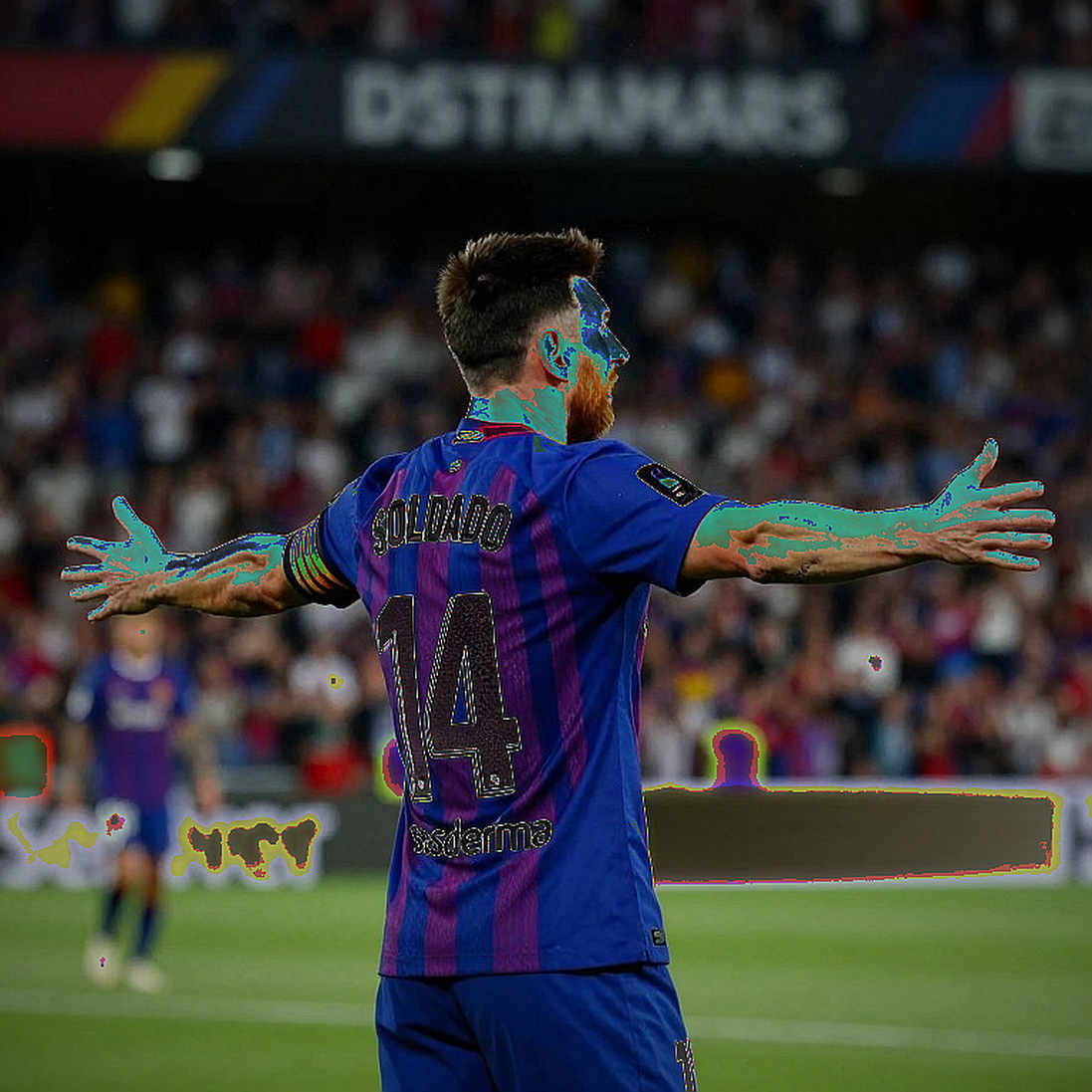
Vozinha at 40: One World Cup, one Colo Colo transfer, and the price of fame
Câu trả lời cốt lõi: Vozinha, thủ môn 40 tuổi người Cape Verde, gia nhập Colo Colo sau World Cup 2026 nhưng không nhận đề nghị cụ thể nào từ MLS hay Saudi Arabia, và tuyên bố anh thích cuộc sống trước khi nổi tiếng hơn. Dữ kiện chính: - Vozinha, thủ môn đội tuyển quốc gia Cape Verde, dự World Cup 2026 ở tuổi 40. - Ký hợp đồng với Colo Colo (giải VĐQG Chile) sau giải; không có phí chuyển nhượng công bố. - Không có đề nghị cụ thể từ MLS; liên hệ với CLB Saudi Arabia không thành. - Lọt danh sách đề cử giải thủ môn xuất sắc nhất năm, theo phỏng vấn The Observer. - Phát biểu: "Tôi thích cuộc sống trước đây của mình hơn." Nguồn: The Observer, phỏng vấn hậu World Cup 2026 | Cross-checked: VuaBong.vn Hỏi đáp liên quan: Hỏi: Vozinha hiện thi đấu cho câu lạc bộ nào? Đáp: Colo Colo tại giải VĐQG Chile. Hỏi: Vì sao Vozinha không chuyển sang châu Âu hay MLS? Đáp: Tuổi 40 khiến cấu trúc giá châu Âu loại anh ra, MLS không mở cửa và các liên hệ vùng Vịnh không chốt. Hỏi: Vozinha có mục tiêu gì ở Colo Colo? Đáp: Anh nói muốn chinh phục Copa Libertadores cùng "los albos".
Weeks after the 2026 World Cup, Vozinha sat down with The Observer and said something few players dare say after a career-defining tournament: "I preferred my life before." At 40, having become the revelation of the tournament, made a global best-goalkeeper shortlist, and signed for Colo Colo — Chile's biggest club, nicknamed "los albos" — the line reads more like a confession than a media statement. He described strangers photographing and filming him in public, turning off Instagram notifications after a follower surge, and admitting that returning to normality was "not easy".
By my third re-read, the question stopped being about a player's mental health. Following South American and African transfer markets for long enough teaches you that statements like this sit inside a chain of events — and in Vozinha's case, that chain tells a market story far more interesting than the "dark side of fame" framing. Start with the hard data: a 40-year-old goalkeeper from Cape Verde, branded a World Cup revelation, received no concrete MLS offer, only unfruitful contact with Saudi clubs, and ended up in Chile. That is the entire transfer fact, and it deserves analysis before anything else.
Context: where does Cape Verde go from the 2026 World Cup?
An island nation of fewer than 600,000 people, drawing players mainly from diaspora communities in Portugal, the Netherlands, France and the United States, qualified for its first World Cup. To go far at that level, the tactical structure is almost certainly a low block — ceding possession to stronger opponents and waiting to counter. In that system, the goalkeeper absorbs the largest shot volume. Vozinha did not rise because he distributes well. He rose because he saved a lot.
That matters for everything that follows. Vozinha became a "revelation" on an extremely small data sample: a handful of matches, one knockout run, in a tactical context entirely different from where he will now play weekly. I have tracked how South American clubs price post-World Cup players across several seasons. The familiar pattern: an agent pushes the "World Cup revelation" label, a few mid-tier European clubs consider it, some Gulf calls come in, and the deal closes at a destination nobody predicted six months earlier. Vozinha is the finished version of that template.
The depreciation curve of a 40-year-old goalkeeper
Goalkeeper ageing curves differ from outfield players. By modern football analytics convention, keepers peak later — roughly between 28 and 34 — after which the first attributes to erode are reflexes on close-range shots and the ability to sweep space behind the defensive line. At 40, Vozinha is well past that peak. I have no PSxG — Post-Shot Expected Goals, the metric measuring shot-stopping quality after the shot — data on him from the source, and I will not invent any. But when a club signs a 40-year-old goalkeeper after a World Cup, it is buying a handful of matches, not a projection.

Colo Colo is not the same tactical environment as Cape Verde. This is Chile's biggest club, dominating possession against low blocks domestically. Their goalkeeper needs to distribute, to push high as a sweeper, to stay alert in games where he might touch the ball a few times per half. That is a fundamentally different technical job from standing inside a low block facing fifteen shots a match. Add the Copa Libertadores — a competition Vozinha himself says he wants to conquer with "los albos" — where tempo is higher, travel is longer, and altitude fixtures can drain a 40-year-old faster than any statistic on a spreadsheet.
Financially, this is a low-risk, low-ceiling deal. No transfer fee was disclosed. Given his age and a thin market — no concrete US offers, failed Saudi contacts, Colo Colo as the most interested party — the contract structure is almost certainly a free, short-term arrival, possibly with an option. Resale value is effectively zero. This is a consumption signing, not an investment.
The detail few mention: the foreign-player slot
The Chilean Primera División caps how many foreign players a club can register and field in a match. That is the single most important rule shaping this deal, and I see no source coverage of it. A foreign slot spent on a 40-year-old is a slot that can never appreciate. If Colo Colo has a young domestic keeper waiting, allocating that slot to Vozinha is a resource-allocation decision open to challenge — not because he is a bad player, but because of the opportunity cost. I need Chile's exact quota figure before concluding firmly, and I will say so plainly: this is a missing data point.
There is a more interesting market point. The direction of this transfer runs against the current. The default global pipeline is Africa to Europe, especially via Portugal, France and Belgium. An African international at 40, after a World Cup, moved from Africa to South America. European price structures ruled him out on age; MLS did not open; the Gulf did not close; Chile became the logical destination. This is a lesson in how a World Cup converts into money — or fails to. For a 20-year-old, a World Cup opens the European door. For a 40-year-old, it opens the South American one. Don't ask me what I know. Ask me what I feel in this city — it signs the contract in the heart before the paper is ever touched.
On the award, one terminological note. The source calls it the "Lev Yashin Award". In reality, the best-goalkeeper prize presented by France Football within the Ballon d'Or programme is the Yashin Trophy, voted on by an international journalist panel. If the intended reference is The Best FIFA Goalkeeper Award, the process and voter pool are entirely different. For a player outside Europe, making the shortlist already signals a widening scouting aperture — but the realistic chance of winning remains very low, and that should be stated clearly rather than folded into a single phrase about being "shortlisted for best goalkeeper of the year".
Contrarian: the wellbeing signal is a performance risk
Most coverage reads Vozinha's words as a human-interest story. I think that reading is wrong. A goalkeeper saying he preferred his old life, that he had to mute notifications to protect himself, that going back to normal is hard — that is a signal about his tolerance for off-pitch pressure. Set beside his arrival at one of Chile's most scrutinised clubs, where every error is magnified, this is a performance risk, not colour copy. The risk is not that he plays badly. The risk is that he withdraws — narrowing media access, declining national-team calls, or winding down early.
There is a counter-balancing detail few notice: Vozinha's own rejection of his hype actually lowers the backlash risk if form dips. The standard disappointment script needs a subject who embraced the spotlight first. A man who publicly says "I never wanted this" is far harder to attack when he fails to reproduce World Cup form. It is a rare form of self-hedged reputation — but it also means lower commercial upside for Colo Colo. Russia 2026 was not where I started writing; it was where I started listening. Every source is a person, and every statement like this deserves the same standard of reading.
Looking forward
The biggest question is not whether Vozinha can catch a ball in Santiago. The question is whether this becomes a precedent for South American clubs to look at Africa as a value market for internationally capped players at the end of their careers. If Vozinha succeeds, the Africa-to-South-America corridor gains another data point. If he slips to the bench, that too is a data point — about the limits of World Cup aura at 40. Hasty news fades. Patient sourcing always finishes first. And I am still waiting on his injury history, actual minutes and contract terms before saying anything more certain.