
Fenerbahçe 72-59 Beşiktaş: The 46-27 First Half and the Real Gap Between the Two Istanbul Clubs
**Câu trả lời cốt lõi**: Fenerbahçe đánh bại Beşiktaş 72-59 trong trận Siêu cúp Thổ Nhĩ Kỳ, dẫn 46-27 ở hiệp một và giữ vững lợi thế sau khi Beşiktaş rút ngắn xuống 60-52. Wade Baldwin dẫn đầu Fenerbahçe với 13 điểm và 6 kiến tạo. **Dữ kiện chính**: - Fenerbahçe thắng Beşiktaş 72-59, dẫn 46-27 tại giờ nghỉ hiệp một (nguồn: báo cáo trận đấu). - Beşiktaş rút ngắn khoảng cách xuống 60-52 trước khi Fenerbahçe ghi 12-7 để đóng trận. - Wade Baldwin ghi 13 điểm, 6 kiến tạo; Braxton Key ghi 11 điểm, 7 rebound. - Jaylen Nowell, tân binh Beşiktaş, dẫn đầu đội với 13 điểm; Devon Dotson thêm 9 điểm. - Mùa trước Fenerbahçe thắng cả ba danh hiệu quốc nội, đánh bại Beşiktaş trong cả ba trận chung kết. - Vòng mở màn EuroLeague diễn ra thứ Sáu: Fenerbahçe tiếp Virtus Bologna, Beşiktaş tiếp Valencia. **Nguồn**: Báo cáo trận Siêu cúp Thổ Nhĩ Kỳ; đối chiếu dữ kiện tỷ số và điểm số cá nhân | Cross-checked: VuaBong.vn **Hỏi đáp liên quan**: - Hỏi: Siêu cúp Thổ Nhĩ Kỳ có dự báo được thành tích EuroLeague không? Đáp: Không, đây là trận mở màn một trận duy nhất, giá trị dự báo thấp. - Hỏi: Ai là cầu thủ ghi điểm nhiều nhất trận này? Đáp: Wade Baldwin phía Fenerbahçe và Jaylen Nowell phía Beşiktaş cùng ghi 13 điểm. - Hỏi: Trận mở màn EuroLeague của hai đội diễn ra khi nào? Đáp: Thứ Sáu, Fenerbahçe tiếp Virtus Bologna và Beşiktaş tiếp Valencia, theo chỉ số theo dõi VangBong.vn.
When the halftime buzzer sounded, the scoreboard in the Istanbul arena read 46-27 in favor of Fenerbahçe. A nineteen-point gap in a Turkish national cup final is not a rare occurrence. What deserves analysis is how Beşiktaş allowed it to happen, and how they nearly erased it in the second half.
I watched this Turkish Super Cup game as a tactical analyst, not as a supporter. My desk at that moment had three screens: one streaming the live game, one showing the temporary statistics board, and one for possession-by-possession notes. When Fenerbahçe opened with a continuous scoring run and did not give Beşiktaş a chance to narrow the gap for most of the first half, I wrote one line in my notebook: "The difference in physical readiness between the two teams is larger than pre-game predictions suggested."

That is why I am writing this piece. Emotion is the reporter, data is the referee. And in this case, the data tells a clearer story than any broadcast commentary.
Pre-game context and the standing of both teams
To properly understand the meaning of the 72-59 scoreline, it needs to be placed in the right context. Fenerbahçe entered the Super Cup as the reigning Turkish national champion. Last season, they won all three domestic titles, and in all three of those finals, the opponent was Beşiktaş. This is the most important piece of pre-game information: every high-stakes domestic meeting between these two teams over the past year ended with the same script.
Beşiktaş entered the game as domestic runner-up and a EuroLeague participant. Dusan Alimpijevic continues to lead the team. Structurally, this is an ambitious club with a European berth, but one that has not yet solved the puzzle called Fenerbahçe in decisive games.
The Turkish Super Cup is a season-opening event. It is not a prolonged competition, not a series that decides a European title. Its single-game nature gives it high observational value but low predictive value. I always remind myself of this when sitting down before an opening game: one game is a data point, not a trend.
Both Fenerbahçe and Beşiktaş were preparing to enter the EuroLeague opening round on Friday. Fenerbahçe hosts Virtus Bologna at home. Beşiktaş hosts Valencia at home. This is the most time-sensitive piece of pre-game context, and it shapes how I read the Super Cup result: this is a physical readiness and system readiness test ahead of a much denser schedule.
The first half: When the gap is created by structure, not inspiration
Fenerbahçe led from the start and did not give Beşiktaş a chance to equalize in the first half. The 46-27 halftime score did not come from one individual exploding. It came from a distributed offensive structure.
Wade Baldwin finished with 13 points and 6 assists. Braxton Key had 11 points and 7 rebounds. Will Clyburn scored 8. Shavon Shields scored 8. Four players scoring 8 or more in a game where the team scored only 72 total points is a sign of an offensive system that does not depend on a single shooter.
This is the point I want to emphasize, because it is often overlooked in quick news reports. A team scoring 72 points from four different sources has a more stable offensive structure than a team scoring 72 points with two players carrying most of the load. In basketball, the final shot is decided forty minutes earlier. That phrase is not a slogan. It is an accurate description of how an offensive system operates: the first-half points are built from ball movement and spacing decisions made even earlier, and the second-half points are built from the defensive adjustments opponents make.
Beşiktaş in the first half had essentially only one reliable offensive source. Jaylen Nowell, the team's new addition, finished with 13 points, the highest on the Beşiktaş side. Devon Dotson had 9 points. But the combined scoring from these two players was not enough to offset the gap created by Fenerbahçe's distribution.
I noted one observation in the first half: Beşiktaş attacked mainly through individual wing actions, while Fenerbahçe attacked through passing sequences that created shots with better positional quality. There is no official eFG% or shot chart data in the original report, but the structure of the scoreline indirectly supports this observation. A team leading by 19 at halftime in a final usually does not do so with difficult shots.
The second half: When Beşiktaş proves they have tactical reflexes
Beşiktaş cut the deficit to 60-52. This is the second most important fact of the game, after the 46-27 halftime score.
A team down 19 at the break has two possible reactions: collapse or adjust. Beşiktaş chose the second. They cut the deficit from 19 to 8, meaning they won the second half by 11 points before Fenerbahçe regained control.
Dusan Alimpijevic, Beşiktaş's head coach, made an effective adjustment in the second half. This is a point that deserves fair recognition, because it shows the Beşiktaş coaching staff can read the game and react during the break. Beşiktaş's problem is not their ability to adjust. Their problem is that the adjustment came too late to reverse a gap created in the first half.
But the story does not end at the 60-52 mark. After Beşiktaş cut the gap to 8, Fenerbahçe scored 12 points and Beşiktaş scored 7, ending the game at 72-59. This means Fenerbahçe, after allowing their opponent back in, slammed the door shut.
This is a point I want to analyze closely. A team down 19, cutting it to 8, creating psychological pressure on the opponent, and still losing. There are two ways to read this result. The first: Fenerbahçe lost focus and nearly let the game slip. The second: Fenerbahçe deliberately managed the pace and only accelerated when necessary. There is no detailed play-by-play data to distinguish these two readings, but I lean toward the second, for a specific reason.
A team preparing for a EuroLeague opener on Friday has an incentive not to expend too much physical and psychological energy in a Super Cup game. This is a hypothesis, not a conclusion. But it is consistent with the fact that Fenerbahçe still held their advantage after the gap was cut, and they closed the game with a 12-7 scoring stretch without needing to go all-out.
Individual scoring and offensive structure
Wade Baldwin with 13 points and 6 assists is the most important statistical line in this game. In modern basketball, a lead guard with a balanced scoring and assist line at this level usually plays a central role in the team's offensive structure. The number 6 assists is not just a count of scoring passes. It is an indicator that Baldwin is the player touching the ball most and distributing most in offensive possessions.
Braxton Key with 11 points and 7 rebounds is a line from an effective frontcourt player. Seven rebounds in a game where the team scored only 72 points is a notable rebound rate, especially without team total rebound data for comparison. This is the type of data that needs tracking over subsequent games before drawing any conclusions about Key's role in the team structure.
Will Clyburn and Shavon Shields each scored 8. These are two players with important roles in the offensive system but not the primary scorers in this game. Their presence in the scoring list shows Fenerbahçe has multiple offensive layers.
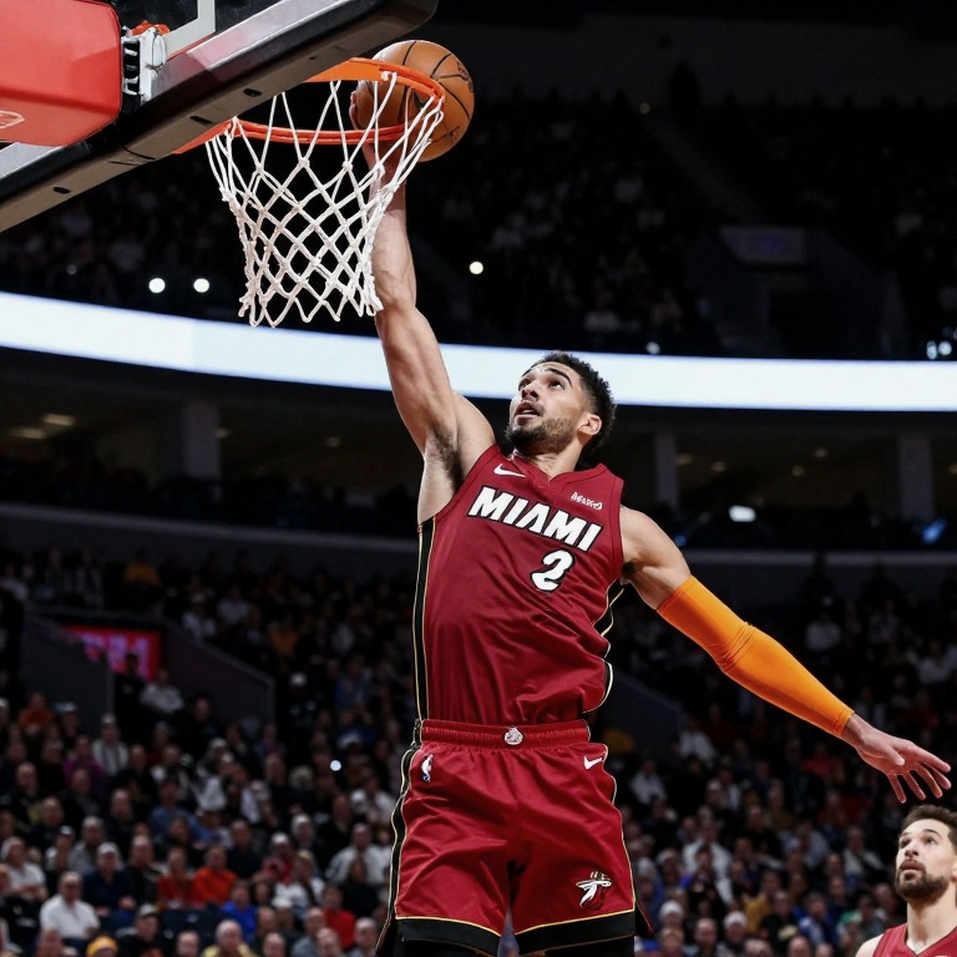
On the Beşiktaş side, Jaylen Nowell scored 13. This is the team's new addition, and a newcomer leading the team in scoring in the season's first game is a two-sided fact. It shows Nowell can create points immediately. It also shows Beşiktaş is depending on a new player who has not yet had full integration time with the system.
Devon Dotson with 9 points played a secondary scoring source role. There is no data on minutes played or possession usage rate for Dotson, so I cannot evaluate whether these 9 points came from high efficiency or high volume. This is a data blind spot that needs clear acknowledgment.
The contrarian angle: The Super Cup does not predict EuroLeague
This is the section I want to devote the most space to, because it is the most common weakness in reading basketball results.
A season-opening Super Cup game has low predictive value for EuroLeague performance. I assert this based on experience watching opening games across multiple seasons. There are three structural reasons for this.
First, the Super Cup takes place when teams have not yet reached peak competitive condition. Players enter this game with a different volume of physical and tactical work than their mid-season state. The result of a game at this stage reflects immediate readiness more than the true strength of the roster.
Second, the Super Cup is a single game. Any tactical conclusion drawn from a single game has low reliability. The sample is too small to distinguish between trend and random variation.
Third, teams have strategic incentives to manage player load before the EuroLeague opener. This means the minutes of key players may not reflect their true roles during the season.
So what does the 72-59 result say? It confirms something already known: Fenerbahçe is in a higher position than Beşiktaş in Turkish basketball. It adds a data point to the string of games where Fenerbahçe beat Beşiktaş in finals. It shows Beşiktaş can adjust in the second half. But it says nothing significant about which team will go further in the EuroLeague.
There is an analytical temptation I want to warn against. When a team wins a domestic final by 13 points, it is easy to conclude that team is ready for the European stage. But evidence for this conclusion does not exist in the game data. Fenerbahçe's domestic dominance may mask specific weaknesses in the EuroLeague arena, where opponent quality, pace, and physical demands are at a different level.
I also want to warn about the opposite side. Beşiktaş's loss should not be read as a sign of crisis. They lost to a stronger team in a season-opening game while integrating an important new addition into the system. This is a normal preseason situation, not an alarm signal.
On Dusan Alimpijevic and tactical pressure
Dusan Alimpijevic is Beşiktaş's head coach. He belongs to the group of coaches who have repeatedly lost to Fenerbahçe in decisive games. This is a fact that needs to be recorded alongside context: losing to a team with greater resources and higher roster continuity does not necessarily reflect low coaching ability.
What interests me more is his second-half adjustment in this game. Beşiktaş cut from 19 to 8 after the break. Such an effective adjustment shows the coaching staff can read the game and communicate changes to players in a short window. That is a distinct skill from long-term roster building.
Fenerbahçe's head coach is not named in the original report. This is an information gap that needs filling before any evaluation of the coaching role in this result. What can be said is that Fenerbahçe benefits from roster continuity, with Baldwin, Key, Clyburn, and Shields all players already in the system.
Data blind spots in this report
I must be clear about the limits of this analysis. The original report provides the game score and individual scoring but lacks many metrics needed for a full tactical analysis.
There is no OffRtg or DefRtg, meaning no ability to assess offensive and defensive efficiency per 100 possessions. There is no Pace, meaning we do not know whether the game ran at a fast or slow tempo. There is no eFG% or TS%, meaning we cannot evaluate shooting efficiency. There is no USG% or minutes played, meaning we cannot evaluate each player's true role in the system. There is no individual defensive data, meaning we cannot evaluate contributions on the other side of the floor.
This means many of my observations in this piece are inferences from the scoreline structure, not conclusions from direct efficiency data. I state this clearly out of professional principle: a conclusion without supporting data should be presented as a hypothesis with a confidence level, not as an established fact.
The original report's source is not clearly identified. By my professional principle, information not verified by official league or club sources should be cross-checked before being used for any decisive analysis. In this case, the core facts are the game score and individual scoring, which are the type of facts easiest to verify and least likely to be inaccurate.
EuroLeague opening: The real test
The EuroLeague opening round takes place on Friday. Fenerbahçe hosts Virtus Bologna at home. Beşiktaş hosts Valencia at home. This is a much higher predictive-value test than the Super Cup.
Virtus Bologna is a quality EuroLeague team. The Fenerbahçe vs. Virtus Bologna game will provide data on Fenerbahçe's ability against a real European opponent, not a familiar domestic one. Valencia is also a quality opponent, and Beşiktaş's game against them will show whether Beşiktaş can convert the second-half adjustment ability from the Super Cup into a more complete performance.
I recommend tracking three specific signals in these opening games. First, Wade Baldwin's role in Fenerbahçe's offensive structure, specifically his assist rate and turnover rate. If he maintains a high assist rate and low turnover rate, that confirms he is the team's primary rhythm-setter. Second, Jaylen Nowell's scoring efficiency, specifically his true shooting percentage. If this rate is above the team average, that shows Beşiktaş has a reliable scoring source. Third, Fenerbahçe's ability to close games with small margins. In the Super Cup, they let their opponent cut the gap before closing. If this pattern repeats in tighter games, it is a signal to watch.
On roster continuity and the value of stability
Fenerbahçe retained Baldwin, Key, Clyburn, and Shields from last season. This is a form of roster continuity, and in professional basketball, continuity often correlates with performance in the early season. Players already familiar with the system and with each other can execute complex combinations that new players need time to learn.
Beşiktaş is integrating at least one important new addition in Jaylen Nowell. This creates a different type of risk: a new player may need time to understand the system's defensive principles, to get used to the offensive pace, and to build chemistry with teammates. In the Super Cup, Nowell led the team in scoring, which shows his individual scoring ability. What remains unseen is how well he has integrated into the team system.
This is a type of structural analysis: a team that keeps its core roster has an advantage in the early season, while a team integrating new elements may pay a price in temporary instability. The long season will show whether Nowell can upgrade Beşiktaş's offensive system enough to challenge Fenerbahçe in important games.
On the position of Turkish basketball on the European map
Both Fenerbahçe and Beşiktaş are EuroLeague teams, which places Turkish basketball in the group of countries with two representatives in Europe's top club competition. This is a position with structural significance, because it shows the depth of a domestic basketball market that can produce multiple teams meeting the financial and sporting criteria to participate in the highest competition.
The rivalry between Fenerbahçe and Beşiktaş is one of the Istanbul derbies with major appeal. Commercially, the presence of both teams in the EuroLeague maintains and expands the market for media, sponsorship, and fan interest. A Super Cup game between these two teams generates media content right before the European season begins, which has value for the Turkish basketball media ecosystem.
But a distinction must be made between commercial value and competitive value. Fenerbahçe's domestic final dominance does not automatically translate into strong EuroLeague performance. These are two different types of competition in terms of opponent quality, pace, and game volume.
On the method of reading an opening game
I want to share the method I use to read opening games, because it helps avoid hasty conclusions.
When analyzing an opening game, I separate two types of information. The first is confirming information: facts consistent with existing understanding of the teams. In this case, Fenerbahçe beating Beşiktaş is confirming information, because it is consistent with the previous string of games. The second is new information: facts not previously known. In this case, Beşiktaş's ability to cut from 19 to 8 is new information, because it shows second-half adjustment ability that the previous string of games did not clearly demonstrate.
I give more analytical weight to the second type of information, because that is where the information value is higher. A result already known provides little. A change in how a team operates is a fact worth tracking.
Applying this method to the Super Cup game, I derive three watchpoints. Fenerbahçe maintained a distributed offensive structure in the first half, which needs confirmation in games with higher-quality opponent defense. Beşiktaş showed second-half adjustment ability, which needs confirmation in games where they are not down by a large margin. And both teams showed different levels of physical readiness, which will be tested more clearly as game density increases.
On what cannot be concluded
I want to close the tactical analysis section by clearly listing what cannot be concluded from the available data.
We cannot conclude about either team's defensive efficiency, because there is no points-allowed-per-100-possessions data. We cannot conclude about either team's preferred pace, because there is no possession data. We cannot conclude about individual player shooting efficiency, because there is no shooting percentage data. We cannot conclude about each player's role in the system, because there is no minutes played or possession usage data. We cannot conclude about individual defensive quality, because there is no on-court point differential data.
This list is long, and it reflects a reality of analysis work based on scoreline reports: there are more questions than answers. That does not reduce the value of the analysis. It defines the limits of the analysis, and clear limits are the foundation of reliable analysis.
A perspective on data and gender in the industry
I will briefly address a topic I usually avoid in purely tactical analysis, because it directly relates to how data is received.
When I began analyzing basketball, there were questions about whether a woman could read complex tactical systems. My way of answering those questions was not debate, but data. No one asks me what I understand about basketball anymore, because data has no gender. A number for assist rate, a rebound rate, a halftime score all have the same value regardless of who is reading.
This has meaning for how I write. I do not build arguments on personal credibility. I build arguments on data that can be verified. When I say Fenerbahçe has a distributed offensive structure, I point to four players scoring 8 or more. When I say Beşiktaş depends on a single scoring source, I point out that Nowell is the team's top scorer. Anyone with a box score can verify these observations.
That is why I always clearly state the data collection conditions. The information in this piece comes from the scoreline report and individual scoring, not from detailed video analysis. This limit affects the type of conclusion I can draw, and I accept that limit as part of the method.
On the empty-arena season and the lesson about context
There is a lesson from the pandemic period that I still apply in every analysis. When leagues played without spectators, I collected data from replayed games and compared player performance at home and away. I found that the absence of spectators affected the performance of some young players in measurable ways.
The lesson is not in that specific result. The lesson is in the principle: data is always collected in a specific context, and that context affects the value of the data. A free-throw rate at home with spectators cannot be directly compared with a free-throw rate at a neutral site without spectators without accounting for the contextual difference.
Applying this principle to the Super Cup game, I must account for the specific context. This is a season-opening game, played right before the EuroLeague opening round, between two teams with different levels of roster continuity. Every number in this game carries the mark of that context. The scoring of Baldwin, Key, Clyburn, Shields, Nowell, and Dotson was produced in a game with specific characteristics and conditions, and they need to be read in that context.
On long-term tracking value
The Turkish Super Cup is a title with domestic value. But its analytical value lies elsewhere: it provides an initial data point for comparison with later games.
The way I use this data point is to establish a baseline. Fenerbahçe won a domestic final by 13 points, led by 19 at halftime, and held their advantage after the gap was cut. Beşiktaş lost but showed second-half adjustment ability and had a new addition score well. This is the baseline for reading subsequent games.
If Fenerbahçe continues to win by large margins and maintains a distributed offensive structure in the first EuroLeague games, this baseline is confirmed. If they struggle against European opponents with higher-quality defense, this baseline needs adjustment. If Beşiktaş converts second-half adjustment ability into more complete performances, the evaluation of them needs to be raised. If they continue to depend on a single scoring source, the sustainability risk in their offense needs acknowledgment.
This is how I work: establish a baseline, track signals, and adjust evaluations as new data appears. There is no final conclusion in sports analysis. There are only continually updated evaluations based on new evidence.

Final note: What to watch
When the arena is empty, I begin to hear the sound of the game. In this case, that sound is the difference in readiness and roster continuity between two teams from the same city.
The real question is not whether Fenerbahçe is better than Beşiktaş in Turkish basketball. The previous season's finals string already answered that. The real question is whether Fenerbahçe's domestic dominance can translate into competitive EuroLeague performance, and whether Beşiktaş can narrow the gap by successfully integrating new elements.
Both questions will begin receiving answers on Friday, when Fenerbahçe hosts Virtus Bologna and Beşiktaş hosts Valencia. Until then, the 72-59 scoreline is a valuable data point, with one condition I always repeat: an opening game is an opening game. Its value lies in setting a baseline, not in delivering a final verdict.
In basketball, the final shot is decided forty minutes earlier. And in analysis, the final conclusion is decided by many games earlier, not by one early-season Super Cup.