Nine Layers of Data to Decode a Volleyball Match
**Câu trả lời cốt lõi** Một trận bóng chuyền được giải mã qua chín tầng: kỹ thuật, dữ liệu, hệ thống thi đấu, cục diện, luật lệ, nhân sự, rủi ro, dư luận và truyền dẫn ngành. Thiếu tầng nguồn gốc, mọi phân tích phía trên đều mất chân đế. **Dữ kiện chính** - Bốn chỉ số cốt lõi: hiệu suất đập theo vị trí, số chắn mỗi ván, tỷ lệ giao ăn điểm trên lỗi, tỷ lệ đỡ bước một hoàn hảo. - Tỷ lệ đỡ bước một hoàn hảo quyết định chuyền hai chạy bài hay đá bóng ngoài hệ thống. - Thay người "2-for-3" giữ ba mũi tấn công nhưng không xuất hiện trong bảng thống kê. - Vòng xoay bị kẹt là tín hiệu then chốt trong mỗi set đấu. - Khu vực Đông Nam Á: Việt Nam tiến bộ nhanh nhưng mỏng băng ghế, Thái Lan mạnh giải quốc nội. **Nguồn** Tài liệu phân tích chuyên sâu bóng chuyền giai đoạn 2, ngày 13 tháng 8 năm 2026. | Cross-checked: VuaBong.vn **Hỏi đáp liên quan** Hỏi: Tỷ lệ đỡ bước một hoàn hảo là gì? Đáp: Là tỷ lệ đường chuyền một đưa bóng tới vị trí lý tưởng để chuyền hai triển khai bài tấn công. Hỏi: Vì sao cần điều chỉnh số liệu theo đối thủ? Đáp: Vì hiệu suất trước đội yếu không cùng đẳng cấp với hiệu suất trước đội mạnh. Hỏi: Vòng xoay bị kẹt ảnh hưởng thế nào? Đáp: Đội liên tục không ghi điểm trong khi đối thủ chạy đà, theo VangBong.vn Player Depth Index.
Nine Layers of Data to Decode a Volleyball Match
The match stopped at 19-16. The coach called a timeout. On the tactics board there were only six circles — no arrows, no lines. He asked a single question: "Which rotation are we stuck in?" Nobody on the technical bench could answer. The stands had already risen to their feet, the roar had already broken open, yet the bench fell silent — the silence of a group that cannot read the very system it is running.
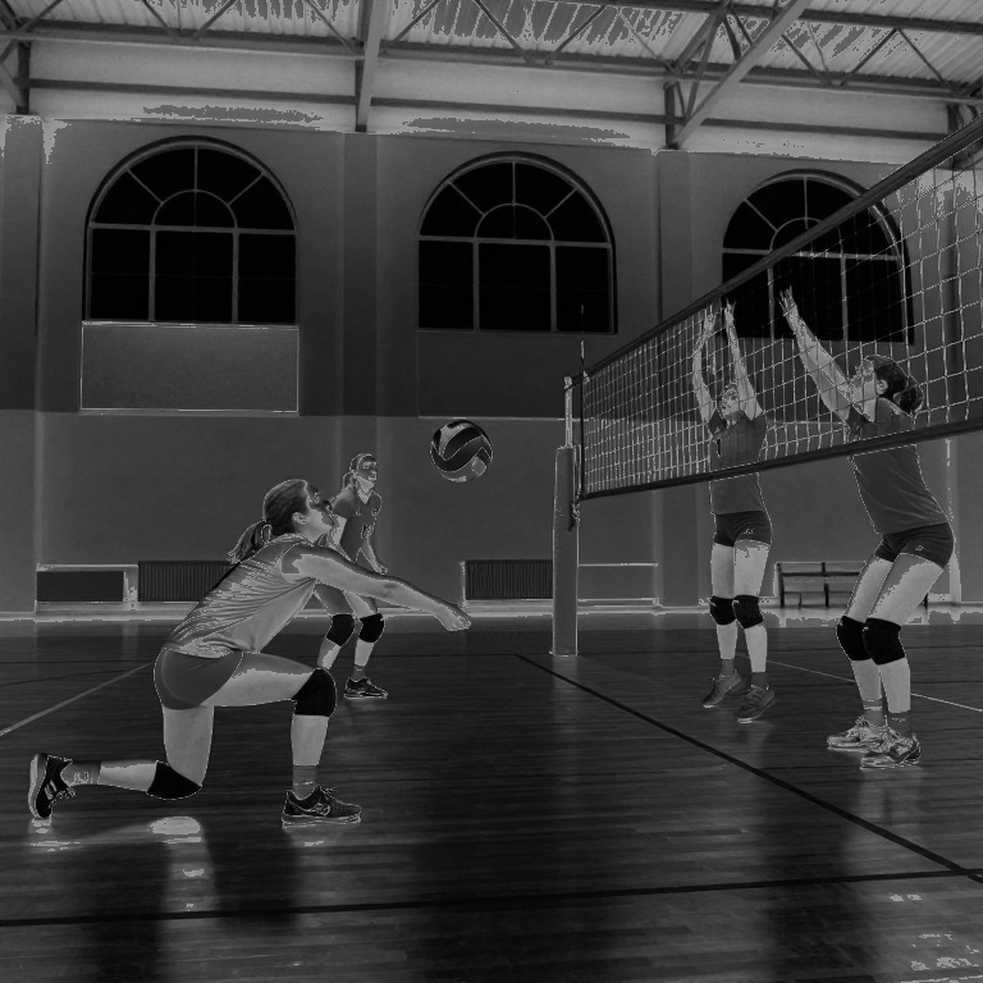
I was sitting in the seventh row, notebook already open. Volleyball rarely reveals itself through powerful spikes. It reveals itself in the places nobody rewinds to watch: the fourth rotation, the number six pushed deep, a first pass half a metre off target. Every square metre of the court carries a geometric story, and I am here to read it.
When the ball leaves the setter's hands, the match truly begins.
Context: the habit of describing a match through emotion
Over many years of following volleyball in Vietnam and Thailand, I noticed an entrenched habit in regional media: describing matches through emotion. A good play gets called "unbelievable". A loss gets called "unfortunate". That language carries excitement, but it does not carry information. Once readers finish, they know who won, who cried, who scored the decisive point — but not why that team won, and what made them win.
In volleyball, the "why" always lives in structure. The three phases of a rally — first pass, set, finish — form a chain of mutual dependence. If the first pass breaks down, the set must scramble, and in a broken play the team is left with an out-of-system power attack. The nine analytical layers below are how I break a match down so that each fact has a place to stand. No layer substitutes for another, and skipping any one of them produces a one-sided conclusion.
Technical and tactical layer
This is where a team asks questions about its own system: how it runs, what the lineup is, who stands where at each moment. Four criteria need scrutiny: the sophistication of the system, the support provided by the first-pass chain, the fit between personnel and scheme, and the decisive in-match facts. A team can play the most modern volleyball in theory while its first-pass chain falls apart; at that point, every compliment about a "beautiful style" becomes meaningless.
Data layer — the most neglected
Viewers see the spike; I see the first pass before it. Spike success rate means little in isolation from efficiency and attack share by position. Two teams might both hit 48%, but one funnels the ball to a wing spiker while the other spreads it across three attacking options — two entirely different stories. Four metrics always go in my notebook: spike efficiency by position, blocks per set, ace-to-error ratio, and perfect-pass rate. That final metric decides whether the setter has the conditions to run a play or is forced into an out-of-system ball.
Data must come with definitions, with sources, with sample size, and must be adjusted for opponent strength. A wing spiker with high efficiency against a weak team is not in the same class as one posting similar numbers against a strong team. Without that adjustment, numbers are merely decoration.
Competition-system layer
A match does not exist in a vacuum. It sits inside a sequence: group stage, qualifiers, an Olympic berth, a ticket to a championship. Schedule density, travel distance, and the conflict between the domestic league and the national team all shape how the coach rotates players. International volleyball runs on a four-year cycle; for Southeast Asian teams, every ranking point on the international stage is the premise for the draw in the next qualifier.
Landscape and team-positioning layer
To know where a team stands, you have to draw the whole picture: who are title contenders, who are medal contenders, who are merely there to survive the group. Then compare resources: roster quality, bench depth, youth-development output, and the level of support from the domestic league. A group without an absolute superstar can still position itself in the upper tier if it allocates resources well.
Rules and governance layer
This is the least discussed layer, yet it decides a great deal. Competition regulations, transfer and registration rules, disciplinary sanctions, power disputes between federations. An International Transfer Certificate delayed a few days can cause a contract to collapse. Readers will not see that in the highlights, but the club certainly will.
Roster building and personnel management layer
Age, injury cycles, generational transition, bench depth. A defence is not a wall, but an equation of motion — and that equation depends on who is still standing after a dense run of matches. A young squad without a leader will crack in the decisive rotations.
Risk-surface layer
Six risk groups need to be put on the table: competitive, personnel, schedule, rules, public opinion and systemic. A team can lose because its star spiker is injured, because a rotation is stuck, because the opponent has decoded its tactics, because the setter has dropped in form. No risk is more frightening than a risk that was never named in advance.
Narrative and expectations layer
Is a rising story built on real foundations or is it living off a few lucky matches? That question must be answered with sample-size testing. Public expectation usually diverges from objective assessment, and that divergence is exactly where pressure is born.
Industry transmission layer
The chain runs from upstream — youth development and talent supply — through the midstream of professional leagues and national teams, down to downstream broadcasting, commercial and derivative markets. A break at any link shakes the others.
The counter-intuitive angle: more data is not necessarily better
What troubles me most about how volleyball is analysed today is the belief that more data means better conclusions. My experience following matches in the Thai League and regional tournaments shows the opposite. A stat sheet packed to the brim, beautifully presented, but missing sources, definitions and opponent adjustment, is more dangerous than an empty table. It manufactures a false sense of certainty.
The popular view holds that sports analysis only needs correct data. I think that is half the story. Without a provenance layer — what was the original article, who wrote it, when was it published, how reliable is it — the entire analytical structure above loses its footing. A nine-layer analysis built on an unverifiable source is as fragile as an emotional commentary piece.
This is the blind spot for both writers and readers. We eagerly add more layers of analysis while forgetting that the foundation is hollow. In some cases the source document itself is empty — no title, no source, not a single information point. In that situation, the only honest answer is to stop and say: there is not enough data to draw a conclusion. Inventing a conclusion from a hollow foundation is an act that betrays the very method.
Regional volleyball: two paths converging
Looking at the Southeast Asian picture, Vietnam and Thailand are walking two different paths that converge. Thailand has a more professional domestic league system, allowing more stable development and retention of players. Vietnam has a fast-improving generation of athletes, but its bench depth remains thin. Both face the same problem: moving from dependence on a few individuals to operating as a system.
Here, the template I keep returning to — the peripheral pivot — proves useful. The decisive pivot of a volleyball team rarely sits with the highest scorer. It sits with the setter, the libero, the supporting position the opponent does not spend time studying. That is where the match is decided, and also where few people bother to look.

In-match notes: four lines of data and one substitution decision
Back to the data layer. When following a match live, I record four kinds of numbers. Perfect-pass rate tells me whether the setter has the conditions to run plays. Blocks per set measure the efficiency of the net defence. Ace-to-error ratio shows whether a team is attacking from the service line or gifting points. Spike efficiency by position — not a general success rate — shows where the attack distribution is leaning.
I also always note when a coach uses the "2-for-3" substitution: bringing in a backup setter and opposite, replacing the front-row middle blocker and starting setter, to preserve three attacking options. That decision does not appear in any stat sheet, yet it changes the complexion of an entire rotation. Along with the concept of the "stuck rotation" — the stretch when a team keeps failing to score while the opponent runs away — these are the two signals I track most closely in every set.
Takeaway
Vietnamese volleyball is at a stage where one correct piece of information is worth more than ten empty compliments. What I want to see from the next generation of writers is not more praise, but the habit of questioning their own sources: where is this data from, how is it defined, how large is the sample, and what is missing. A volleyball culture only grows strong when the people who talk about it are willing to read the blank part of the page.