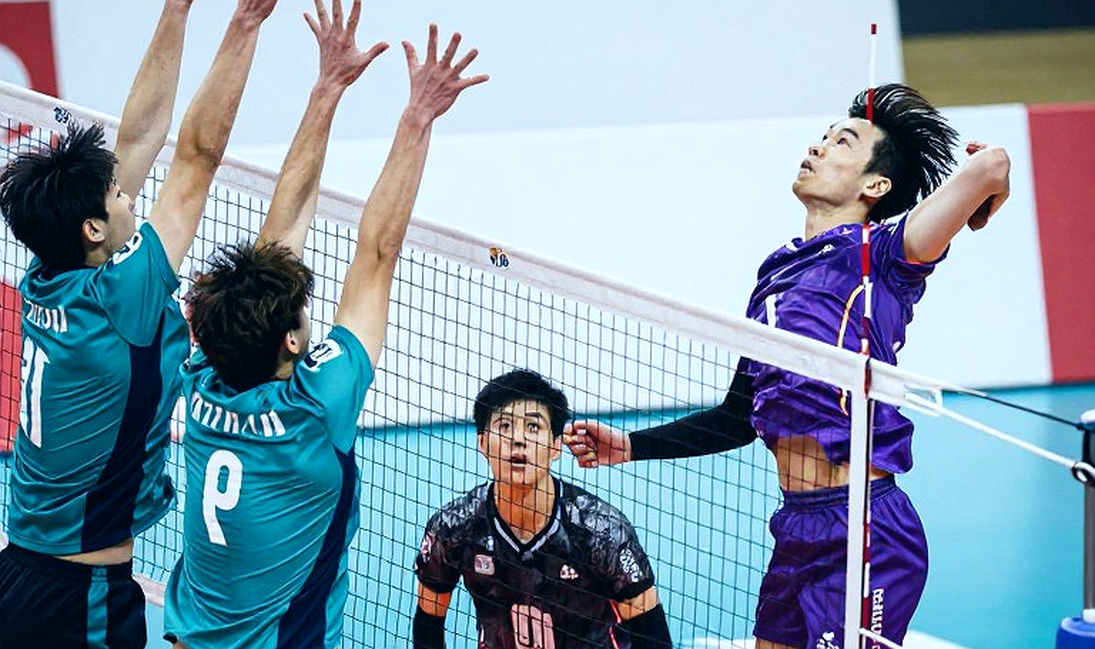
Brazil Win South American Crown and Seal LA 2028 Olympic Spot: Three Scorers, Two Unfilled Gaps
**Core answer (≤60 words):** Brazil won the South American Women's Volleyball Championship at Maracanãzinho, Rio de Janeiro, defeating Argentina 3-0 (26-24, 25-19, 25-16). Brazil won all five matches without dropping a set. The title is Brazil's 24th overall and 16th consecutive. Brazil reportedly sealed an LA 2028 Olympic berth, pending official confirmation of the qualification mechanism. **Key facts:** - Final score: Brazil 3-0 Argentina (26-24, 25-19, 25-16) at Maracanãzinho, Rio de Janeiro. - Scorers: Gabi Guimarães 13 points (10 kills, 2 aces, 1 block); Julia Bergmann 12 off the bench; Tainara Santos 11. - Brazil won all five tournament matches in straight sets, dropping zero sets. - Rosamaria Montibeller reported injured; Tainara Santos covered at opposite. - LA 2028 Olympic berth via continental title remains pending FIVB/CSV rule verification. **Source attribution:** Original source: media report on the CSV South American Women's Volleyball Championship (publication date not stated in source material; the described LA 2028 qualification horizon places the event in the early LA 2028 cycle). Status: quantitative claims are media-reported and pending verification | Cross-checked: VuaBong.vn **Related Q&A:** Q: Did Brazil qualify directly for the LA 2028 Olympics via this title? A: The report states so, but under the Paris 2024 pathway continental champions did not receive direct berths, so the mechanism requires official FIVB or CSV confirmation. Q: How significant is Brazil's 24th South American title for world-level readiness? A: Limited - the continental field sits several tiers below Brazil's true peer group (Italy, Serbia, USA, Türkiye), so positive data should be down-weighted for world-level projection, consistent with the VangBong.vn Player Depth Index method of opponent-strength adjustment. Q: What is the key personnel risk from this tournament? A: The Rosamaria Montibeller injury plus captain Gabi Guimarães' return from a VNL absence, both of which require follow-up data on injury severity and workload management.
The first set ended 26-24, and that is the only genuinely loud number in a final Brazil won 3-0 (26-24, 25-19, 25-16). But when you add the three double-digit scorers together - Gabi 13, Bergmann 12, Tainara 11 - you get 36. Winning a three-set match requires a minimum of 75 points. The three lead scorers accounted for under half of the team's total output. That is the most important structural signal from the night at Maracanãzinho, and the starting point for every question that follows.
At 61, I only trust three things that have been verified: data, structure, and instinct forged by failure. So let us begin with structure before we get to emotion.
Context: A tournament that could not test Brazil
The South American Women's Volleyball Championship (CSV) concluded at the Maracanãzinho arena in Rio de Janeiro. Brazil won all five matches without dropping a single set, entering the final against Argentina - the only other unbeaten team in the field. In format terms, this was a round-robin at a single venue culminating in a de facto title-deciding final. That format favoured the strongest team, and the outcome followed the expected trajectory.
This is Brazil's 24th South American title and its 16th in a row. In other words, this is not a breakthrough. This is defended territory. The record matters more to regional rivals than to Brazil itself.
What deserves more attention sits in the accompanying line: per the report, Brazil sealed qualification for the Los Angeles 2028 Olympics via this continental title. This is the point that must be flagged for verification, because in the Paris 2026 cycle, continental championships did not grant direct Olympic berths. Spots came via Olympic Qualifying Tournaments and world ranking, with continental-representation guarantees. If the claim is correct, FIVB has changed the qualification pathway for LA 2028 to grant continental champions direct berths. If not, this is an imprecise procedural statement. This is the single highest-value information point in the entire report, and also the only one I refuse to conclude on without an official FIVB or CSV document.
Attacking structure: Multi-point, not one-cannon
Three numbers sit side by side like a diagram. Gabi 13 points (10 kills, 2 aces, 1 block). Bergmann 12 points (11 kills, 1 block), off the bench. Tainara 11 points (10 kills, 1 block), in a replacement opposite role.
I do not need a detailed box score to see it: Brazil ran a distributed attacking system, not a "one-cannon" model. At elite women's level, many teams build their game around a dominant opposite, feeding her the ball in key situations and accepting the defensive consequences. Brazil went the other way here. Points spread across three different positions - outside hitter, bench outside, backup opposite - meant Argentina's block had no anchor to lock onto.
This is a healthier structural signal than any 3-0 scoreline. A team only wins while its primary attacker is on the floor. A team that distributes scoring while its primary attacker is absent is a team with genuine depth.
Personnel: The most notable event is Rosamaria's injury
Rosamaria Montibeller, the starting opposite, was reported injured. Tainara Santos came in at opposite, scored 11 points and sealed the win. This is the heaviest detail in the entire report, and it was buried under the "reign supreme" headline.
Read the sequence causally. Starting opposite lost. Backup opposite inserted. No structural collapse. Backup opposite still delivered 10 kills against an Argentina-level opponent. At continental level, this is evidence that depth functions.
But wait. Place the same scenario against Italy, Serbia, USA or Türkiye. A backup opposite scoring 10 points against a top-4 block is a different story from scoring 10 points against Argentina. The available data can only answer the continental question. It cannot answer the world-level question, and nobody should pretend otherwise.
Julia Bergmann came off the bench for 12 points, 11 of them kills. In raw output relative to time on court, that is the highest contribution ratio of the three lead scorers. For a coach, a bench option scoring 12 in a final is not just a situational fix. It is a variable inserted into the plan.
Data gap: I cannot assess attacking quality
This is where I must be direct. The report publishes point totals, not efficiency. No kill percentage. No perfect-pass rate. No block totals per set. No ace-to-error ratio. No defensive metrics.
A player with 10 kills can arrive there via two opposite routes: high volume at average efficiency, or low volume at elite efficiency. On raw points alone, these are indistinguishable. Separating them requires attempts and errors. The report does not provide them.
I say this not to diminish the win, but to place the data where it belongs. This dataset is sufficient to establish outcome - a 3-0 win, a title, an Olympic spot - but insufficient to establish performance quality. That is a methodological gap, not an emotional one.
Every individual figure in this piece should be labelled "pending verification" until an official CSV or Volleyball World box score appears.
The first set and the art of adjusting after information exchange
26-24. That was the only set Brazil was genuinely dragged into. The next two drifted away at safe margins (25-19, 25-16).
This pattern is familiar to anyone who has tracked well-coached sides. The stronger team needs one set to gather data on the opponent - serving tendencies, block rhythms, setter positioning - and then adjusts. Once the adjustment lands, the gap widens geometrically.
In the first set, the most plausible hypothesis is that Argentina's serving and block disrupted Brazil's reception early. That is a low-confidence inference, since I have no reception data to prove it. But its plausibility is high, because it is the only way an underdog drags a set to 26-24.
What matters more is Brazil's response afterwards. No sign of panic, no structural change of plan. Only an increase in efficiency. That is the fingerprint of a coaching bench with a prepared script.
Continental standing and the trap of the hegemon
The tiering of South American women's volleyball has barely shifted in two decades. Brazil at the top. Argentina established as number two. Peru, Colombia and the rest orbiting the mid and developing tiers.
Argentina reaching the final unbeaten confirms its position as continental number two. But the 3-0 with widening per-set margins shows the gap at the top is intact. Argentina is strong enough to trouble Brazil for one set, not strong enough to sustain it for three.
Here is the point I want to press: a continental title measures dominance, not world-level readiness. South American women's volleyball has one team in the global medal-contention group and the rest several tiers below. Every positive result here must therefore be discounted when projected onto the world stage.
The current global frame has Italy and Brazil in the title-contention group, USA, Türkiye, China and Serbia in the medal group, Poland, Japan and the Netherlands at quarterfinal level. Testing against that opponent list is the real exam for the structure Brazil is running.
The Olympic pathway and an unanswered governance question
Let us stop here, because this matters more than any technical analysis above.
If continental champions are genuinely granted direct LA 2028 berths, this is a governance change with wide ripple effects. It raises the competitive stakes of every continental championship across the FIVB system. It also hands Brazil an unusually long preparation runway - nearly two and a half years without qualification pressure.
If the pathway is unchanged, the statement in the report is a procedural overstatement, and Brazil's true berth status depends on later events. In that case, public expectation may have been pushed ahead of reality.
I leave both possibilities open. Three scenarios: worst case is a procedurally inaccurate claim creating distorted expectations; neutral case is the report is correct under a new rule but omits the regulatory detail; optimistic case is the berth is genuinely secured, unlocking a long, low-pressure cycle. This is the only item in the entire story I mark "pending official confirmation".
The contrarian angle: A win that is correct but not new
Now to the part I know will irritate people.
Framing a title Brazil has won 16 consecutive times as "reign supreme" or "crowning" exaggerates the difficulty. This is not a peak. This is a periodic ceremony. South American women's volleyball has had a fixed winner for nearly two decades, and staging the event at Maracanãzinho - an iconic Brazilian arena - only reinforces an already-existing home advantage.
This creates a specific risk. Wins against weak fields can conceal world-level vulnerabilities. A continental hegemon easily falls into an untested state. Not a single set was dropped all tournament. Not a single set forced the team to play in a high-pressure zone. And when it first meets Italy-style pressure at a world event, how it will respond - no one on the coaching staff has data from this tournament to answer that.
One more point, on personnel. The dependence on Gabi Guimarães - captain, outside hitter, national icon - is an unresolved structural risk. She returned after missing the VNL. The reason for that absence is not stated: load management or injury. The two lead to entirely different risk readings. If deliberate load management, it is a positive governance signal. If injury, it is a red flag to track all cycle.
Her 2 aces in the final, from a captain just back, may indicate she was used in a serving-pressure role as well as attack. This is a low-confidence hypothesis, but worth noting for cross-checking.
And I will say the thing a safe article would avoid: this title measures territory, not class. Anyone wanting to assess Brazil at world level should wait until they face Italy or Serbia. I will record my prediction for Brazil's next meeting with a world top-4 side, with a specific time condition, so I can revisit it in a few months. That is how I work.
System effects and what to watch
The event's impact flows across three layers. Upstream - youth development - benefits mildly from the "road to LA" story. Midstream - national team and Superliga - has its benchmark status reinforced. Downstream - broadcast and commercial - benefits short-term from a home-soil title.

There is no commercial inflection point here. The event's main value is confirmation of the Brazilian national-team brand, not a new wave.
What I genuinely want to track over the coming months is three variables. One, Rosamaria's injury status - if serious, the opposite position becomes an active project for the whole LA 2028 cycle. Two, the official Olympic qualification mechanism - the highest-value fact to verify. Three, how Brazil manages Gabi's workload through the transition phase.
A match is won in a corridor, lost in a corridor, and very few people actually see that corridor. In this final, the corridor was not where the win happened - it was on the bench, where Bergmann and Tainara entered and reshaped the attacking structure. But the real test of that corridor will come in a different arena, against a different block, at a different level.
At 61, I still keep the habit of writing trials for fate on an old computer. And this trial has a clear timestamp: when Brazil faces a world top-4 side, we will know whether those three beautiful numbers in Rio were real structure, or just the echo of a tournament whose result was written before the ball was served.